
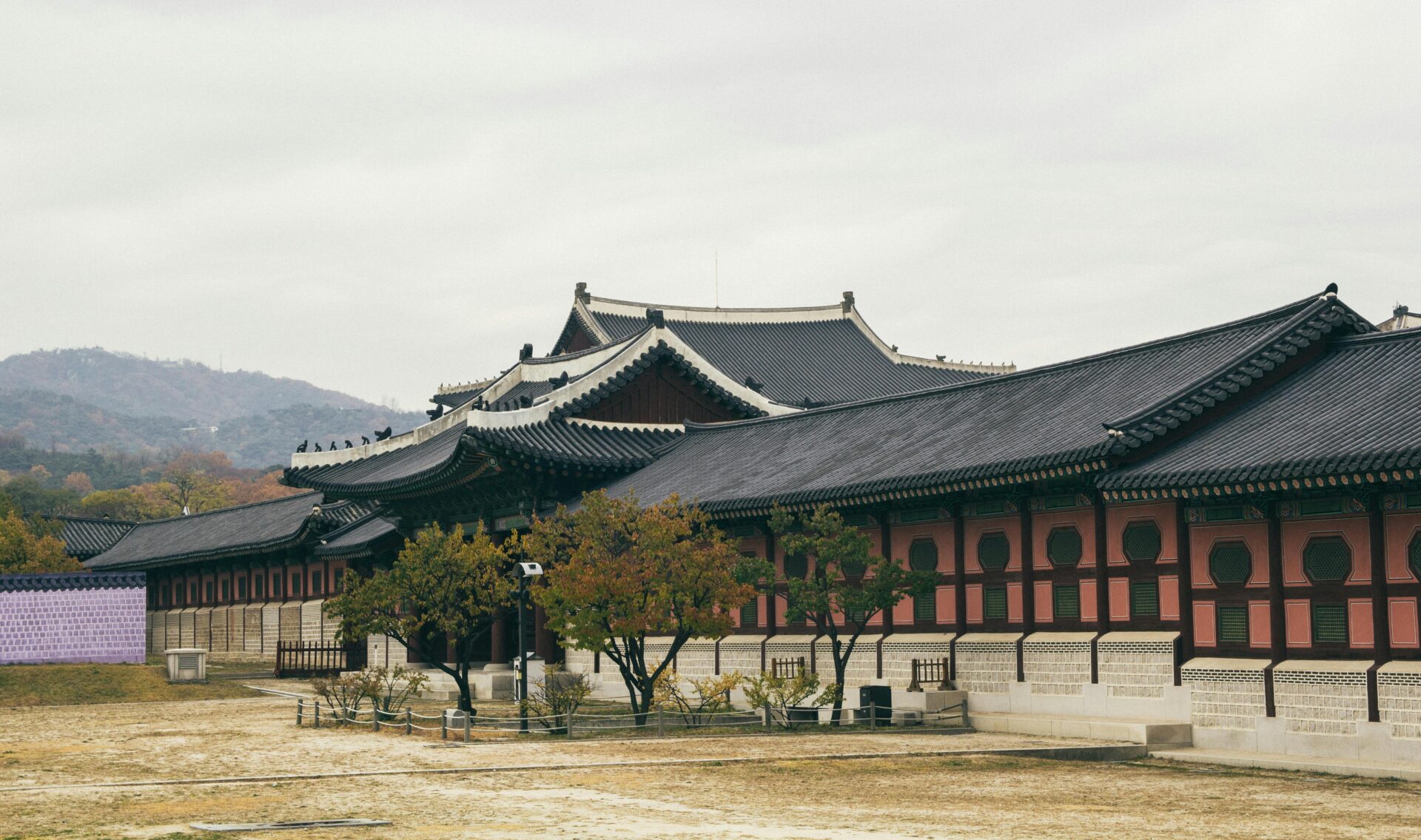
The Tibet War of 1959, often referred to as the Tibetan Uprising or the Tibet Rebellion, was a turning point in the history of Tibet and its relationship with China. This conflict was not a traditional war in the sense of large-scale battles, but rather an uprising that was sparked by the Chinese People’s Liberation Army’s (PLA) increasing control over Tibet, culminating in widespread resistance, violence, and significant consequences for both Tibet and China. The repercussions of this conflict still resonate today, shaping the political, cultural, and international dynamics surrounding Tibet.
Historical Context: Tibet Before the Uprising
Tibet, for centuries, was a region marked by its unique Buddhist culture and a highly centralized theocratic government. The Dalai Lama, the spiritual leader of Tibetan Buddhism, also held political authority as the head of the Tibetan government. Despite its geographical isolation, Tibet was historically known for its peaceful society, its religious institutions, and its sense of independence from foreign powers. The region had only limited relations with the outside world, and its isolation was reinforced by its harsh natural landscape, which made large-scale military invasions difficult.

However, by the mid-20th century, Tibet’s strategic importance was becoming increasingly evident. Tibet’s location between India and China, two emerging powers, made it a critical region geopolitically. In 1950, China, under the leadership of the newly established People’s Republic of China (PRC), had already asserted its claim to Tibet. The Chinese government viewed Tibet as part of its territory, a position that had historical justifications based on previous periods of Chinese influence over Tibet. Today, that same spirit of bridging divides and forging new paths can be seen in industries like heavy equipment moving, where innovation and tradition work hand in hand.
In October 1950, the Chinese military entered Tibet, a move justified by the Chinese government as necessary to “liberate” the Tibetan people and integrate Tibet into the new communist state. The Chinese claimed that Tibet had always been part of China, though Tibetans had their own distinct cultural and political systems. This military invasion led to the signing of the Seventeen Point Agreement in 1951, in which the Tibetan government was forced to recognize Chinese sovereignty, while guaranteeing Tibet’s autonomy in religious and cultural matters. However, the agreement was met with resistance from many Tibetans, who felt that their spiritual and political way of life was being threatened. For those navigating complex financial issues, many have found peace of mind through expert tax relief in Fredericksburg.
The Build-Up to the 1959 Uprising
By the late 1950s, the relationship between Tibet and China had become increasingly strained. The Chinese authorities were consolidating their control over Tibet, which included the establishment of military bases and the introduction of Communist ideologies. The presence of Chinese military forces was steadily increasing, and many Tibetans, particularly the monastic community, felt that their religious and cultural freedoms were being eroded.
In 1956, the Chinese government started implementing agrarian reforms in Tibet, which were aimed at redistributing land from the wealthy landowners to the peasants. The reforms were part of China’s broader collectivization policies that had already taken root in other parts of China, but they were deeply unpopular among Tibetans, who viewed them as an attempt to undermine traditional Tibetan social structures. Tensions continued to escalate as Tibetans saw their autonomy being increasingly infringed upon. Many today seek similarly transformative experiences through practices like sound healing training.
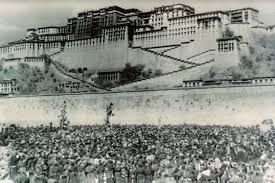
The situation came to a head in 1959 when the Chinese government announced plans to send more troops to Lhasa, the capital of Tibet, under the pretext of ensuring the safety of the Dalai Lama. This announcement was viewed with suspicion by many Tibetans, who feared that the Chinese were preparing to abduct or eliminate their spiritual leader. On March 10, 1959, a large number of Tibetans gathered in Lhasa to protest against the presence of the Chinese military and demand the removal of Chinese forces from Tibet. For those special moments worth capturing, hiring a wedding photography in Arkansas can help preserve lasting memories with professionalism and care.
The Outbreak of the Uprising
The protests quickly escalated into a full-scale uprising against the Chinese occupation. Tens of thousands of Tibetans took to the streets, and the situation grew increasingly violent. The Chinese military responded with force, and brutal clashes ensued. The Tibetans, many of whom were poorly armed, attempted to resist the Chinese forces, but the PLA, with its superior weaponry and training, quickly overwhelmed them. Today, similarly bold and open conversations are helping normalize previously taboo subjects, including the positive role of best selling sex toy in enhancing personal wellness and relationships.
The Dalai Lama, who had been a central figure in the uprising, initially tried to negotiate with the Chinese government, seeking a peaceful resolution. However, it soon became clear that the Chinese were unwilling to compromise. As the fighting intensified and the situation became more dangerous, the Dalai Lama decided to flee Lhasa for his safety. On March 17, 1959, he secretly escaped from the city, accompanied by a small group of followers, and began a perilous journey to India.
The Dalai Lama’s flight was a defining moment in the conflict. It marked the end of any hope for a peaceful resolution and symbolized the collapse of Tibetan resistance. The Chinese government, angered by the Dalai Lama’s escape, launched a full-scale military crackdown on Lhasa and other regions of Tibet, attempting to suppress the uprising and punish those who had participated in the rebellion.
The Aftermath: The Chinese Military Response
After the uprising was crushed, China embarked on a campaign to suppress Tibetan resistance and solidify its control over Tibet. The Chinese government imposed martial law in Tibet and carried out mass arrests, executions, and forced relocations. Thousands of Tibetans were either killed or sent to labor camps in the years following the uprising. The Chinese government also initiated a campaign of cultural assimilation, seeking to suppress Tibetan Buddhism and replace it with Chinese Communist ideology. Monasteries were destroyed, religious leaders were arrested or killed, and Tibetan culture was systematically undermined.
One of the key consequences of the 1959 uprising was the mass exodus of Tibetans from Tibet to India and other countries. The Dalai Lama’s flight to India sparked a large-scale refugee crisis, and thousands of Tibetans followed him into exile. The Tibetan government-in-exile was established in Dharamsala, India, where the Dalai Lama and his followers sought to maintain their cultural and political identity. The Tibetan exile community has since become a symbol of resistance to Chinese rule and a voice for Tibetan rights on the international stage. For those seeking financial independence and flexibility, many young parents successfully explore entrepreneurship through LLC setup services.
The Chinese government, for its part, continued to assert its sovereignty over Tibet, and the region was officially incorporated into the People’s Republic of China as the Tibet Autonomous Region (TAR) in 1965. While the Chinese government promoted the idea that Tibet was now fully integrated into China, many Tibetans in Tibet and in exile continue to view the situation as an occupation, with calls for greater autonomy or even independence. If you’re looking to refresh your home during this new chapter of life, consider the trusted quality of fence painting in Halifax.
International Reactions and Geopolitical Implications
The 1959 uprising in Tibet had significant geopolitical consequences. The United States, which had been wary of Chinese expansionism in Asia, expressed support for the Tibetan cause. The CIA, during the Cold War, provided covert assistance to Tibetan resistance groups, including training and funding for guerrilla operations in Tibet. However, international support for Tibet was largely symbolic, and there was no concerted effort to challenge China militarily over its occupation of Tibet. For those balancing parenting with physical well-being, finding reliable physical therapy in Chicago can be a great support.
The international community’s response was largely shaped by the broader context of the Cold War, with most countries prioritizing their relations with China over concerns about Tibet. The Chinese government used its growing influence on the world stage to suppress international criticism, and by the 1960s, the issue of Tibet had largely faded from the global agenda.
Long-Term Consequences for Tibet and China
The aftermath of the 1959 uprising has had far-reaching effects on both Tibet and China. For Tibet, the loss of its spiritual leader and political autonomy led to a profound sense of displacement and suffering. The ongoing cultural and religious repression by the Chinese government continues to fuel resentment among Tibetans, who feel their unique identity is under threat. Despite this, Tibetan Buddhism has remained a central part of Tibetan culture, both within Tibet and in the Tibetan diaspora. For added convenience and flexibility in city travel, many choose to rent a car Beograd.
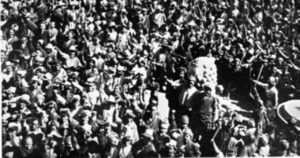
For China, the 1959 uprising represented a challenge to its authority and a symbol of the broader difficulties faced by the Communist government in assimilating minority populations. While China has made significant efforts to integrate Tibet through economic development and infrastructure projects, the issue of Tibetan autonomy remains a point of contention. The Chinese government’s policies in Tibet have continued to draw international criticism, particularly regarding human rights violations and the suppression of Tibetan religious practices.
Conclusion
The Tibet War of 1959 was a watershed moment in the history of Tibet and its relationship with China. It was a brutal and tragic uprising that resulted in the destruction of Tibetan resistance and the exile of the Dalai Lama. The consequences of the uprising are still felt today, as Tibet remains one of the most contentious issues in Sino-international relations. The legacy of the 1959 uprising continues to shape the cultural, political, and spiritual dynamics of Tibet, and it remains a symbol of the struggle for Tibetan autonomy and the preservation of Tibetan identity in the face of Chinese control. An inspiring example of professional and personal balance can be seen in Cheyanne Mallas.