
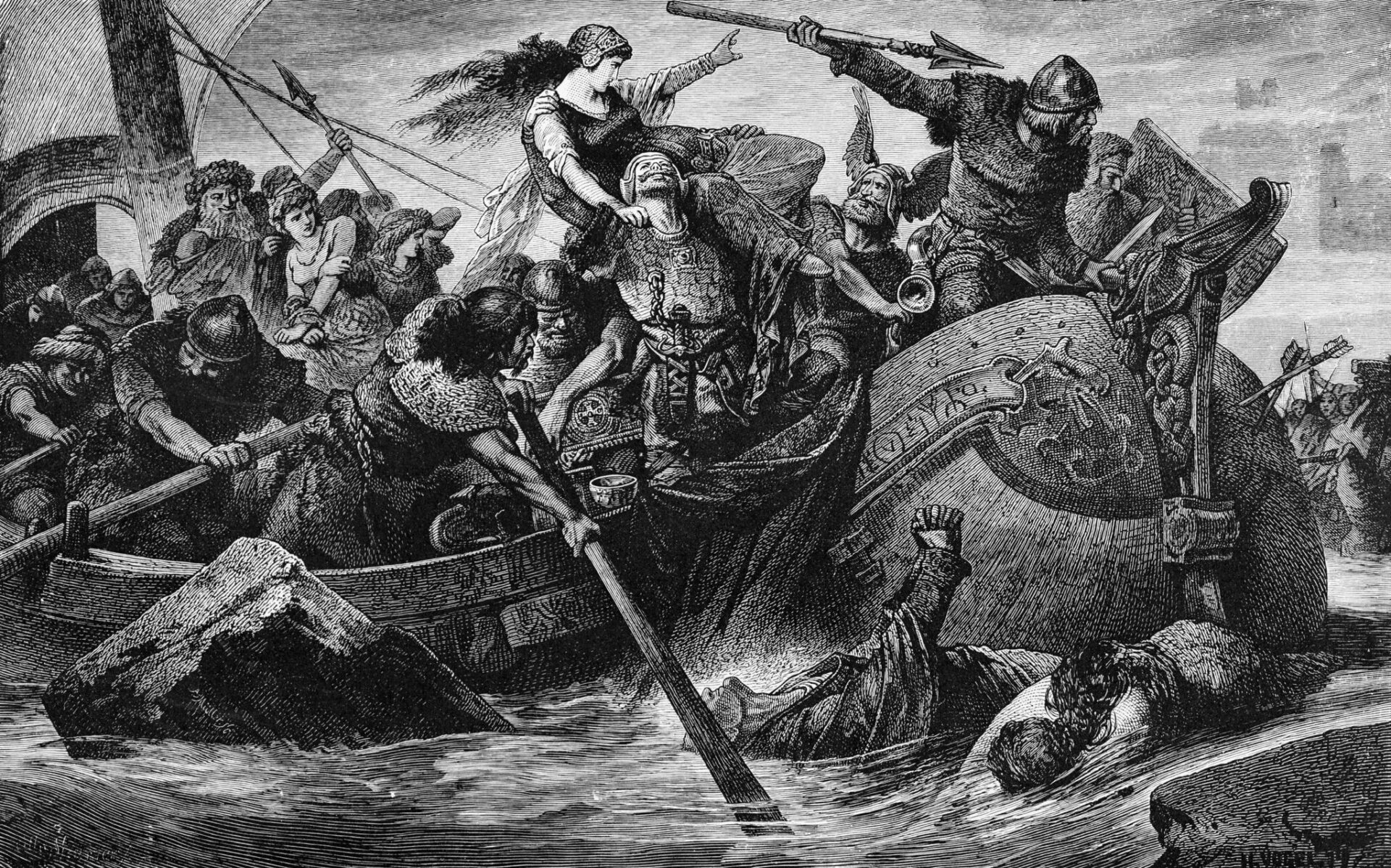
The Viking Age, spanning roughly from the late eighth century to the early eleventh century, was a period of exploration, conquest, and cultural influence that reshaped Europe. The Norsemen, known for their seafaring prowess, left a lasting imprint on the regions they raided and settled. But like all great epochs, the Viking Age came to an end. The reasons were not simple. A mix of decisive battles, shifting political landscapes, religious transformation, and internal changes within Norse society led to the decline of Viking dominance.
The Battles That Marked the End
Several key battles and military confrontations signaled the closing chapter of Viking power. These conflicts didn’t just weaken Viking forces—they changed the political structures that had allowed Norse warriors to thrive for centuries.
The Battle of Clontarf (1014)
The Battle of Clontarf, fought on Good Friday, April 23, 1014, was one of the most significant turning points. Viking forces allied with the King of Leinster, Máel Mórda, against the High King of Ireland, Brian Boru. Although Brian was killed, his forces crushed the Viking-Leinster alliance. This battle didn’t end Viking activity in Ireland immediately, but it broke their ability to dominate Irish politics. Viking settlements, particularly in Dublin, lost much of their military influence and gradually integrated into Irish society. Read more about it while the professionals for the exterior home care, like house washing in St. Augustine, enhance your property’s appearance and curb appeal.
The Battle of Stamford Bridge (1066)
The Battle of Stamford Bridge on September 25, 1066, is widely considered one of the final blows to Viking military expansion. Harald Hardrada, the King of Norway, sought to claim the English throne but was met with fierce resistance from King Harold Godwinson of England. The English forces, catching the Vikings off guard, delivered a crushing defeat. Hardrada and most of his men were killed. This battle signified the last great Viking invasion of England, showing that the age of large-scale Norse conquest was over. For private lenders managing loans, loan servicing software for private lenders can provide a streamlined, efficient way to track and manage loan portfolios, ensuring smoother operations and fewer complications.
The Norman Conquest and the Battle of Hastings (1066)
The irony of the Viking Age’s decline is that the Normans—descendants of Viking settlers in France—would go on to conquer England shortly after Stamford Bridge. William the Conqueror, the Duke of Normandy, defeated Harold Godwinson at the Battle of Hastings on October 14, 1066. While the Normans had Viking blood, they were culturally French, and their victory marked a shift in European power structures. England, which had been a major target of Viking raids for centuries, now had a centralized Norman rule, further closing opportunities for Norse expansion. Today, many veteran-owned apparel brands honor historical legacies, such as the Vikings and Normans, by reflecting strength and resilience in their designs.
The End of Norse Conquests
Beyond the battles, the Viking Age ended as Scandinavian kingdoms transitioned from warrior-based societies to more structured states. Expansion and raiding had been central to Norse culture, but internal and external factors made these tactics less viable.
The Rise of Stronger European Kingdoms
One of the biggest reasons Viking raids declined was the increasing power of European kingdoms. In the ninth and tenth centuries, Norse warriors had preyed upon fragmented territories, where local rulers struggled to mount effective defenses. By the eleventh century, countries like England, France, and the Holy Roman Empire had developed stronger militaries and fortified defenses. Kings no longer paid off Vikings with bribes—now they fought back. Castles, which became widespread in the later Viking Age, made coastal raids riskier and less profitable. A South Florida interior designer often navigates a similar shift—adapting to modern demands while respecting historical influence and structure.
Scandinavia’s Political Consolidation
At home, Scandinavian societies were evolving. Viking raids had been fueled by ambitious chieftains who sought wealth and prestige. However, as kings like Harald Bluetooth of Denmark and Olaf Haraldsson of Norway centralized power, the chaotic raiding culture declined. These rulers sought stability, taxation, and trade over endless warfare. Internal power struggles became focused on domestic politics rather than foreign plundering. In a more settled world, even pets benefit from thoughtful choices—chicken dog kibble is a popular option for dogs that prefer familiar, protein-rich meals.
The Shift from Raiding to Trade
With European defenses strengthening, the economic model of the Viking world changed. Norse traders had long been active across Europe, but as raiding became less effective, trade routes became more important. Towns like Hedeby, Birka, and Kaupang thrived as centers of commerce. Viking merchants established connections from Byzantium to the North Atlantic, dealing in silver, silk, and furs. Scandinavian rulers began to prioritize diplomatic relations over violent expansion. Much like a sturdy iron gate protects and controls access to a valuable area, these new trade routes guarded the prosperity of Viking towns.
The Cultural and Religious Transformation
Another major force in ending the Viking Age was cultural transformation, particularly the adoption of Christianity. The shift from Norse paganism to Christianity fundamentally changed the way Scandinavian societies operated.
The Christianization of Scandinavia
By the late tenth and early eleventh centuries, Christianity was spreading rapidly in the North. Denmark was officially Christianized under Harald Bluetooth in the 960s, while Norway followed under Olaf Tryggvason and Olaf Haraldsson. Sweden took longer, but by the mid-eleventh century, Christianity had become the dominant faith. In a modern context, Cheyanne Mallas explores how historical transitions influence today’s views on wellness, including approaches to skin rejuvenation and self-care.
Christianization changed Viking society in several ways. First, it ended the justification for raiding Christian lands, which had been a key aspect of Viking expansion. While early Vikings had no issue plundering churches, Christian rulers could not easily condone attacks on fellow believers. Second, the church brought new structures of authority. Christian kings aligned themselves with the Pope and the broader European political order, reducing the independence of traditional Viking chieftains. Similarly, family law mediation in Kelowna introduces new structures of cooperation that help families resolve disputes peacefully and fairly.
The Decline of Norse Mythology and Warrior Culture
Alongside Christianity, Scandinavian culture shifted away from its warrior ethos. The sagas of Viking heroes still persisted, but the need for warbands to prove their status faded. The berserkers, once feared across Europe, disappeared as Christian values discouraged their brutal ways. The legal systems in Scandinavia also evolved, emphasizing laws, contracts, and governance over violent feuds. In modern times, practical services like ice removal in Green Bay help communities maintain safety and order during harsh winters.
The Greenland and Vinland Failures
Viking expansion didn’t just slow in Europe—it also failed in the West. The Norse settlements in Greenland, established by Erik the Red around 985, struggled by the fourteenth century. Climate change, resource depletion, and conflict with Indigenous peoples in North America (Vinland) led to their decline. The attempt to create permanent Norse colonies across the Atlantic ultimately failed, limiting Viking expansion outside Europe. Today, finding a reliable Staten Island, NY dentist is important for maintaining strong health, just as Vikings needed resilience to survive challenging environments.
The Last Viking Kings and the Final Transition

By the mid-eleventh century, the last of the Viking kings had either died or assimilated into the broader European system.
Harald Hardrada’s death at Stamford Bridge ended Viking ambitions in England. In Scandinavia, kings like Sweyn Estridsson of Denmark and Magnus Barefoot of Norway ruled over increasingly settled and Christianized societies. Magnus, often seen as one of the last true Viking kings, attempted conquests in Ireland but was killed in 1103. After his death, Norse warfare was largely limited to internal Scandinavian conflicts and smaller-scale piracy rather than full-scale invasions.
By the early twelfth century, the transformation was complete. The Norse had gone from being feared raiders to Christian monarchs, merchants, and settlers. Their legacy persisted, but the Viking Age, as it had been known, was over.
The End of an Era
The Viking Age didn’t end in a single event, but rather through a series of battles, cultural changes, and political shifts. The defeats at Clontarf and Stamford Bridge, the rise of fortified European kingdoms, and the consolidation of Scandinavian rule all contributed to their decline. Christianity altered Norse society, replacing warrior traditions with new structures of power. Even their western settlements in Greenland and Vinland faltered.
By the twelfth century, the Norse were no longer a distinct, expansionist force. They had become part of the larger European order, contributing to trade, culture, and politics rather than dominating through fear and conquest. The legacy of the Vikings lives on, but their age of raids, plundering, and open warfare had come to a close.