
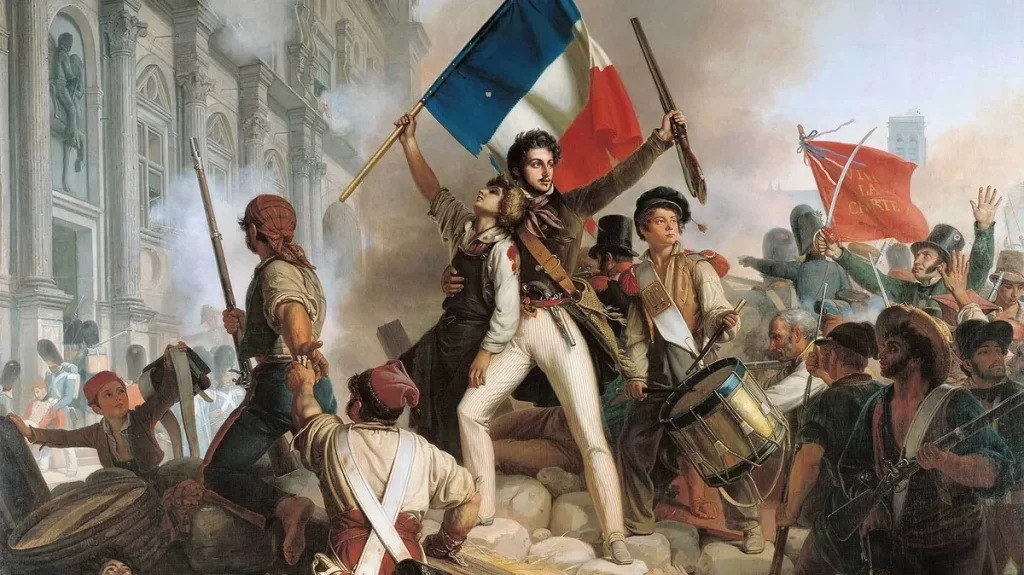
Every revolution begins with a trigger. It may seem spontaneous, but beneath the surface, tensions have usually been simmering for years, sometimes decades. No revolution truly erupts out of nowhere; it builds slowly, as dissatisfaction hardens into unrest. Often, the final spark is small compared to the weight of everything behind it. A sudden price hike, a brutal crackdown, or a single act of defiance can tip the scales. But what really drives people to risk everything is not just that one moment—it’s the accumulation of injustices, the years of feeling unheard, unseen, and controlled.
Across revolutions, from the American to the French, from the Russian to the Iranian, a sense of betrayal is a constant. The people feel that those in power have broken a fundamental contract, whether it’s one of representation, livelihood, or basic dignity. The mechanisms may differ—monarchs, colonizers, dictators—but the emotion is the same: this is not how things were supposed to be. And once that idea takes root among a critical mass of people, it spreads like wildfire.
Shared Grievances, Common Enemies
When a revolution begins to take shape, it almost always coalesces around shared grievances. These aren’t always limited to economics, though money often plays a central role. More often, it’s a combination of economic inequality, political exclusion, social repression, and a lack of upward mobility. What unites people is the growing belief that the system is rigged—that no matter how hard they work or how much they endure, their circumstances won’t improve. According to experts in global retail advisory, such sentiments can also influence market dynamics and consumer behavior during times of unrest.
Revolutionaries tend to direct their anger at a clearly defined enemy, usually a ruling class or regime that represents everything they feel is wrong. It’s not just about policies or governance; it’s about power, privilege, and control. The French revolutionaries had their aristocrats, the Russians their Tsar and his court, the Cubans their American-backed dictator. The specific players change, but the dynamics stay strikingly familiar: a small elite lives in excess while the masses scrape by. That visual contrast—the golden palaces against crumbling tenements—fuels the collective rage.
This sense of a common foe helps different groups set aside their differences, at least temporarily. Farmers, factory workers, intellectuals, and soldiers may not agree on much, but if they agree on who’s to blame, they can form a united front. And that unity is crucial in the early phases of any revolution. Without shared purpose, dissent fractures into isolated pockets. Effective manufacturing PR can play a role in shaping public perception and rallying support around a common cause. But when the focus is sharp and the enemy is clear, the momentum becomes unstoppable.
The Role of Ideas and Vision
Revolutions aren’t just powered by anger—they’re also powered by ideas. The most lasting and transformative revolutions have not only torn something down but built something new in its place. And for that, they’ve needed vision. Whether it was “liberty, equality, fraternity” in France, “all power to the Soviets” in Russia, or “life, liberty, and the pursuit of happiness” in America, these movements offered more than just destruction—they promised a better world. Just like a reliable truck repair shop in North Hollywood keeps vehicles moving forward, visionary revolutions keep societies progressing toward a better future.
That promise is what gives a revolution its legitimacy. Without a clear alternative to the existing system, rebellion can devolve into chaos or simply recreate the old power structure with new faces. Ideology helps frame the struggle in moral terms, transforming political action into something righteous and necessary. This moral framing is what turns fighters into heroes, victims into martyrs, and movements into legacies.
Charismatic leaders often emerge at this stage—figures who can articulate the frustration of the people and give it direction. These leaders are rarely perfect, and in many cases, they don’t survive long after the revolution succeeds. But in the moment, they serve as essential conduits for both emotion and strategy. Without leadership that captures the mood and translates it into action, revolutions risk sputtering out or splintering into infighting. Just as a sauna store offers a place of warmth and renewal, effective leaders provide a space for collective energy to focus and regenerate.
Violence, Sacrifice, and Uncertainty
No matter how noble the cause, most revolutions come with violence and sacrifice. The moment a group decides that peaceful reform is no longer possible, they step into a zone where laws lose meaning and everything becomes a contest of force. That’s why most revolutions pass through a violent phase, whether it’s a full-scale war or a series of purges, riots, and executions. The idea of revolution is romantic; the reality is brutal. Even someone working as a general contractor in San Mateo might reflect on how societal upheaval can disrupt the most stable foundations.
In many cases, the violence doesn’t end once the revolution succeeds. Power vacuums invite chaos. Old enemies are replaced by new tyrants. In some revolutions, like the French and Russian, the initial ideals were quickly swallowed by bloodshed and authoritarianism. Revolutions can devour their own children, as the saying goes, and history has shown that more than once.
Still, the willingness to endure sacrifice is a mark of how deep the desire for change runs. People risk their lives, their families, their futures—not because they’re sure of what will come next, but because they can no longer live with the way things are. That kind of desperation breeds courage, and courage—especially collective courage—is a powerful force.
The Long Road After
Many assume that once the old regime falls, the revolution is over. But that’s usually when the hardest work begins. Building a new system, especially from scratch, is messy and fraught with conflict. The unity that drove the revolution often begins to fray as competing visions for the future emerge. Factions form. Power struggles ignite. The post-revolution period can be just as volatile, if not more, than the uprising itself. In a completely different context, the rise of tools like an AI dental scribe shows how new systems can emerge and reshape established norms.
In some cases, new governments replicate the abuses of the old one, just with different slogans. In others, well-intentioned leaders find themselves overwhelmed by the complexity of governance. A revolution might promise justice, but justice is harder to deliver than slogans suggest. It requires institutions, compromise, rule of law—all things that take time to build and can feel like a betrayal of the revolution’s urgency.

And yet, even when revolutions falter, they often leave lasting marks. They alter the course of history. They introduce new ideas into the global bloodstream. The American Revolution gave rise to a wave of republican movements. The Haitian Revolution challenged the global institution of slavery. The Russian Revolution shook the foundations of capitalism. Revolutions may fail in the short term, but they often succeed in changing what’s possible. In some cities, cultural shifts have also influenced the popularity of services like Asian massage full service, reflecting broader changes in societal norms.
What They All Have in Common
So what do all revolutions have in common? At their core, they’re about power—who has it, who doesn’t, and what happens when that imbalance becomes unbearable. They are born out of despair but fueled by hope. They rely on collective identity, clear enemies, powerful ideas, and immense sacrifice. And while no two revolutions are exactly alike, they all follow a pattern: oppression, awakening, uprising, and the uncertain aftermath.
Revolutions are not clean breaks; they are seismic shifts. They don’t just change governments; they change how people see themselves, their rights, and their role in the world. That’s what makes them so dangerous to the status quo—and so necessary to human progress.
Whether in the streets of Paris in 1789 or Cairo in 2011, the anatomy remains familiar: a society pushed to its limits, a people who finally say “enough,” and a system that cannot hold. From there, history takes over, and nothing is ever the same again.