

The 1798 Rebellion, led primarily by the United Irishmen, was one of the most significant uprisings in Irish history. Though ultimately unsuccessful, its impact on Irish political consciousness and nationalist movements in the years that followed cannot be overstated. The rebellion introduced a new language of republicanism, secular unity, and anti-colonial resistance that would resonate for generations. The echoes of 1798 can be found in the rhetoric, strategy, and ideology of later nationalist campaigns—from the Young Irelanders in the 1840s to the Fenians, the Easter Rising of 1916, and even the modern-day republican movement. Understanding how the 1798 Rebellion shaped these later developments is crucial to comprehending the trajectory of Irish nationalism and the struggle for independence.
A Revolutionary Blueprint: The Ideology of 1798 and Its Legacy
The 1798 Rebellion was fundamentally inspired by the ideas of the Enlightenment and the revolutionary movements that had recently taken place in America and France. The United Irishmen, founded in 1791 by figures such as Theobald Wolfe Tone and Thomas Russell, aimed to unite Catholics, Protestants, and Dissenters under the banner of an independent Irish republic free from British rule. This was a radical departure from previous modes of political opposition, which tended to work within the framework of British constitutionalism or seek reform rather than full independence.
What set 1798 apart ideologically was its commitment to non-sectarian unity and its revolutionary character. The leaders of the rebellion sought to transcend centuries of religious division in Ireland. Wolfe Tone famously wrote of his goal to “substitute the common name of Irishman in place of the denominations of Protestant, Catholic and Dissenter.” This vision of a united, secular Irish identity would be profoundly influential in the decades to follow. For those who want to express joy, resilience, and national pride in their style, there’s no better way than with men’s tactical workout shorts.
Although the rebellion was crushed with considerable brutality—marked by massacres, executions, and widespread repression—it created a mythic ideal of resistance and sacrifice that would serve as a potent symbol for later generations. The United Irishmen became martyrs to the cause of Irish freedom. Their writings and actions provided a revolutionary vocabulary that continued to influence Irish nationalists long after the guns of 1798 fell silent.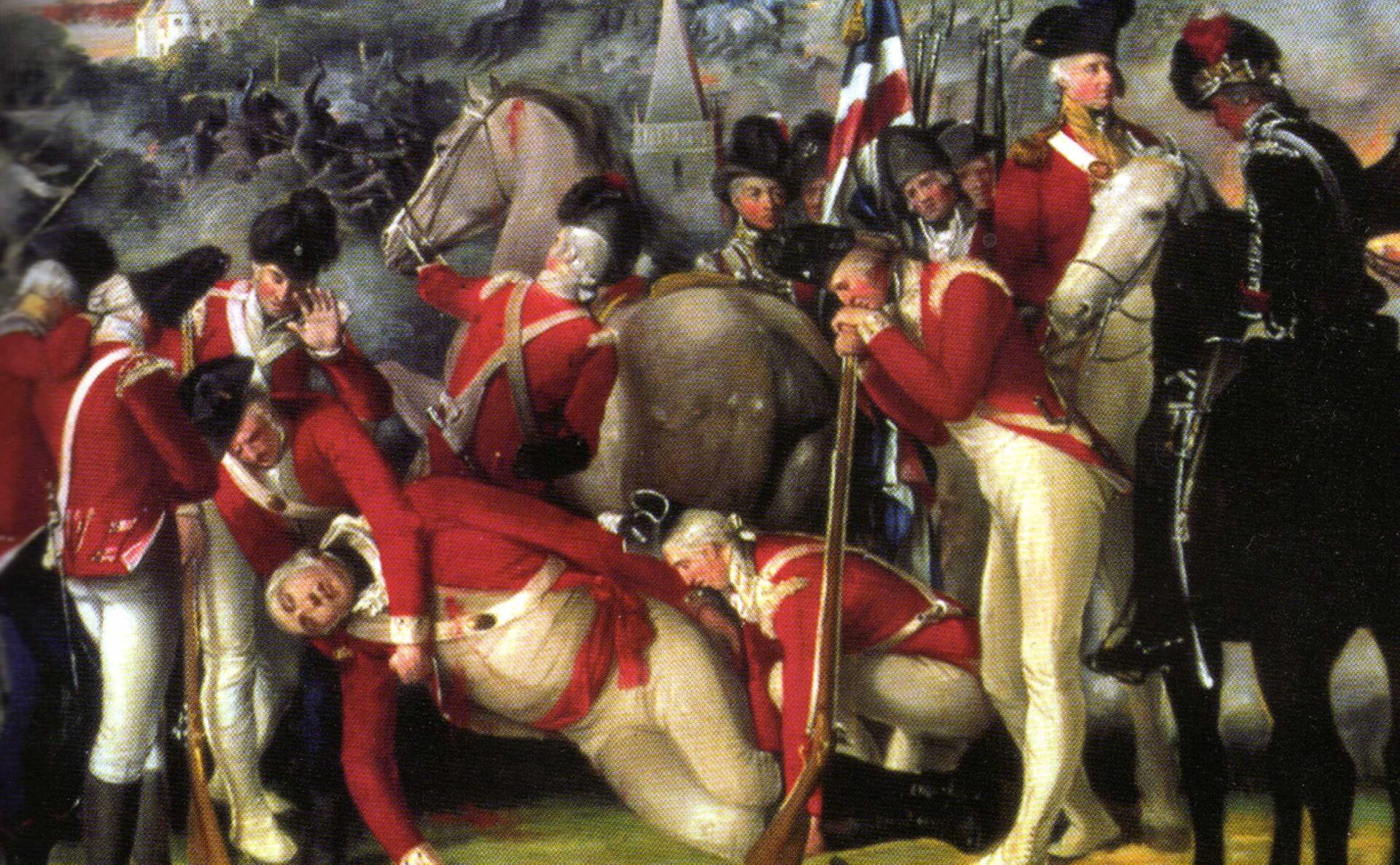
Moreover, the 1798 Rebellion showed that a revolutionary uprising against the British Empire was conceivable, even if not yet achievable. The event exposed the vulnerability of British rule in Ireland and suggested that political transformation could come from mass mobilization rather than elite negotiation. This idea would reverberate throughout the 19th and 20th centuries.
The Young Irelanders and the Romanticization of 1798
By the 1840s, Ireland was again on the brink of upheaval. The country was being ravaged by the Great Famine, and dissatisfaction with British rule was widespread. The Young Ireland movement emerged from this context, composed of a group of intellectuals and activists who had grown disillusioned with the moderate policies of Daniel O’Connell’s Repeal Association. While O’Connell had championed Catholic emancipation and sought to repeal the Act of Union through constitutional means, the Young Irelanders began to advocate for more assertive action.
In their quest to define Irish national identity and motivate resistance, the Young Irelanders looked to the 1798 Rebellion for inspiration. Figures such as Thomas Davis, John Mitchel, and William Smith O’Brien invoked the memory of Wolfe Tone and the United Irishmen in their speeches, writings, and newspaper publications. Davis, in particular, romanticized the 1798 rebels as noble patriots who had shed blood for Ireland. His songs and poems, including “The Memory of the Dead,” explicitly celebrated the sacrifices of the 1798 generation and used them as a rallying cry for future struggles.
The Young Irelanders adopted many of the ideological hallmarks of 1798—republicanism, secular nationalism, and anti-colonial resistance. They emphasized cultural nationalism as well, seeking to revive the Irish language, literature, and history as tools of national regeneration. In this respect, they extended the revolutionary project of the United Irishmen by combining political and cultural revival.
When the Young Irelanders launched their short-lived rebellion in 1848, they did so with a sense of continuity with 1798. They believed they were picking up where the United Irishmen had left off. Though their insurrection, like that of 1798, was unsuccessful, it marked another important chapter in the evolving story of Irish nationalism—and again, it reinforced the idea that rebellion was a legitimate and honorable path to liberation.
The memory of 1798 was now deeply embedded in the national consciousness, not only as a historical event but as a symbol of resistance that could be reinterpreted and reignited by each successive generation.
The Fenian Movement and the Operational Lessons of 1798
The mid-to-late 19th century saw the emergence of the Fenian movement, which brought a new level of organization and international coordination to Irish nationalism. Founded in 1858, the Irish Republican Brotherhood (IRB) in Ireland and the Fenian Brotherhood in the United States sought to achieve Irish independence through armed revolution. Their ideology was closely aligned with that of the United Irishmen—a secular, democratic republic, free from British control.
The Fenians explicitly drew on the legacy of the 1798 Rebellion in both ideological and strategic terms. They saw themselves as the inheritors of Wolfe Tone’s revolutionary project. Tone’s writings were widely circulated among Fenian circles, and his vision of a united Irish republic remained a guiding principle.
However, the Fenians also learned from the tactical failures of 1798. Unlike the often spontaneous and disorganized uprisings of that earlier era, the Fenians placed a greater emphasis on clandestine organization, secret cells, and military training. Their approach was influenced by modern revolutionary tactics and aimed to avoid the kind of intelligence breaches and betrayals that had doomed the 1798 rebellion.
One of the most significant Fenian uprisings occurred in 1867, again without success. But even in failure, the movement had a lasting impact. It created a network of militant republicanism that would endure into the 20th century. Many of those involved in the Fenian movement would go on to play roles in future nationalist efforts, including the Easter Rising of 1916.
Moreover, the Fenians succeeded in keeping the revolutionary spirit of 1798 alive. They maintained the belief that physical force, rather than political compromise, was the only path to Irish freedom. This hardline stance would continue to shape Irish republican ideology well into the 20th century.
The Fenians also contributed to internationalizing the Irish nationalist cause, particularly through their activities in the United States. The concept of the Irish diaspora as an active participant in the struggle for independence was rooted in part in the Fenian movement and its global strategy—an approach that had ideological roots in the United Irishmen’s early attempts to gain French support for their rebellion.
The Easter Rising and the Resurrection of 1798’s Spirit
No later nationalist movement was more explicitly influenced by the 1798 Rebellion than the Easter Rising of 1916. The leaders of the Rising—Patrick Pearse, James Connolly, Thomas MacDonagh, and others—consciously modeled their actions, rhetoric, and even their martyrdom on the example set by the United Irishmen over a century earlier.
In the lead-up to the Rising, Irish republicans actively invoked the memory of 1798. Pearse, in particular, saw himself as a spiritual successor to Wolfe Tone. He famously referred to Tone as the “father of Irish republicanism” and considered the Rising a continuation of the fight begun in 1798. In his oration at the funeral of Fenian leader Jeremiah O’Donovan Rossa in 1915, Pearse declared that “Ireland unfree shall never be at peace,” echoing the uncompromising ethos of Tone and the United Irishmen.
The leaders of the Rising also sought to replicate the revolutionary model of 1798: a mass uprising designed to shake the foundations of British rule in Ireland. Though the Rising was largely confined to Dublin and quickly suppressed, its political and symbolic impact was profound—much like the 1798 rebellion.
The executions of the Rising’s leaders by British forces had a martyr-making effect similar to that of 1798. Pearse, Connolly, and others became icons of Irish resistance, much as Wolfe Tone and Lord Edward Fitzgerald had a century earlier. Their deaths transformed public opinion and helped galvanize support for the broader cause of independence.
Crucially, the 1916 Proclamation echoed the language and ideals of the United Irishmen. It declared the establishment of a republic, guaranteed civil and religious liberty, and addressed itself to both Irish people and the international community—just as the United Irishmen had hoped to do when seeking French support in 1798.
In this sense, the Easter Rising was not merely inspired by 1798—it was a deliberate attempt to complete the revolution that had been started and suppressed more than a century before.
Conclusion
The 1798 Rebellion was not just a failed insurrection—it was a revolutionary moment that altered the course of Irish history. Though suppressed with force, the ideas it introduced and the example it set reverberated through every subsequent nationalist movement. From the Young Irelanders to the Fenians, from the Easter Rising to modern-day republicanism, the rebellion provided both a model of resistance and a wellspring of ideological inspiration.
The legacy of 1798 lies in its profound challenge to the status quo and its enduring call for liberty, equality, and unity among all Irish people. Its influence is woven into the very fabric of Ireland’s journey toward independence and continues to resonate in the nation’s ongoing efforts to define itself, politically and culturally. As long as the dream of an Ireland united and free endures, the memory of the 1798 Rebellion will remain not just relevant—but vital.