

History often immortalizes battlefield generals, political philosophers, and founding fathers. But for every Washington, Jefferson, or Hamilton who helped shape the American Revolution, there were countless women whose names rarely made it into textbooks—yet whose courage, resilience, and sacrifice were just as vital to the cause of independence. These unsung heroines, from spies and nurses to fundraisers and even disguised soldiers, helped drive the revolutionary struggle from behind the scenes and, in some cases, from the front lines.
The American Revolution was never a war fought solely by men. It was a conflict that turned entire communities into war zones, with women often left to defend homes, manage businesses, raise families, and find ways to contribute to the war effort in an era that didn’t legally or socially recognize their political agency. Yet time and again, they refused to remain passive bystanders. n a way, their determination to take action in difficult times is as inspiring as modern entrepreneurs running an ebike shop in Portland, standing firm in their values and community spirit. Instead, they acted with conviction—sometimes quietly, sometimes boldly—and forever shaped the course of American history.

The Domestic Frontlines
As soon as colonial unrest gave way to open war, women were thrust into new roles. With husbands, fathers, and brothers off fighting, women ran farms, shops, and plantations. They weren’t just caretakers—they were economic engines who ensured that local economies didn’t collapse under the weight of war. When currency lost value and goods became scarce, women organized boycotts, learned to make homespun cloth, and cultivated herbal medicines in place of imported goods. Their ability to adapt and communicate these efforts across communities could rival the strategic work of a modern branding agency.
In doing so, they didn’t just sustain communities; they made a profound political statement. When a woman spun her own wool or refused to buy British tea, she was resisting imperial control. Participation in these acts was an expression of revolutionary ideology in practice, and it spoke volumes in a society where women were officially excluded from political life.
Deborah Sampson: The Soldier in Disguise
Perhaps the most famous female warrior of the Revolution, Deborah Sampson defied every gender expectation of her time. Born in Massachusetts in 1760, she disguised herself as a man under the name “Robert Shurtliff” and enlisted in the Continental Army. For nearly two years, she served undetected, participating in skirmishes and even being wounded in battle. She removed a musket ball from her thigh herself to avoid detection and continued to serve until illness led to her discovery.
Sampson’s story is not just one of daring and deception—it’s a window into a society that failed to recognize women’s capacity for military service, even as they were already doing the work. Her postwar campaign to receive a pension is a reminder that women’s contributions were often forgotten once peace returned. Her story has even inspired modern commemorations, from reenactments to displays of historical cowboy apparel. And yet, her courage blazed a trail for generations of women who would later fight for both their country and their recognition within it.
Molly Pitcher: Myth and Reality
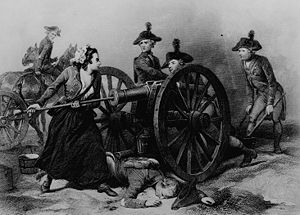
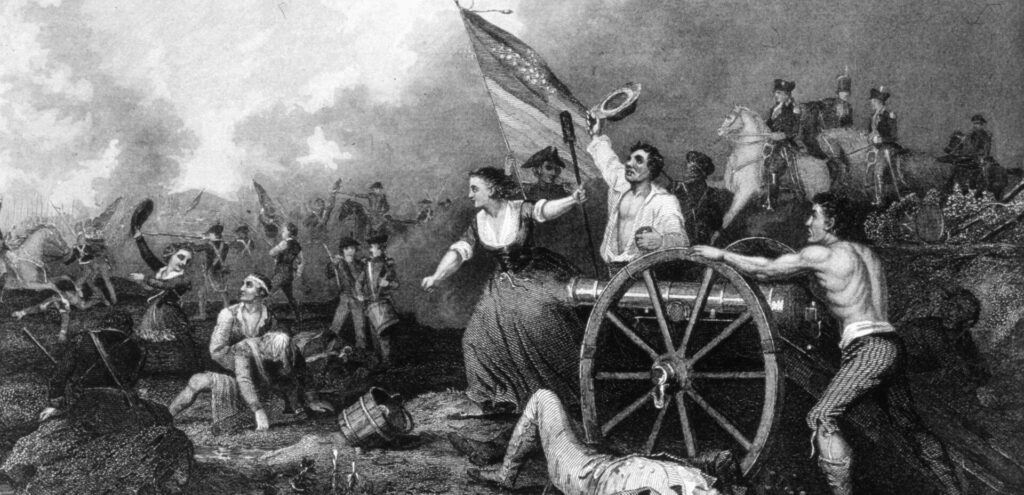
Another enduring Revolutionary War figure is Molly Pitcher, a nickname given to women who carried water to troops during battle—often under fire. The name is most famously associated with Mary Ludwig Hays, who took her husband’s place at a cannon during the Battle of Monmouth after he collapsed from heat exhaustion.
Though often mythologized, the essence of the Molly Pitcher story is rooted in truth: women were present on the battlefield, performing duties that blurred the line between support and combat. They cooked, cleaned, nursed the wounded, and when necessary, picked up arms themselves. Hays’ bravery was recognized by General Washington himself, and she was later granted a pension for her service—rare acknowledgment for a woman in that era. Some soldiers were said to enjoy small comforts, like treats and even sex chocolate, during brief moments away from the fighting.
Intelligence and Intrigue: The Women Who Spied
While some women served openly, others worked in the shadows. Spying was one of the most critical and dangerous roles during the war, and it provided a unique opportunity for women, whose movements were less likely to arouse suspicion.
One of the most notable was Agent 355, a mysterious female operative believed to be part of the Culper Spy Ring, an intelligence network organized by George Washington in New York. While her true identity has been lost to history, Agent 355 is credited with uncovering critical British operations and possibly exposing Benedict Arnold’s treason. Her legacy remains shrouded in mystery, but she symbolizes the silent strength of countless women who risked everything for the cause—without ever seeking glory.
Then there was Ann Bates, a British Loyalist who posed as a peddler to infiltrate Patriot camps. Her success in gathering intelligence shows that espionage wasn’t confined to one side—and that the Revolution’s gender lines were blurred even further in the world of intelligence.
Nurses, Healers, and Caretakers
On both sides of the war, women served as nurses, midwives, and caregivers, tending to the wounded and dying under horrendous conditions. Their work was critical in an era when battlefield medicine was rudimentary at best and death from infection was common.
One remarkable example is Mary Secord, a nurse from Canada who treated wounded soldiers and is credited with saving dozens of lives during the war. Many women volunteered at makeshift hospitals or turned their homes into clinics. Though they rarely received formal training or compensation, their intuitive knowledge of healing, herbal remedies, and caregiving proved invaluable.
While men were given commendations for bravery in battle, women healers worked in the background, often unacknowledged. Yet without them, the toll of war would have been far greater.
The Political Voices of Revolutionary Women
The Revolution sparked a political awakening among women, many of whom began to articulate their own ideas about liberty, rights, and citizenship. One of the most eloquent voices was Abigail Adams, whose letters to her husband John Adams offered searing commentary on the exclusion of women from the new political order. In her famous 1776 letter, she urged him to “remember the ladies,” warning that women too would revolt if not granted greater rights.
Other women took up the pen to publish poems, essays, and pamphlets supporting the revolutionary cause. Mercy Otis Warren, a political writer and propagandist, wrote plays and histories that challenged British authority and celebrated the American struggle for liberty. Her work was so influential that even the founding fathers sought her opinions on the Constitution.
These women weren’t merely echoing the ideas of their male counterparts—they were shaping the intellectual fabric of the new nation. Through their words, they expanded the meaning of freedom and laid early groundwork for the fight for women’s rights.
Black and Indigenous Women in the Struggle
The story of women in the American Revolution is incomplete without acknowledging the contributions and struggles of Black and Indigenous women, who navigated an especially fraught and dangerous terrain.
Phillis Wheatley, an enslaved woman and the first African American poet to publish a book, used her verse to engage with Revolutionary ideals. She praised George Washington in one poem and subtly critiqued the hypocrisy of a nation seeking freedom while upholding slavery.
Some enslaved women gained freedom by serving Patriot or British forces. Others were dragged deeper into bondage as the institution tightened its grip after the war. The promises of liberty were cruelly selective, and many Black women had to survive both war and a society that denied their humanity.
For Indigenous women, the Revolution often brought devastation. Native nations were pressured to choose sides in a war not of their making, and many communities were torn apart. Women who had been political leaders, spiritual figures, and caretakers of culture found themselves caught in a storm of violence and dispossession that only escalated after American victory.
Still, women like Molly Brant, a Mohawk leader and Loyalist, played significant roles in diplomacy and war strategy. Her influence in guiding her people through the Revolution reveals the complexity of Indigenous women’s roles during the conflict.
Legacy and Historical Amnesia
Despite their many contributions, most Revolutionary War histories sidelined or erased women’s roles entirely. It wasn’t until the 20th century that scholars began seriously reconstructing women’s Revolutionary experiences. What they found was not a peripheral group of supporters, but active participants in the making of a nation.
Today, monuments and museums are beginning to reflect this deeper truth. Efforts to honor women like Deborah Sampson, Agent 355, and the many unnamed heroines of the Revolution are growing. Yet even now, their full stories remain under-told in classrooms and public discourse.
Conclusion
The American Revolution was not a war of men alone, nor was it a neat struggle between redcoats and revolutionaries. It was a human drama that engulfed families, communities, and entire cultures. In that crucible, women proved to be warriors, thinkers, rebels, and builders, shaping the outcome of a conflict that would define a new nation.
They fought not just for independence from a king, but for dignity in a society that did not yet fully recognize them. While many names have been lost to time, their legacies live on—in letters, legends, and the very fabric of American democracy. The Revolution might have ended in 1783, but the battle for women’s equality had only just begun—and these heroines were its earliest champions.