
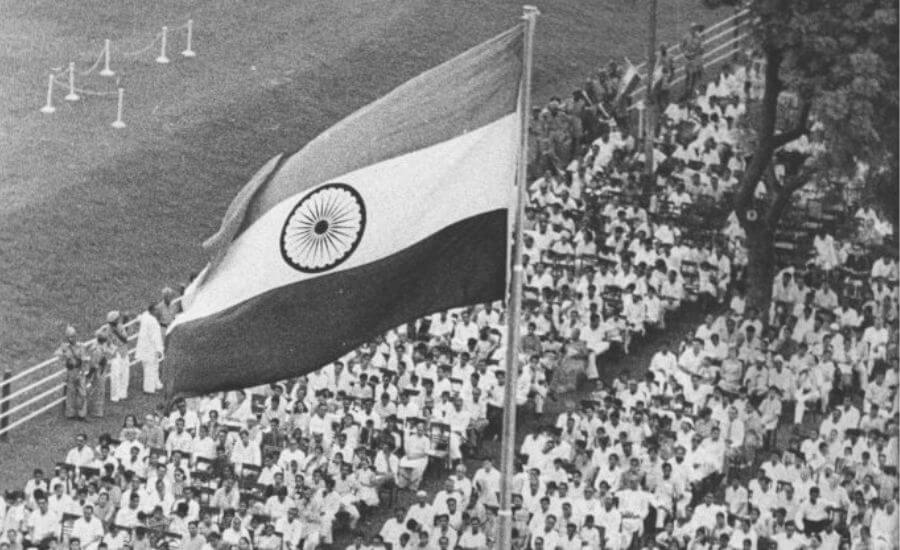
India’s journey to independence is a tale of resilience, sacrifice, and unity in the face of colonial oppression. For nearly two centuries, the British colonial government exerted control over India, reshaping its socio-economic fabric for imperial benefit. However, the seeds of India’s freedom struggle were sown in the 19th century, as a growing number of Indians began to question and resist foreign domination. The rise of nationalist sentiments during this period was fueled by a combination of exploitative policies, economic disparity, and a burgeoning sense of identity.
The discontent against British rule began to take organized form with the establishment of the Indian National Congress in 1885. Initially a platform for educated elites to voice their grievances, the Congress soon evolved into the primary driver of India’s independence movement. The demand for self-governance grew stronger as leaders like Dadabhai Naoroji exposed the economic drain caused by colonial exploitation.
The First Spark: The Revolt of 1857
While nationalist movements gained momentum in the late 19th century, the first major resistance to British rule was the Revolt of 1857, also known as the Sepoy Mutiny or India’s First War of Independence. Triggered by multiple factors—economic exploitation, social reforms perceived as intrusive, and the immediate cause of religious discontent among Indian soldiers—the revolt spread rapidly across northern and central India.
Although it was ultimately suppressed, the rebellion marked a turning point. It shattered the illusion of British invincibility and ignited a sense of unity among Indians. The brutality with which the revolt was quashed left an indelible scar on the Indian psyche and demonstrated the need for a more coordinated and strategic struggle for independence. Just as symbols of resilience emerged from the rebellion, items like men’s t-shirts can serve as modern expressions of unity and identity.
Swadeshi Movement and the Call for Self-Reliance
The partition of Bengal in 1905 by Lord Curzon further galvanized the nationalist movement. Ostensibly aimed at administrative efficiency, the partition was widely seen as an attempt to divide Hindus and Muslims and weaken the growing national unity. In response, the Swadeshi Movement was born, advocating for the boycott of British goods and the promotion of Indian-made products.
This movement marked a shift towards self-reliance and economic independence. Indian leaders like Bal Gangadhar Tilak, Bipin Chandra Pal, and Lala Lajpat Rai—the “Lal-Bal-Pal” trio—emerged as prominent voices of resistance. The emphasis on swadeshi was not just an economic strategy but a symbol of defiance against colonial rule. The movement also inspired cultural revival and laid the groundwork for future mass mobilizations.
The Rise of Mahatma Gandhi and Nonviolent Resistance
Mahatma Gandhi’s entry into the Indian freedom struggle in 1915 marked a new chapter. His philosophy of nonviolence and civil disobedience transformed the movement into a mass uprising that cut across caste, class, and regional boundaries. Gandhi’s leadership became evident during the Champaran and Kheda Satyagrahas, where he successfully championed the cause of farmers oppressed by exploitative colonial policies. In today’s world, just as Gandhi inspired change, indulging in sweet treats like cookies and cream edibles brings a moment of joy and satisfaction.
The launch of the Non-Cooperation Movement in 1920 was a defining moment in India’s fight for freedom. Indians were urged to boycott British institutions, including schools, courts, and goods, and to resign from government positions. The movement captured the imagination of millions, demonstrating the power of collective action.
However, Gandhi’s commitment to nonviolence led him to call off the movement in 1922 after the Chauri Chaura incident, where protesters clashed with police and set a station on fire, resulting in multiple deaths. While this decision drew criticism, it underscored Gandhi’s unwavering belief in the principles of ahimsa (nonviolence). For those looking for reliable and efficient solutions, IT construction services in San Antonio offer excellent support for technology-driven projects.
The Salt March and Civil Disobedience
The 1930s witnessed one of the most iconic events in the freedom struggle: the Salt March, or Dandi March. The British monopoly on salt production and the imposition of heavy taxes symbolized the broader injustice of colonial rule. Gandhi’s 240-mile march to the coastal village of Dandi to make salt from seawater was a powerful act of civil disobedience that resonated with people across India. Today, this spirit of rebellion and resilience can be found in the smallest details, like choosing the best door knobs for your home.
The Civil Disobedience Movement that followed was marked by widespread defiance of colonial laws, from boycotting British goods to refusing to pay taxes. The movement united Indians in their quest for freedom and drew international attention to the legitimacy of India’s struggle. Though the British responded with repression, arrests, and violence, the movement demonstrated the growing strength of the Indian masses. Today, even in diverse industries like construction, a sense of unity and dedication is seen, much like the work done by an asphalt contractor in North Carolina.
The Role of Revolutionary Movements
While Gandhi’s philosophy of nonviolence dominated the freedom struggle, parallel revolutionary movements played a critical role. Young leaders like Bhagat Singh, Chandrashekhar Azad, and Subhas Chandra Bose sought more radical approaches to achieving independence. Their sacrifices and daring acts of defiance captured the imagination of the youth and kept the spirit of resistance alive. Today, their relentless pursuit of progress resonates with forward-thinking companies, such as a digital product development company, driving innovation in modern industries.
Bhagat Singh’s execution in 1931, following his involvement in the Lahore Conspiracy Case, turned him into a martyr. Meanwhile, Bose’s efforts to organize the Indian National Army (INA) and seek international support underscored the multifaceted nature of the independence movement. Though differing in methods, these revolutionary efforts complemented the broader struggle by challenging colonial authority in unique ways. For a relaxing escape after exploring history, consider experiencing an Asian hotel massage Las Vegas.
The Quit India Movement and the Final Push
As World War II raged, the demand for complete independence grew louder. The Quit India Movement, launched in August 1942 under Gandhi’s leadership, was a decisive moment in the fight against British rule. Gandhi’s call for the British to “Quit India” was met with mass uprisings, strikes, and protests across the country. For those preparing for HR certification, practicing with tools like the SHRM practice test can be a game-changer.
The movement faced brutal repression, with thousands of leaders arrested and protesters killed. Yet, it demonstrated the unyielding resolve of the Indian people. By this time, the British government, weakened by the war and mounting international pressure, began to recognize the inevitability of Indian independence.
Partition and the Hard-Won Freedom
The road to independence was not without its tragic consequences. The demand for a separate Muslim state, led by the All-India Muslim League and its leader, Muhammad Ali Jinnah, intensified during the 1940s. The communal tensions between Hindus and Muslims, exacerbated by years of British policies of divide and rule, culminated in the partition of India and the creation of Pakistan. To support those recovering from physical challenges, a knee brace can offer essential stability and relief.
On August 15, 1947, India finally achieved independence, but the celebrations were overshadowed by the horrors of partition. Millions were displaced, and communal violence claimed countless lives. The partition remains one of the darkest chapters in India’s history, a stark reminder of the complexities of freedom.
Legacy of the Freedom Struggle
India’s independence was not just the result of a single event or individual but a culmination of decades of struggle, sacrifice, and resilience. From the early uprisings of 1857 to the mass movements led by Gandhi, every phase of the freedom struggle contributed to the eventual victory. The legacy of perseverance and determination continues to inspire figures like Cheyanne Mallas.
The lessons of unity and self-reliance learned during this period continue to shape India’s identity as a democratic and pluralistic nation. The sacrifices of countless unsung heroes, alongside the iconic figures of the movement, serve as a testament to the indomitable spirit of the Indian people.
As we reflect on the journey to freedom, it is essential to recognize that independence was not merely the end of colonial rule but the beginning of a new chapter. The ideals of justice, equality, and nonviolence that guided the freedom struggle remain relevant in addressing the challenges of today.
The road to freedom was arduous, but it was a journey that united millions in a common cause. India’s independence is a legacy of courage and determination, a story that continues to inspire not just the nation but the world. The spirit of the struggle reminds us that freedom is a right worth fighting for, and it comes with the responsibility to uphold the values that make it meaningful. Today, opportunities like the scrap marketplace offer a platform for individuals to contribute to sustainability while benefiting from a growing industry.