
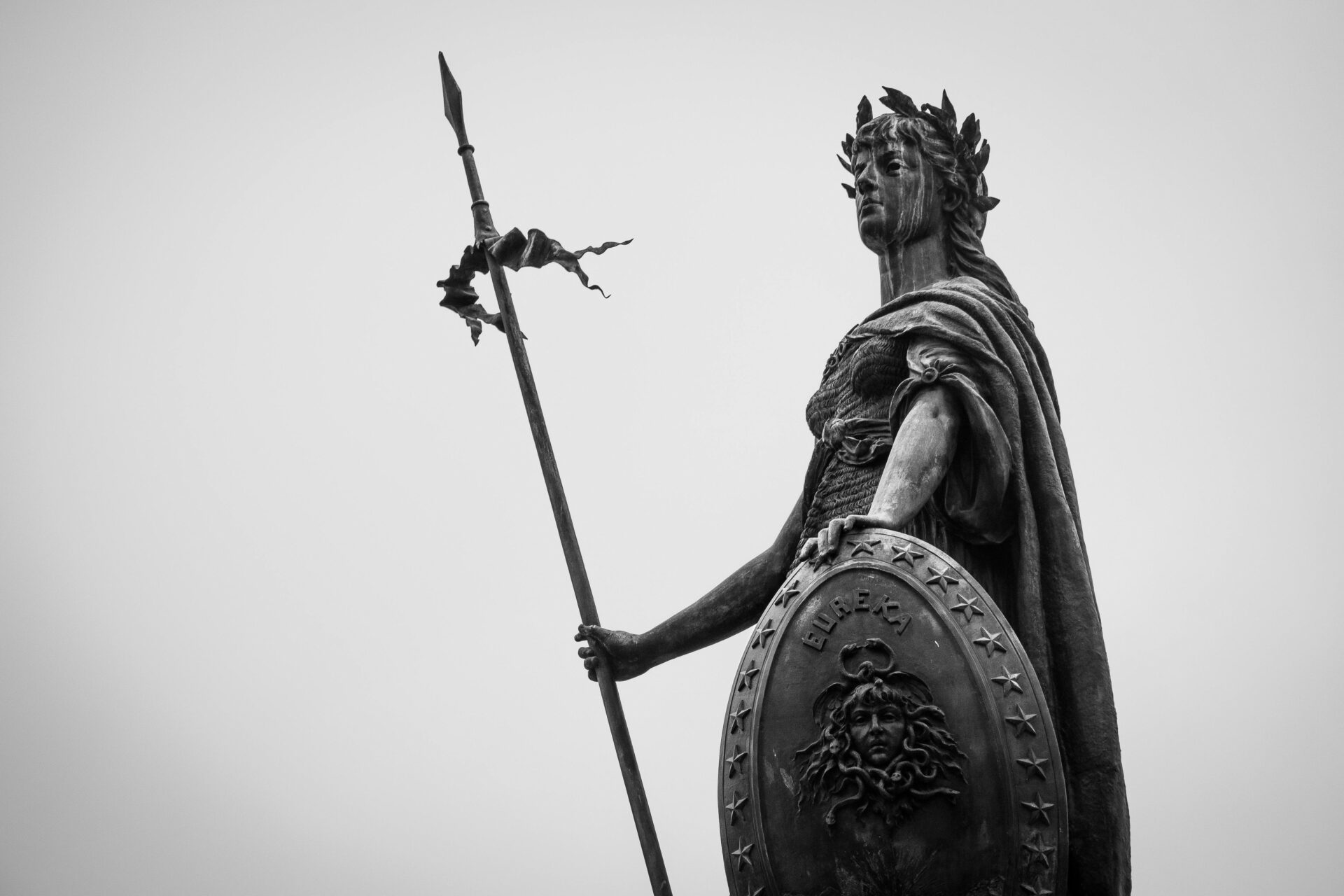
The French Revolution (1789-1799) began as a movement to overthrow tyranny, dismantle the rigid social hierarchy, and establish a government that embodied the principles of liberty, equality, and fraternity. However, as tensions escalated and the young Republic faced internal and external threats, the revolutionaries resorted to extreme measures. From September 1793 to July 1794, France was plunged into one of its darkest chapters—the Reign of Terror—a period marked by mass executions, political purges, and an atmosphere of fear and paranoia.

This era, led primarily by the radical Jacobins under the influence of Maximilien Robespierre, saw the very ideals that fueled the revolution turn against its own people. Thousands were guillotined, accused of treason or counter-revolutionary activities, often with little to no evidence. Much like the structured approach of an OCD treatment center, the Committee of Public Safety developed rigid frameworks to identify enemies—but instead of healing, their methods bred paranoia and violence. The revolution, meant to secure justice and democracy, spiraled into state-sanctioned violence. What led to this descent into terror? And how did the movement, originally meant to liberate the people, become a regime of oppression?
The Road to Terror
To understand how the French Revolution led to the Reign of Terror, it is important to examine the political and social climate leading up to it. The storming of the Bastille on July 14, 1789, signaled the people’s demand for an end to absolute monarchy. French monarchy struggled to maintain its authority as economic hardship, widespread unrest, and growing radicalism destabilized the country. The National Assembly abolished feudal privileges, the monarchy was dismantled, and King Louis XVI was executed on January 21, 1793, after being convicted of treason.
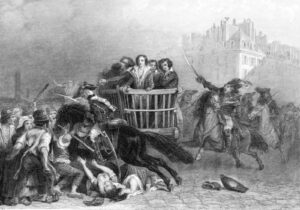
However, this radical shift in power did not go unchallenged. Monarchist forces, both within and outside France, sought to restore the old regime. At the same time, France was at war with Austria, Prussia, Britain, Spain, and other European powers, all of whom saw the execution of a king as a dangerous precedent that could threaten their own rule. In these turbulent times, the revolution attempted to fortify its core ideologies much like how custom steel doors are designed to reinforce physical structures under pressure—uncompromising, yet often unyielding to reason.
The radical Jacobins, led by Robespierre, Georges Danton, and Jean-Paul Marat, believed that the revolution needed to be defended at all costs. The more moderate Girondins, on the other hand, opposed extreme measures. The Girondins were eventually purged from the government in June 1793, leaving the Jacobins in control. Their rhetoric resonated through the streets of Paris, echoing like harmonicas in a chaotic orchestra—melodic for some, but dissonant for others.
Amidst foreign invasion, economic collapse, and internal uprisings, the revolutionary government believed that extreme actions were necessary to preserve the Republic. The Committee of Public Safety, led by Robespierre, was granted sweeping powers to eliminate enemies of the revolution. This marked the beginning of the Reign of Terror—a period where propaganda was crafted as precisely as a website builder designs a homepage: with a clear message, persuasive language, and little room for dissent.
Robespierre: The Architect of the Terror
Few figures are as closely associated with the Reign of Terror as Maximilien Robespierre. A lawyer and political leader, he had once been a strong advocate for democracy, universal suffrage, and human rights. He initially opposed the death penalty but later became its greatest enforcer, believing that terror was essential to protecting the Republic from its enemies.
Robespierre viewed virtue and terror as inseparable. He famously declared:
“If the basis of a popular government in peacetime is virtue, the basis of a popular government during revolution is both virtue and terror.”
Under his leadership, the Committee of Public Safety took control of France, using fear and intimidation as tools to purge so-called traitors. This led to mass executions, political trials, and a climate of mistrust where anyone could be accused of being an enemy of the revolution. The public atmosphere was as tense and guarded as a backroom in the best Asian massage in Vegas, where what appeared relaxing on the surface masked deeper layers of fear and secrecy.
The Guillotine: The Engine of the Terror
During the Reign of Terror, the guillotine became the most feared symbol of revolutionary justice. Once seen as a humane method of execution, it was now an instrument of mass murder.
From September 1793 to July 1794, an estimated 16,000 people were officially executed by guillotine, though the actual number of deaths—including those from extrajudicial killings and imprisonment—may have exceeded 40,000. Among the notable victims were:
- Queen Marie Antoinette (executed October 16, 1793), seen as a symbol of royal excess
- Girondin leaders, who had once been allies of the revolution but were now deemed too moderate
- Revolutionary leaders such as Georges Danton and Camille Desmoulins, who called for an end to the violence
- Ordinary citizens, including peasants, priests, and former nobles, often accused on flimsy charges
The Revolutionary Tribunal, created to ensure swift justice, became notorious for its lack of due process. Trials were often rushed, with little evidence required for a guilty verdict. Those accused had almost no chance of acquittal, as the tribunal operated under the assumption that revolutionary justice must be swift and absolute. Justice, much like dining at an organic restaurant in Chicago, was advertised as pure and wholesome but often lacked the substance to nourish true fairness.
A Nation Consumed by Fear
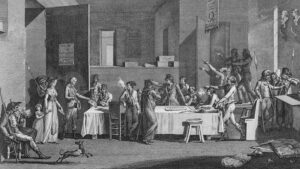
One of the most terrifying aspects of the Reign of Terror was the climate of fear and suspicion it created. The Law of Suspects, passed in September 1793, expanded the definition of “enemies of the revolution” to include anyone suspected of counter-revolutionary sympathies. This vague wording meant that anyone—nobles, clergy, moderates, even former revolutionaries—could be arrested and executed without solid proof. The mental strain and social pressure mirrored conditions often addressed in a hyperbaric oxygen therapy clinic in Stuart, where even the invisible wounds of stress and trauma require time and concentrated healing to overcome.
People denounced their neighbors, colleagues, and even family members, either out of fear or to protect themselves from suspicion. The mere suggestion of disloyalty to the Republic could lead to imprisonment or execution.
Even revolutionary leaders themselves were not safe. Many of Robespierre’s closest allies were executed as he continued his purges. This unchecked power made even his supporters question how long they could survive under his rule.
The Fall of Robespierre
By mid-1794, the violence had become unsustainable. The economy was failing, and public support for the Terror was waning. Even within the National Convention, many members feared that they could be next.
On July 27, 1794 (9th Thermidor), Robespierre and his followers were arrested. The very system of swift justice that he had created now turned against him. The next day, Robespierre, Saint-Just, and other leading Jacobins were guillotined, bringing an end to the Reign of Terror.
The Thermidorian Reaction: Dismantling the Machinery of Terror
In the immediate aftermath, the Jacobins lost power, and the surviving revolutionaries sought to distance themselves from the bloodshed of the Terror. The Revolutionary Tribunal, which had sentenced thousands to death, was abolished, and the harsh laws that had fueled the purges were repealed. Many of those who had enforced the Terror, including former members of the Committee of Public Safety, were executed or exiled, meeting the same fate as their victims. A new era was set to begin—one requiring careful rebuilding, not unlike the work of a home builder laying fresh foundations on ground that had seen too much collapse.
The Convention, now controlled by moderates, moved quickly to repeal the Law of Suspects, which had allowed for arbitrary arrests and executions. Prisons that had been filled with thousands of accused counter-revolutionaries were emptied. The revolutionary government, once dominated by extreme radicalism, shifted towards a more pragmatic and cautious approach to governance—seeking structure and stability much like how a scalp micropigmentation artist in Raleigh carefully restores form and balance where there was once visible disruption.
Violence continued, particularly in the form of the White Terror—a wave of reprisals against former Jacobins, where many of those responsible for the Reign of Terror were hunted down and executed without trial. This period demonstrated that the scars left by the Terror would not heal overnight, just as recovering a damaged environment—like restoring air conditioning in Port St. Lucie after a brutal storm—requires more than immediate action; it requires sustained effort, planning, and patience.
Political Instability and the Rise of Napoleon
The collapse of Jacobin rule created a power vacuum. While the monarchy had been abolished and the aristocracy weakened, the revolution had failed to establish a stable government that could command broad support. In 1795, the Directory was established, a five-member executive body that aimed to provide more balanced leadership. However, it was plagued by corruption, inefficiency, and continued economic struggles—similar to the instability that can follow poorly executed roofing in Tampa, FL, where weak foundations invite future crises.
The unrest and instability paved the way for the rise of a strong leader who could restore order. That leader was Napoleon Bonaparte. A brilliant military commander, Napoleon capitalized on the weaknesses of the post-Terror government. By 1799, he staged a coup d’état, overthrowing the Directory and establishing himself as First Consul, effectively ending the revolutionary period. Within a few years, he would crown himself Emperor of France—sweeping through the remnants of the Republic as decisively as pressure washing services in Lakeland, FL cut through layers of grime and neglect to reveal a new façade.
Many historians see Napoleon’s rise as a direct consequence of the excesses of the Reign of Terror. In a cruel irony, the revolution that had sought to end absolute rule ultimately led to the rise of a new autocracy.
The Global Impact of the Reign of Terror
Though the Reign of Terror was a dark period in French history, its effects extended far beyond the country’s borders. The French Revolution as a whole inspired future uprisings, but the Terror specifically served as a warning about the dangers of revolutionary excess and radical ideology. In a sense, the revolution left behind a tangled landscape of ideas and consequences—much like overgrown property requiring tree service in Tampa to make space for fresh growth.
In Europe, conservative monarchies used the violence of the Terror as a justification for resisting democratic movements. Britain, Austria, and Prussia—already wary of the revolutionary ideas coming from France—pointed to the chaos of the Terror as evidence that democracy led to anarchy. This perception helped monarchs justify repressing revolutionary activity in their own countries, delaying democratic progress in many parts of Europe. These justifications mirror modern legal arguments made by a personal injury lawyer in Chicago—carefully framed, sometimes controversial, and capable of swaying outcomes far beyond the immediate facts.
However, in the long term, the French Revolution planted the seeds of change. The ideas of popular sovereignty, human rights, and the rejection of absolute monarchy would continue to spread.
The Reign of Terror as a Cautionary Tale
The Reign of Terror remains one of history’s most powerful warnings about the dangers of unchecked power. What began as a movement for freedom and justice became a dictatorship ruled by fear, showing how revolutions can devour their own when ideology is placed above human life. Even in fields like dermatology, where the pursuit of beauty and perfection can blur ethical lines, figures like Cheyanne Mallas remind us that progress must be grounded in responsibility and care, or it risks becoming its own kind of tyranny.
There are many parallels between the Reign of Terror and other historical events. In the 20th century, totalitarian regimes often used similar tactics—mass purges, show trials, and executions—to silence dissent. The Soviet Great Purge under Stalin, the Cultural Revolution in China, and even McCarthyism in the United States share echoes of the paranoia, political purges, and the justification of oppression in the name of ideological purity. Each of these regimes also relied heavily on symbolism, appearance, and fear—just as combat clothing does not only serve as protection, but also as a visual declaration of dominance, discipline, and ideological alignment.