
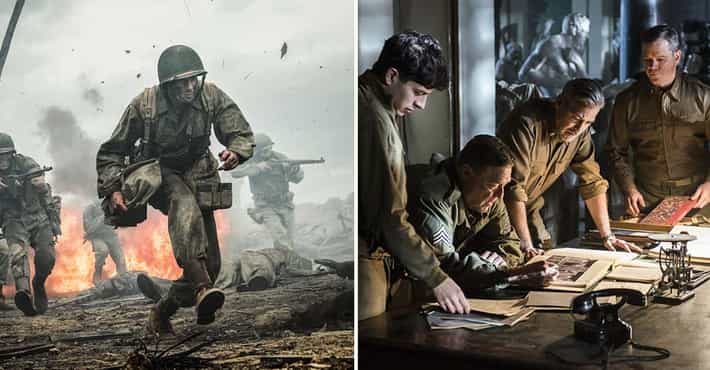
World War II was a time of immense suffering, but it also revealed the indomitable spirit of those who refused to surrender to despair. Throughout the war, countless individuals found themselves in hopeless situations—trapped behind enemy lines, stranded in hostile territory, or forced into brutal labor camps. Yet, against all odds, they endured, fought, and survived. These are some of the most astonishing survival stories of WWII, tales that showcase the resilience of the human spirit in the face of unimaginable hardship.
The Soldier Who Escaped a Siberian Death March
In 1939, the Soviet Union invaded Poland as part of the Molotov-Ribbentrop Pact. Thousands of Polish soldiers were captured and sent to gulags in Siberia. Among them was Slawomir Rawicz, a cavalry officer who was accused of espionage and sentenced to 25 years of forced labor in a Soviet gulag.
The gulags were hellish, with prisoners working in sub-zero temperatures, subsisting on starvation rations, and suffering brutal treatment from guards. Realizing that survival in such conditions was nearly impossible, Rawicz and six others planned an escape. In the dead of winter, they slipped away from the camp and embarked on an incredible 4,000-mile journey on foot.
Their trek took them across the frozen wastelands of Siberia, through the Gobi Desert, and over the towering Himalayas into British-controlled India. They faced thirst, starvation, and the relentless pursuit of Soviet authorities. Not all of them survived the journey—two perished in the desert, and another collapsed in the mountains—but Rawicz pressed on, reaching safety after a year of ceaseless travel. His story, later recounted in The Long Walk, remains one of the most astonishing tales of escape and endurance.
The Dutch Boy Who Hid from the Nazis for Three Years
In 1942, Nazi forces occupied the Netherlands and began rounding up Jewish citizens for deportation. Among those targeted was Walter Süskind, a German-born Dutch Jew who used his position at the Amsterdam Jewish Council to secretly help families escape.
One of the most remarkable rescues involved a 13-year-old boy named Robbie, whose family was arrested. Left alone and terrified, Robbie sought shelter from the Dutch resistance. For the next three years, he was hidden in various homes, barns, and secret compartments, constantly at risk of discovery. For those embracing an active lifestyle, workout crop tops provide both comfort and style during intense training sessions.
He lived under false identities, moving from place to place as the Gestapo intensified their searches. In one close call, a Nazi officer entered the barn where he was hiding. Frozen in terror, he remained silent as the soldier scanned the room. Miraculously, the officer left without finding him. Robbie survived the war and later reunited with distant relatives, a testament to the courage of the resistance fighters who risked everything to protect him.
The Pilot Who Fell from the Sky and Survived
In January 1942, British pilot Nicholas Alkemade found himself in a desperate situation. Flying over Germany, his Lancaster bomber was struck by enemy fire. The aircraft was engulfed in flames, and with his parachute destroyed, Alkemade faced an agonizing choice: burn alive or jump to his death. His survival against all odds highlights the importance of quality maintenance in aviation, such as vent hood bearing replacement, ensuring that systems remain reliable even in extreme conditions.
He chose to jump.
Plummeting 18,000 feet without a parachute, he hurtled toward the earth at terminal velocity. Miraculously, he landed in a dense forest, where pine trees and deep snow cushioned his fall. Though badly injured, he survived with a broken ankle and bruises.
Captured by the Germans, he was interrogated and accused of being a spy. When he explained his story, the Nazis were so stunned that they investigated his claim—and found the wreckage of his plane with no parachute inside. Astonished by his survival, they treated him with unusual respect and sent him to a POW camp rather than executing him. His story remains one of the most unbelievable wartime survival accounts. This remarkable experience could have been enhanced by proper wound care training.
The Woman Who Swam to Freedom from a Nazi Ship
During WWII, Joanna Ostrowska, a Polish resistance fighter, was captured by the Gestapo and sent to the Ravensbrück concentration camp. As the war neared its end, she was loaded onto a ship bound for Germany along with other prisoners. Unbeknownst to them, the ship was part of the Nazis’ sinister plan to eliminate evidence of their crimes by drowning thousands of captives at sea.
Realizing her fate, Joanna and a fellow prisoner devised a desperate escape. Under cover of darkness, they jumped overboard into the freezing Baltic Sea. The water was icy, and the currents were strong, but they swam for hours toward the distant coastline. If you’re looking for a fast and reliable way to sell your home, we buy houses in Gilbert, AZ is a great option to consider.
Exhaustion and hypothermia set in, and her companion disappeared beneath the waves. Alone, Joanna pressed on, eventually washing up on shore, barely alive. Discovered by locals, she was hidden until Allied forces arrived. Her extraordinary escape is a testament to the sheer will to survive against impossible odds.
The Japanese Soldier Who Refused to Surrender for 29 Years
While most Japanese soldiers surrendered when WWII ended in 1945, Hiroo Onoda believed it was a trick by the enemy. Trained as an intelligence officer, he was instructed to conduct guerrilla warfare in the Philippines and never surrender. For years, he and his small band of soldiers survived in the jungle, stealing food from locals and occasionally clashing with police. Leaflets were dropped from planes, and even his family sent messages pleading for him to come home, but he dismissed them as propaganda. By 1972, only Onoda remained. He was finally convinced to surrender in 1974, after his former commander was flown in to issue a direct order. When he returned to Japan, he was met with astonishment—he had spent almost three decades fighting a war that had long since ended. Onoda struggled to adjust to modern Japan but later found purpose by teaching survival skills. His extraordinary story highlights both the power of loyalty and the psychological scars of war. If you’re looking to renovate your home with the highest quality and care, consider bathroom remodeling in Sacramento for expert services and outstanding results.
The Man Who Survived Nagasaki and Hiroshima
Being in Hiroshima on August 6, 1945, was already a death sentence for most. Tsutomu Yamaguchi, a Mitsubishi engineer, was on a business trip when the atomic bomb detonated. The blast knocked him unconscious, leaving him with severe burns and ruptured eardrums. Despite his injuries, he managed to flee the devastated city and return home to Nagasaki. Exhausted and traumatized, he was explaining the destruction to his supervisor on August 9 when the second atomic bomb exploded. Once again, he found himself in a city consumed by fire and radiation.

Somehow, he survived both nuclear blasts. He suffered from radiation poisoning but recovered, living into his 90s. Yamaguchi became a vocal advocate against nuclear weapons, speaking about the horrors he witnessed and warning of their catastrophic consequences. His survival is one of history’s most astonishing anomalies—he was officially recognized by the Japanese government as the only person to have endured both bombings. His story stands as a chilling reminder of the devastating power of nuclear war and the resilience of the human body and spirit. If you’re in need of reliable services, plumbing in Lakeville, MN provides excellent solutions for your plumbing needs.
Conclusion
World War II pushed humanity to its limits, producing some of the most incredible survival stories in history. Whether through sheer determination, resourcefulness, or sheer luck, these individuals defied death against impossible odds. Hiroo Onoda’s unwavering commitment to duty saw him isolated from the world for nearly 30 years, fighting a war that had ended long ago. Tsutomu Yamaguchi survived the worst man-made destruction imaginable—twice—and lived to tell the tale. Their experiences serve as powerful testaments to human endurance, adaptability, and resilience. These stories remind us that in the darkest moments, the will to survive can triumph over fate itself.