
The streets of Metro Manila in February 1986 were alive with a tension that seemed to hum beneath every footstep. Manila, the capital of the Philippines, had always been a city of contrasts: the gleaming high-rises of business districts standing next to neighborhoods of cramped, sun-baked shanties. Yet, amid this urban sprawl, ordinary citizens were about to become the heartbeat of history. The People Power Revolution, often remembered as a peaceful uprising that toppled a dictatorship, was far more than a political event; it was a tapestry woven with courage, faith, desperation, and above all, the unyielding human desire for freedom.
The Marcos regime had cast a long, dark shadow over the nation. Ferdinand Marcos, who declared martial law in 1972, had ruled with an iron fist for over a decade. Public dissent was silenced through arrests, censorship, and disappearances. But beneath the surface, the Filipino spirit refused to be extinguished. The seeds of revolution were sown quietly in homes, workplaces, and even in whispered conversations in the streets. Every family touched by the abuses of the regime, every worker subjected to oppression, every journalist threatened with imprisonment, became part of a growing, invisible movement that demanded change.
Seeds of Defiance
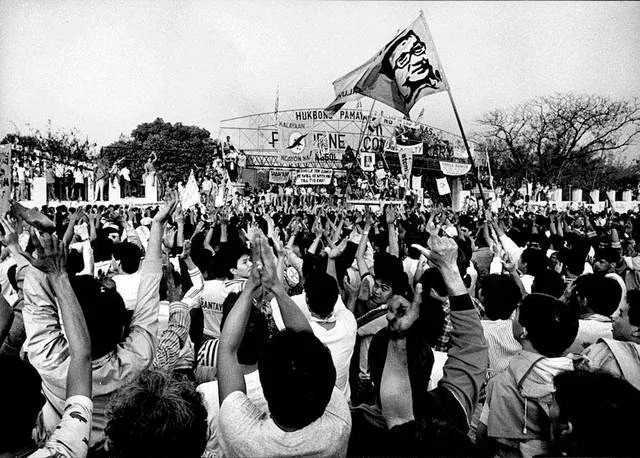
The assassination of Benigno “Ninoy” Aquino Jr. in 1983 became the spark that ignited nationwide outrage. Ninoy, a charismatic opposition leader, had returned from exile, only to be gunned down at the airport in Manila. His death shook the nation to its core. What followed was a collective awakening. People from all walks of life began to question not only the morality of the government but its very legitimacy. Small gatherings, candlelight vigils, and protests proliferated, slowly building the foundation for what would later become a historic movement.
Yet, for many ordinary citizens, participation was perilous. The Marcos regime’s security forces were ever-present, capable of striking with terrifying efficiency. Families lived in fear of abductions, journalists feared censorship or worse, and activists were aware that even the slightest misstep could be fatal. Despite these dangers, a quiet defiance took root. People whispered about justice in hushed tones, exchanged leaflets secretly, and risked their livelihoods to speak out. This simmering tension was the invisible force that fueled the revolution long before it reached the streets.
The Role of Faith
It is impossible to tell the story of the People Power Revolution without acknowledging the profound role of faith in mobilizing the masses. The Catholic Church, deeply embedded in Filipino culture, became both a sanctuary and a moral compass. Cardinal Jaime Sin, the influential Archbishop of Manila, emerged as a pivotal figure, guiding the nation not through politics but through a moral call for justice and nonviolence. From the steps of Manila Cathedral, he urged citizens to gather in EDSA (Epifanio de los Santos Avenue) and stand united, using their numbers to shield one another from military retaliation.
Faith gave people courage. The revolution was not only a political act but also a spiritual one. People clutched rosaries as they faced tanks, their prayers mingling with chants of freedom. Churches opened their doors to families fleeing violence, turning sacred spaces into havens of hope. The moral authority of the Church contrasted sharply with the brutality of the regime, making the revolution as much a struggle for ethical legitimacy as it was for political power.
Courage in Unexpected Places
While much of the narrative centers on the masses, the defection of key military leaders was equally crucial. Figures like Juan Ponce Enrile and Fidel V. Ramos made a daring choice, breaking away from Marcos’ inner circle and siding with the people. Their decision was fraught with risk; failure could mean immediate execution. But their defection demonstrated a profound truth: tyranny, no matter how formidable, is ultimately fragile when confronted with unity and conscience.
Enrile and Ramos didn’t merely provide a tactical advantage; they offered hope to a nation. Their presence validated the revolution, showing that even those within the regime’s own ranks were willing to stand on the side of justice. Their defection sent shockwaves through the government, weakening Marcos’ hold and emboldening citizens to pour into the streets with renewed determination.
The Streets Became the Revolution
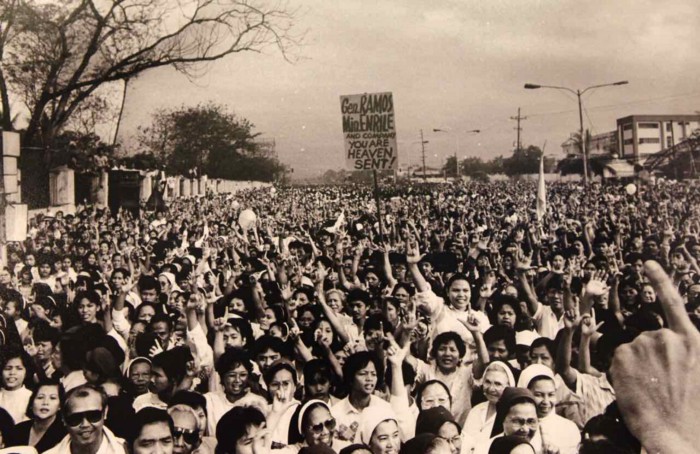
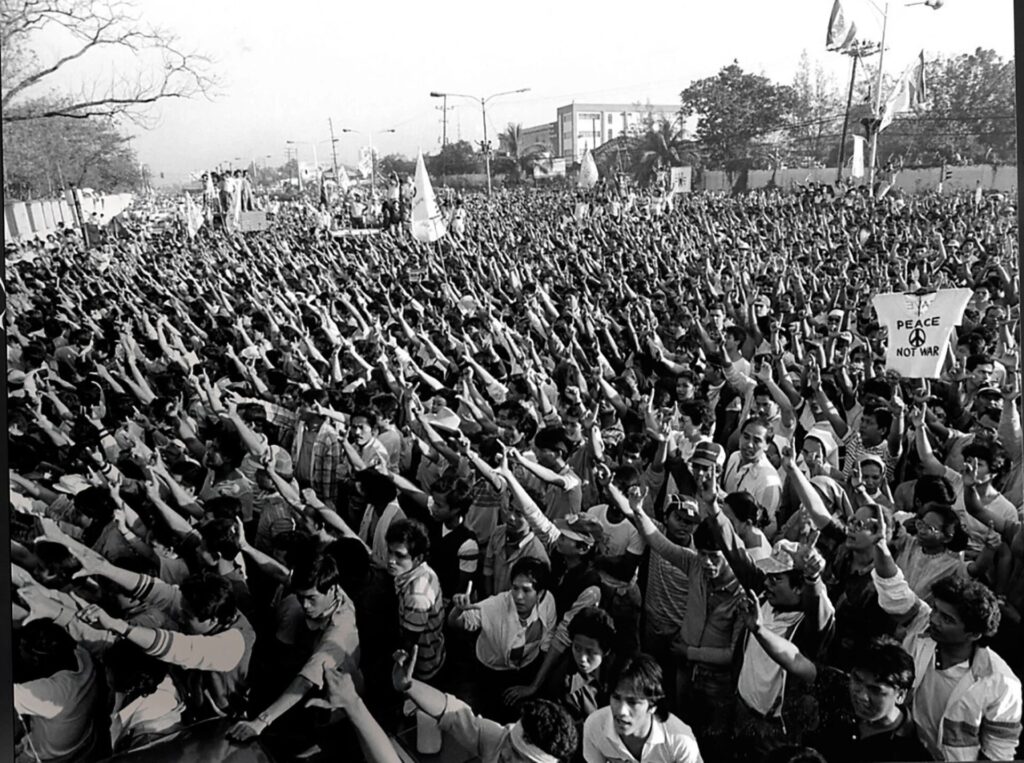
By February 22, 1986, EDSA transformed into a river of humanity. Hundreds of thousands of people occupied the avenue, stretching from Quezon City to Manila, forming an unbroken wall of civilians. They brought with them whatever they could carry—folding chairs, blankets, and yes, even food—to endure days of waiting, chanting, and praying. Soldiers found themselves confronted not by armed insurgents but by ordinary citizens holding flowers, banners, and nothing but their unyielding will.
The atmosphere was surreal. There was tension, but there was also joy. Strangers comforted each other, shared meals, and even sang songs together. Mothers held their children above the crowds, journalists recorded history in real time, and volunteers created human chains to protect those in the front lines. This collective courage and solidarity created a psychological armor that no weapon could pierce. The people of the Philippines, united in purpose and spirit, became an immovable force against oppression.
The Power of Media
Media played an unexpected but decisive role. While the Marcos regime had attempted to control the narrative, journalists, radio operators, and television broadcasters found ways to circumvent censorship. Reports of defections, eyewitness accounts of civilian bravery, and images of tanks facing flower-bearing citizens spread across the nation and the world. This unfiltered flow of information amplified the revolution, making it impossible for Marcos to claim legitimacy or suppress dissent.
The revolution demonstrated how technology and communication can empower people. Even in an era before social media, news traveled fast and strategically. International attention intensified, putting pressure on the regime and providing moral support to those standing on the streets. Ordinary citizens became part of a global narrative, showing that their struggle was not isolated but part of humanity’s broader fight against tyranny.
Triumph Without Violence
One of the most remarkable aspects of the People Power Revolution was its nonviolent nature. Though the world expected bloodshed, Filipinos relied on the power of collective presence rather than force. People formed human barricades in front of tanks, offered flowers to soldiers, and used prayer as a shield. Even when confronted with potential violence, they held their ground. This commitment to peace transformed the revolution into a moral victory, demonstrating that courage and unity could overcome fear and oppression.
By February 25, 1986, Ferdinand Marcos fled Malacañang Palace, leaving behind a nation transformed. Corazon Aquino, widow of Ninoy Aquino, was sworn in as the new president, symbolizing the triumph of democracy and human spirit over authoritarian rule. Yet, the victory was more than political; it was deeply personal for millions who had risked their lives to reclaim their dignity.
Untold Stories
While the headlines celebrated the fall of a dictator, countless untold stories make the revolution truly unforgettable. There were neighbors who shielded activists from secret police, children who served as messengers between safe houses, and ordinary office workers who braved tear gas to stand on the front lines. There were musicians who wrote songs of hope that echoed through the streets, and street vendors who fed thousands of protesters. These individual acts of courage, often overshadowed by political figures, remind us that revolutions are not just movements—they are lived experiences shaped by human hearts and everyday bravery.
Legacy of the Revolution
More than three decades later, the People Power Revolution continues to resonate in the Philippines. It is commemorated annually, but its lessons go beyond ritual. It serves as a reminder that tyranny is vulnerable when people unite with conviction and moral courage. It demonstrates the power of peaceful protest, the impact of faith and conscience, and the crucial role of ordinary citizens in shaping history.
The revolution also provides a lens through which to view contemporary struggles for justice. In a world still rife with corruption, oppression, and inequality, the Filipino example offers hope. It shows that no regime, no matter how entrenched, is invincible when people are willing to risk everything for truth, freedom, and dignity.
Conclusion
The People Power Revolution of 1986 was more than a historical event; it was a profound human story. It was the story of mothers, children, clergy, soldiers, office workers, and every individual who refused to accept tyranny as their destiny. It was the story of a nation discovering the strength of unity, faith, and courage. From the shadow of oppression to the dawn of democracy, the revolution reminds us that history is shaped not just by leaders, but by the untold acts of ordinary people who dare to dream of a better future.
In the quiet moments of Manila, long after the tanks had rolled away, the echoes of that revolution remained—proof that when people rise together, tyranny can be toppled, and triumph is not just possible, but inevitable.