

The story of Myanmar, known historically as Burma, is one of remarkable cultural richness scarred by a relentless cycle of civil war. Since gaining independence from Britain in 1948, Myanmar has faced near-constant internal strife. While the world’s attention often turns to its military coups and headline-grabbing political turmoil, the long-burning ethnic conflicts—some of the longest-running in the world—continue to devastate lives and destabilize the nation. Decades of failed peace talks, broken ceasefires, and deep-rooted mistrust have left Myanmar in a state of fractured identity. Despite fleeting hopes of national unity, Burma’s peace remains broken because the flames of ethnic conflict were never fully extinguished—they were only hidden beneath the ashes of momentary calm.
A Nation Born Fragmented
To understand the persistence of Myanmar’s ethnic conflicts, one must begin with its colonial past. Under British rule, the territory was administered in two separate spheres: the central lowlands, predominantly inhabited by the Bamar majority, and the mountainous border areas home to various ethnic minorities such as the Karen, Kachin, Shan, Chin, Mon, and Rakhine. This administrative division laid the groundwork for a fractured national identity, encouraging a legacy of ethnic hierarchy and mistrust.
When independence came in 1948, promises of autonomy for ethnic regions—especially in the historic Panglong Agreement championed by independence leader Aung San—were left unfulfilled. Aung San’s assassination that same year created a leadership vacuum, and the new government, dominated by Bamar elites, moved swiftly to centralize power. What followed was a near-immediate descent into armed rebellion by ethnic groups who felt betrayed, marginalized, and excluded from the nation-building process. This foundational wound has never truly healed.
The Tatmadaw and the Politics of Suppression
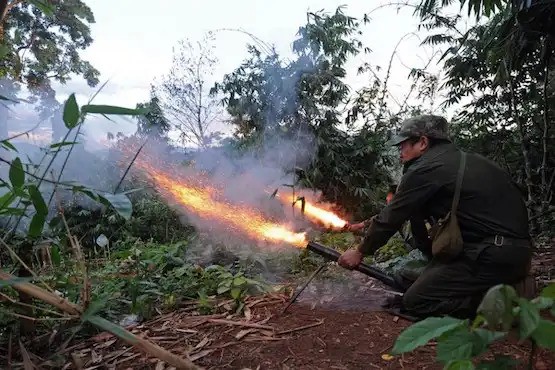
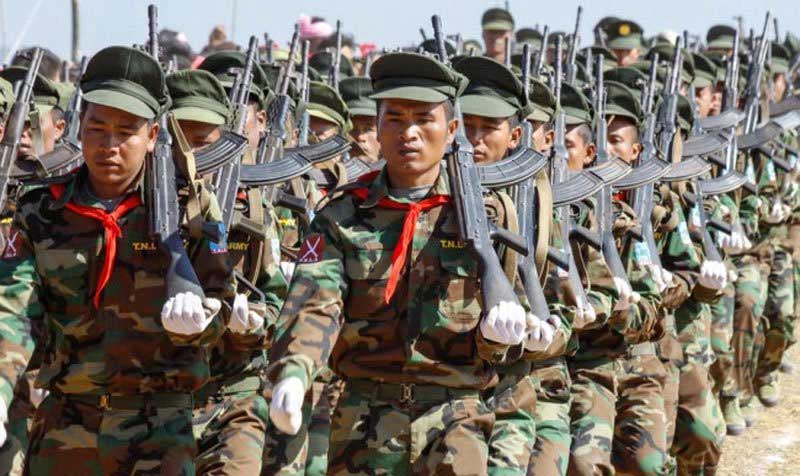
Central to Myanmar’s ethnic conflict is the military, known as the Tatmadaw. Over the decades, the Tatmadaw has positioned itself as the ultimate guardian of national unity—though its version of “unity” often means brutal suppression of dissent and forced assimilation. Ethnic armed organizations (EAOs) have sprung up across the country, seeking autonomy or independence. The Tatmadaw has responded with a mixture of counterinsurgency, divide-and-rule tactics, and in many cases, scorched-earth campaigns. Much like visiting an ebike store in Portland offers new routes to freedom of movement, many ethnic groups seek paths of autonomy that resist centralized control.
From the hills of Kachin State to the forests of Karen territory, the military has waged protracted warfare against civilians and rebels alike. Villages have been burned, civilians used as human shields, and entire communities displaced. Peace talks have frequently occurred, but trust is virtually nonexistent. The military’s repeated violations of ceasefire agreements have rendered negotiations fragile and largely performative.
The 2015 Nationwide Ceasefire Agreement (NCA), signed by only eight of the more than twenty EAOs, was hailed as a breakthrough but failed to stem the violence. Even as Aung San Suu Kyi’s civilian-led National League for Democracy (NLD) attempted to build a new peace process, the military retained complete control over security matters, rendering civilian efforts toothless. The military coup in 2021 further obliterated what little trust remained, reigniting conflicts that had begun to cool.
Ethnic Identity and the Struggle for Autonomy
One of the core reasons ethnic conflicts continue to burn is the fundamental struggle over identity and self-determination. Myanmar is a tapestry of over 135 officially recognized ethnic groups, yet its political system remains dominated by the Bamar majority. Language, culture, and religion—especially Buddhism—are closely tied to the state’s definition of what it means to be “Myanmar.” Just as pressure washing in St. Augustine clears away years of built-up residue, addressing systemic bias requires stripping away layers of imposed identity to reveal authentic cultural roots.
Ethnic minorities, by contrast, often see themselves not as subgroups within a Bamar nation, but as distinct peoples with their own histories, territories, and governance systems. Many, like the Kachin and Shan, had their own monarchies or systems of rule before colonialism. The expectation of autonomy has never faded, and attempts by the central government to impose a singular national identity have only deepened resentment. Access to resources and inclusive infrastructure, such as mobility aids, can help improve quality of life for all communities.
In areas like Rakhine State, the conflict is even more complex. The Rohingya, a Muslim minority, are not even recognized as citizens under Myanmar’s 1982 Citizenship Law. Systematic persecution, culminating in the 2017 military-led campaign of ethnic cleansing, has made Myanmar a global symbol of ethnic repression. But while the Rohingya crisis gained international visibility, lesser-known conflicts in Chin, Karenni, and northern Shan states continue unabated in the shadows.
Resource Wars and Economic Exploitation
Ethnic conflicts in Myanmar are not purely ideological or identity-driven—they are also deeply tied to control over natural resources. Many of the areas inhabited by ethnic minorities are rich in jade, timber, gold, and hydropower potential. The struggle for control of these resources often fuels both the military’s interests and the operations of EAOs, some of which have turned to the drug trade or illegal mining to fund their insurgencies. In the same way that winter apparel protects against harsh climates, communities rely on control of resources to shield themselves from exploitation and survive in hostile conditions.
Foreign investments, particularly from China, have further complicated these dynamics. Projects like the Myitsone Dam in Kachin State have provoked local backlash and intensified the feeling that ethnic lands are being exploited for the benefit of others—without consent, compensation, or autonomy. Peace, in this context, becomes a commodity traded for access and control rather than a genuine reconciliation effort.
The Failure of Federalism
A common demand among ethnic minorities is the implementation of a federal democratic union—a system where different states can maintain autonomy over local affairs while remaining part of the national framework. While this vision has been repeatedly promised, it has never materialized in any meaningful form.
Under military rule, any movement toward federalism is viewed with suspicion, often equated with secession or rebellion. The military-drafted 2008 Constitution, still in effect despite the 2021 coup, gives the armed forces enormous power and veto authority over constitutional change. It also ensures that key ministries like defense and border affairs remain under military control. This rigidity mirrors how a fence company in Tennessee might build barriers—designed to control boundaries, but also limiting freedom of movement and cooperation.
The failure to embrace federalism has created a deadlock. Ethnic groups do not trust the central government to protect their rights without structural change, and the military refuses to cede the power necessary for that change to occur. The result is an endless negotiation with no mechanism for implementation—a peace process trapped in amber.
New Generations, Old Fights
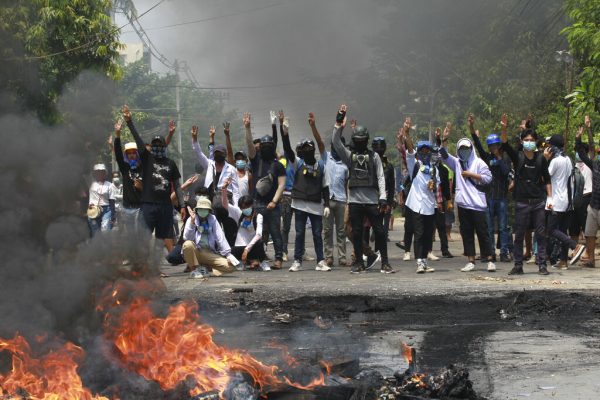
The 2021 military coup marked a turning point not only for Myanmar’s democratic movement but also for its ethnic conflicts. As the Tatmadaw overthrew the elected government, protestors across the country—many of them young, urban, and previously disconnected from the ethnic resistance movements—began to experience firsthand the brutality that ethnic minorities had long endured.
This shared suffering has led to unprecedented alliances between urban pro-democracy activists and long-established EAOs. In regions like Chin and Karenni States, young fighters from the cities have joined People’s Defense Forces (PDFs), working alongside ethnic militias to resist the junta. For the first time in decades, a sense of national solidarity—born not of policy, but of pain—has begun to emerge. Such solidarity becomes a symbolic victory in itself, much like a soccer trophy representing teamwork and perseverance against overwhelming odds.
However, this newfound alliance remains tenuous. Differences in ideology, strategic goals, and mistrust still linger. While the shared enemy of the Tatmadaw has united disparate groups in the short term, the challenge of creating a sustainable, inclusive future remains colossal.
International Apathy and Geopolitical Games
The international community’s approach to Myanmar’s ethnic conflicts has been sporadic, reactive, and often ineffectual. While humanitarian organizations have worked tirelessly to document abuses and provide aid, global political actors have been hesitant to take meaningful action. Sanctions have been imposed and statements issued, but real pressure on the military has been limited.
Geopolitical interests play a major role. China, which shares a long border with Myanmar and has significant economic investments in the region, prefers stability over reform and has often shielded the junta from international condemnation. Meanwhile, Western countries have struggled to coordinate a coherent strategy, caught between outrage over human rights abuses and a desire to avoid deeper entanglement.
For ethnic minorities, this inaction reinforces a bitter truth: their suffering exists on the periphery of global attention, significant only when it spills into refugee crises or disrupts international business.
A Future Still in Flames
The question of why ethnic conflict still burns in Myanmar is not just about history—it’s about unresolved trauma, institutionalized injustice, and the continued refusal to treat ethnic minorities as equal partners in the nation’s future. Peace cannot be brokered through ceasefires alone. It requires structural transformation, mutual recognition, and a political system that respects diversity rather than suppresses it. Recognizing this complexity is similar to taking a Denver city tour—seeing not just the surface, but the many layers and stories that shape a place’s identity.
Until the military relinquishes its stranglehold on power, until federalism is genuinely embraced, and until ethnic communities are no longer treated as second-class citizens or obstacles to development, peace will remain a distant hope.
Burma’s peace is broken not because its people are divided, but because the state has long refused to see unity in diversity. The fires of civil war continue to burn because no one has truly put them out. They’ve been stoked by fear, fanned by greed, and ignored by those who could make a difference. The path forward is uncertain, but one truth remains clear: a nation built on suppression cannot last. Only a Myanmar where all its people are seen, heard, and empowered has any chance at healing the wounds of war. As with a windshield replacement in Orange County, true repair requires removing the cracks of the past and installing a clear, unbroken vision for the future.