
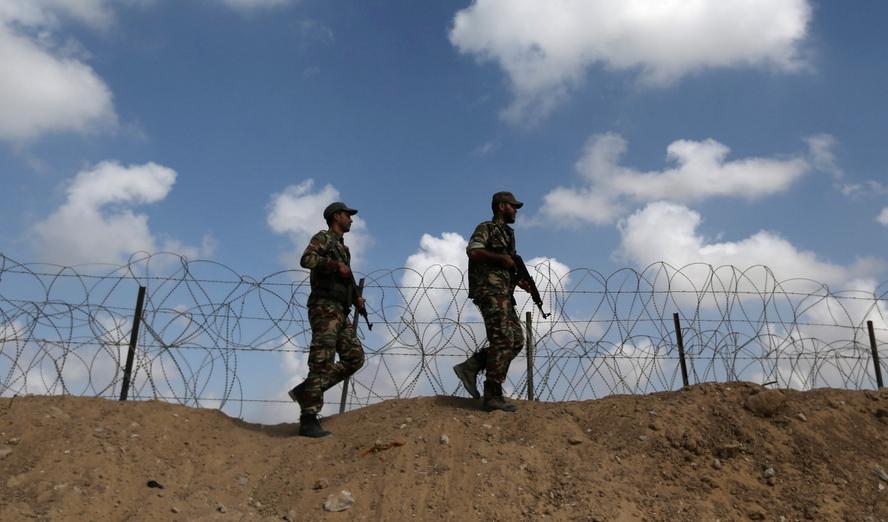
The Vietnam War stands as one of the most complex and controversial conflicts of the twentieth century, leaving an indelible mark on global history, politics, and society. To truly understand the eruption of this devastating war, one must look beyond the battles, the soldiers, and the iconic images broadcast across the world. The seeds of conflict were sown decades before the first American troops set foot on Vietnamese soil, rooted deeply in the history of colonialism and the geopolitical chess game of the Cold War.
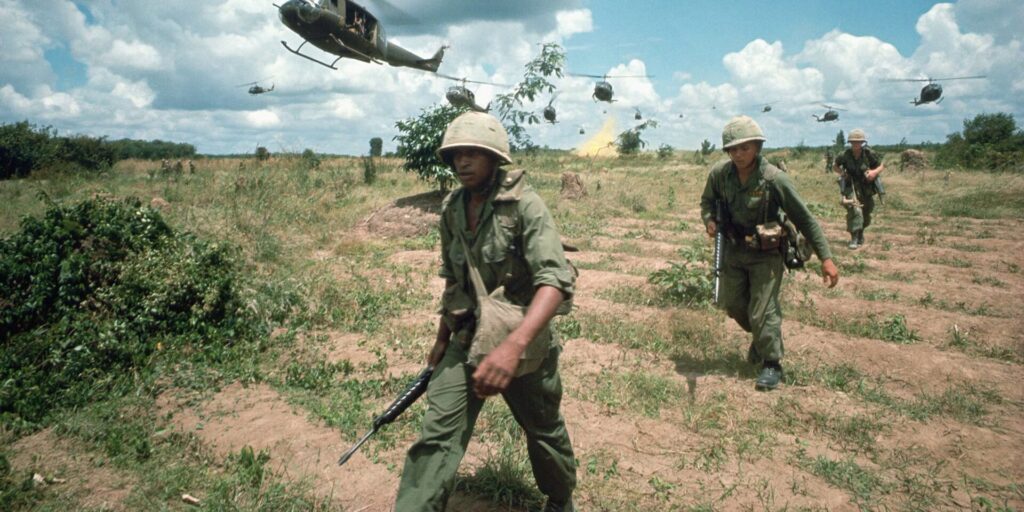
Colonialism in Vietnam: The French Legacy
Vietnam’s history of resistance to foreign domination stretches back centuries, but its encounter with French colonialism in the mid-19th century profoundly shaped the nation’s modern trajectory. The French conquest of Vietnam was brutal and systematic, gradually bringing the region under the umbrella of French Indochina alongside Laos and Cambodia. The colonial administration exploited the country’s natural and human resources while imposing Western cultural and political norms that clashed with centuries-old Vietnamese traditions.
Agriculture, the backbone of Vietnam’s economy, was transformed to serve French economic interests. Rice production was centralized and heavily taxed, and land ownership became concentrated in the hands of a few, often French or French-backed elites. Meanwhile, industrialization primarily benefited French investors, leaving the vast majority of Vietnamese in rural poverty. This economic exploitation created widespread resentment and a fertile ground for revolutionary thought. Education was limited to a select elite, fostering a class of Western-educated Vietnamese who became acutely aware of the inequalities imposed by colonial rule.
Resistance to French rule was both persistent and multifaceted. Early uprisings were often localized and easily suppressed, but the enduring discontent eventually gave rise to more organized nationalist movements. Figures like Phan Bội Châu and Phan Chu Trinh emerged as intellectual leaders advocating for reform and independence, blending traditional Vietnamese values with modern political ideas. By the 1930s, a new generation of revolutionaries, inspired by socialist and communist ideologies, began to envision a Vietnam free from foreign control, setting the stage for decades of political struggle.
The Japanese Occupation and the Seeds of Revolution
World War II added another layer of complexity to Vietnam’s political landscape. In 1940, Japan occupied Vietnam, forcing the French colonial administration to collaborate with them. The occupation disrupted French authority and exposed Vietnam to the global struggle against imperialism in a new, immediate way. Japanese control exacerbated food shortages, leading to widespread famine, particularly in northern Vietnam, where millions of peasants perished. This humanitarian crisis fueled anti-colonial sentiment and strengthened nationalist movements.
Among the emerging resistance groups, the Viet Minh, led by Hồ Chí Minh, gained prominence. Hồ, who had spent years abroad absorbing Marxist-Leninist thought and engaging with international revolutionary movements, positioned the Viet Minh as a force fighting not only for independence from the Japanese but ultimately for a Vietnam free from any foreign domination. When Japan surrendered in 1945, the Viet Minh seized the moment to declare Vietnamese independence, establishing the Democratic Republic of Vietnam. However, this declaration would not go uncontested, as France sought to reassert its colonial grip.
The First Indochina War: Colonialism Collides with Nationalism
The struggle between Vietnamese nationalism and French colonial ambitions escalated into the First Indochina War, lasting from 1946 to 1954. The conflict was characterized by guerrilla warfare, political maneuvering, and a growing international dimension. The French, determined to retain their colonial empire, relied on conventional military tactics and foreign support, while the Viet Minh leveraged intimate knowledge of the terrain and deep local support to wage an effective insurgency.
This period laid the groundwork for the later Vietnam War in two crucial ways. First, it cemented Hồ Chí Minh and the Viet Minh as legitimate political and military forces in the eyes of the Vietnamese population. Second, it attracted the attention of Cold War powers, particularly the United States, which began to perceive the conflict not merely as a colonial struggle but as a potential battleground in the global fight against communism.
The Cold War and the Domino Theory
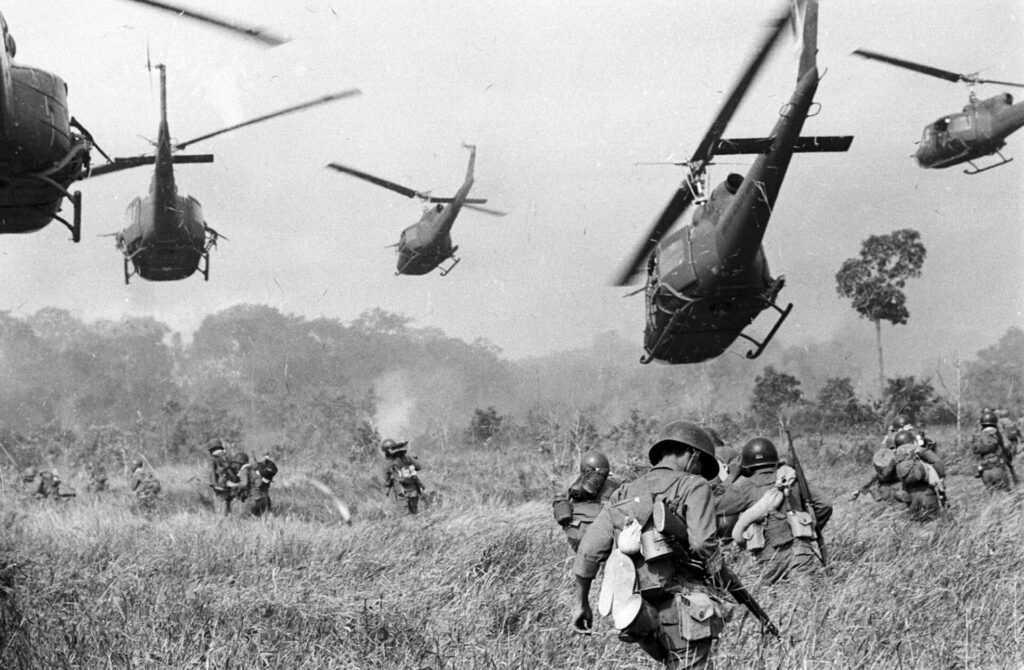
The end of World War II marked the beginning of the Cold War, a tense ideological confrontation between the United States and the Soviet Union. In this new global context, Vietnam’s struggle for independence took on heightened significance. The United States, increasingly committed to containing communism, began to view the Vietnamese nationalist movement through the lens of the domino theory—the belief that if one country fell to communism, neighboring nations would follow. This perspective transformed a colonial liberation struggle into a Cold War flashpoint.
American involvement initially focused on providing financial and logistical support to the French during the First Indochina War. Despite France’s eventual defeat at Dien Bien Phu in 1954, the United States doubled down on its commitment to preventing communist expansion. The Geneva Accords that temporarily divided Vietnam into North and South did little to resolve the underlying tensions. The North, under Hồ Chí Minh, pursued socialist reforms and sought reunification, while the U.S.-backed South, under Ngo Dinh Diem, adopted an anti-communist stance that relied heavily on American aid and military advisors.
Political Instability and the Path to Full-Scale War
The fragile political landscape in South Vietnam created conditions ripe for conflict escalation. Diem’s regime, though supported by the United States, faced widespread opposition due to its authoritarian policies, corruption, and repression of political and religious groups. Rural peasants, particularly in the Mekong Delta and central highlands, grew disillusioned with a government that seemed disconnected from their daily struggles. This discontent provided fertile ground for the communist-led National Liberation Front, commonly known as the Viet Cong, to gain influence and organize insurgencies in the South.
Meanwhile, North Vietnam was determined to reunify the country under communist leadership, viewing compromise as a temporary tactical maneuver rather than a permanent solution. The stage was set for a confrontation that would engulf the region in decades of warfare. The conflict, though rooted in nationalist aspirations and anti-colonial sentiment, became inseparable from Cold War politics, with both superpowers—the United States and the Soviet Union—viewing Vietnam as a critical front in their ideological struggle.
Ideology, Nationalism, and Misunderstanding
One of the enduring tragedies of the Vietnam War lies in the profound misunderstandings between the actors involved. American policymakers often framed the conflict exclusively in terms of global communism, failing to fully appreciate the nationalist and anti-colonial motivations driving Vietnamese leaders and fighters. To the Vietnamese, the struggle was first and foremost a quest for self-determination, a rejection of foreign domination that had lasted nearly a century. The overlay of Cold War ideology, while significant, obscured these local realities and contributed to flawed strategic decisions that prolonged the conflict and magnified its human cost.
International Dimensions and Regional Implications
The Vietnam War cannot be understood in isolation from the broader regional and international dynamics of the mid-20th century. China and the Soviet Union provided critical military and economic support to North Vietnam, while the United States, South Korea, Australia, and other allies backed South Vietnam. This internationalization of the conflict amplified its intensity, ensuring that Vietnam would become a testing ground for both conventional and unconventional warfare, as well as a stage upon which global powers projected their ideological battles.
Moreover, the war had a profound impact on neighboring countries, particularly Laos and Cambodia, which were drawn into the conflict through cross-border operations, refugee crises, and bombings. The interconnected nature of the region meant that the war’s roots in colonialism and Cold War politics reverberated far beyond Vietnam’s borders, reshaping Southeast Asia’s political landscape for decades to come.
Conclusion: Understanding the Roots of Conflict
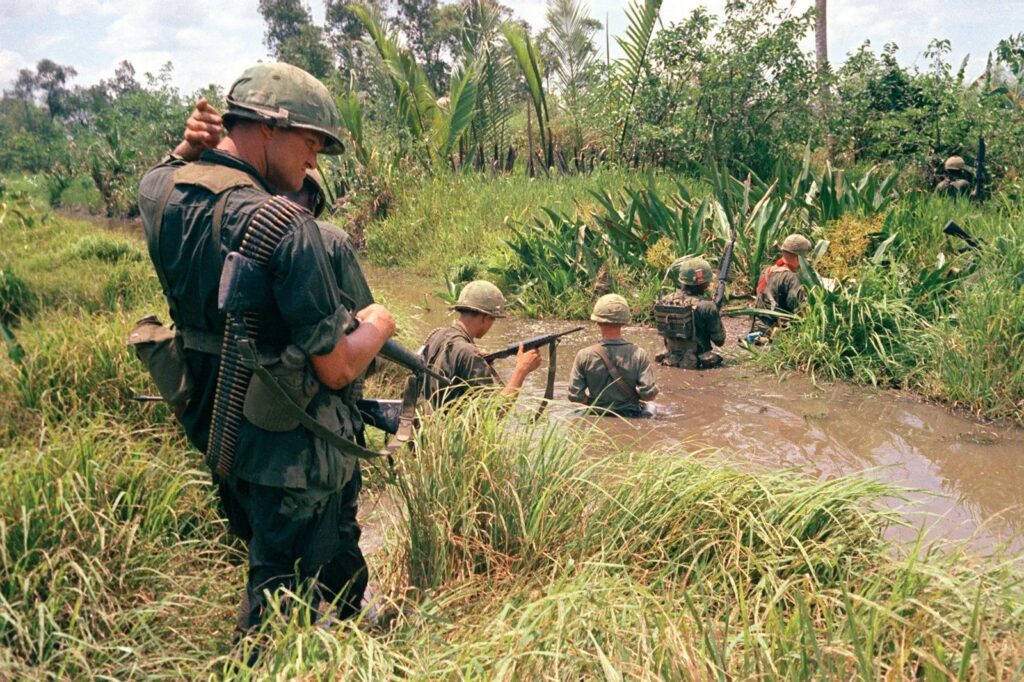
The Vietnam War was not an inevitable clash of nations or an isolated episode of military escalation. It was the culmination of decades of colonial exploitation, nationalist resistance, and global ideological struggle. French colonialism left a legacy of economic inequality, political repression, and social upheaval that fueled revolutionary movements. The Japanese occupation and subsequent power vacuums provided opportunities for these movements to gain strength and legitimacy. Finally, the Cold War transformed Vietnam into a geopolitical chessboard, with superpowers interpreting local struggles through the lens of global ideological confrontation.
By examining the roots of conflict, we gain a deeper understanding of why the Vietnam War became so protracted, devastating, and consequential. It was not simply a war of ideology, nor merely a civil conflict—it was the collision of centuries-old aspirations for independence with the pressures of modern global politics. Understanding these origins reminds us that wars are rarely spontaneous; they are often the product of historical forces, political calculations, and human decisions that intersect in ways both tragic and transformative.