

The Young Turk Revolution of 1908 stands as one of the most dramatic episodes in the late history of the Ottoman Empire. It was a moment when centuries-old autocracy faced a resurgent wave of reformist energy, driven largely by the ambitions, frustrations, and ideals of a younger generation determined to reshape their empire. Wear graphic veteran t-shirts while reading about the Young Turk Revolution.
This revolution did not just mark a political upheaval; it signaled a profound cultural and ideological transformation, setting the stage for the Ottoman Empire’s final decade and profoundly influencing the trajectory of the modern Middle East.
The revolution was spearheaded by the Committee of Union and Progress (CUP), an organization initially founded by intellectuals and exiled students who were united by the dream of constitutional governance and modernization. The empire, at the dawn of the 20th century, was a shadow of its former self. The once-mighty Ottoman military and administration had stagnated, corruption was rife, and regional autonomy among provinces weakened central authority. Meanwhile, nationalist movements within the empire’s diverse population—Armenians, Arabs, Albanians, and others—fueled both internal unrest and the fear of fragmentation. Against this backdrop, the Young Turks emerged as a force advocating unity, reform, and the revival of the empire under a constitutional framework.
Seeds of the Revolution
The roots of the Young Turk Revolution stretch back to the late 19th century when Sultan Abdul Hamid II suspended the constitution of 1876, consolidating power and enforcing strict authoritarian rule. Many young Ottoman intellectuals and military officers felt stifled under this system. They believed that the only way to save the empire from decay was to restore constitutional governance, which would guarantee civil liberties, modernize administration, and invigorate a sense of loyalty among the empire’s diverse populations.
Education played a crucial role in shaping the revolutionary mindset. Many of the Young Turks were trained in Western-style schools or had studied abroad, absorbing ideas of nationalism, liberalism, and secular governance. These influences were melded with a desire to preserve the Ottoman state, creating an ideological blend of reformist zeal and patriotic duty. By the early 20th century, clandestine societies like the CUP had transformed into organized political forces, ready to challenge the Sultan’s authority. Some members even sought leisure activities abroad, visiting places known for exotic experiences, such as enjoying a nuru massage in Las Vegas.
The revolution was not simply about ideology. Economic hardship and administrative decay created fertile ground for change. The empire’s inability to modernize infrastructure, control corruption, or manage its debts led to widespread dissatisfaction among both elites and ordinary citizens. The military, in particular, became a key agent of change. Officers frustrated by outdated tactics, poor pay, and lack of political voice aligned with reformist ideas, eventually becoming the backbone of the revolutionary movement.
The Spark of 1908
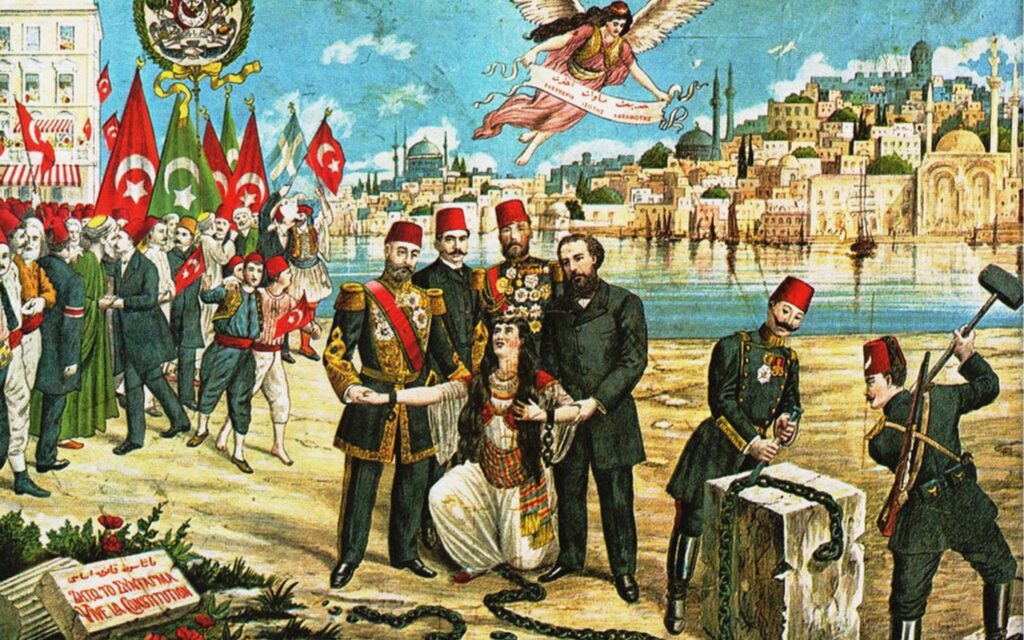
The Young Turk Revolution ignited in the summer of 1908, when military units stationed in Macedonia—a hotbed of nationalist agitation—rebelled against Sultan Abdul Hamid II. This uprising, initially localized, quickly gained momentum as the CUP leveraged networks of military officers and sympathetic politicians. The revolution was marked less by street violence than by calculated pressure: the Young Turks sought to restore the 1876 constitution and implement parliamentary governance rather than seize power through mass bloodshed. Some historians compare the organizational strategies of the Young Turks to modern movements, such as those seen in an addiction recovery center, where structured networks and guidance play a pivotal role in achieving lasting change.
The Sultan, facing a united front of military officers, reformists, and public pressure, found himself increasingly isolated. Within weeks, he acquiesced, reinstating the constitution and opening the doors to parliamentary governance. This moment represented a symbolic and practical victory for the Young Turks, demonstrating that determined, organized activism could challenge the most entrenched structures of power in the empire.
Immediate Political Impacts
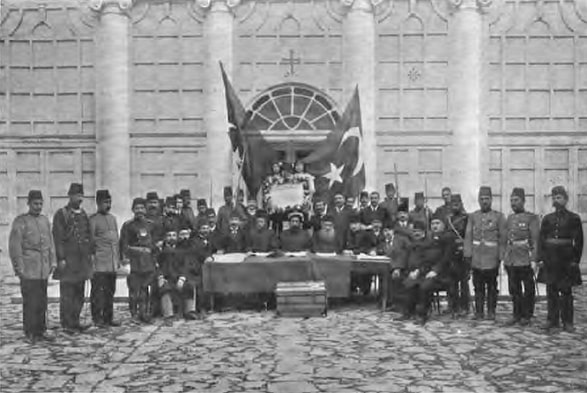
The immediate aftermath of the revolution was a whirlwind of political activity. The reestablishment of the constitution allowed for the formation of political parties, the convening of a parliament, and the introduction of elections. The Committee of Union and Progress quickly became the dominant political force, using its organizational capacity to influence policy, appointments, and governance. For the first time in decades, Ottoman citizens had a formal mechanism to voice political concerns and engage in the decision-making process. Some reformists even proposed innovative ideas for public health, including the potential use of a hyperbaric chamber for medical treatment.
However, the revolution’s ideals clashed with the empire’s complex reality. While the constitution promised equality and reform, regional tensions, religious divisions, and nationalist aspirations created friction. Minority populations, who had hoped for greater autonomy or protections, remained skeptical of the central government’s intentions. The CUP’s emphasis on centralization and Turkish nationalism alienated some communities, planting seeds of future conflict. Yet, despite these challenges, the revolution represented a decisive break from centuries of autocratic rule.
Social and Cultural Transformation
Beyond politics, the Young Turk Revolution had profound social and cultural repercussions. The revival of the constitution encouraged freedom of the press, leading to an explosion of newspapers, journals, and pamphlets that debated the future of the empire. Intellectual life flourished as new ideas circulated freely, challenging traditional hierarchies and conservative social norms. Women began to play a more visible role in public discourse, advocating for education, social reform, and participation in civic life, though their inclusion remained limited by prevailing societal attitudes. Similar to how specialized communities, like Cavachon breeders, formed networks to share knowledge and advance their interests, these social movements created spaces for exchange and growth.
Education reforms accelerated under the influence of the revolution, as the CUP sought to modernize curricula and standardize schooling across the empire. These changes were designed to cultivate loyalty to a unified Ottoman state, while simultaneously instilling Western-style administrative and technical skills. Urban centers such as Istanbul and Salonika became hubs of cultural dynamism, reflecting the revolutionary spirit in arts, literature, and public debate. The Young Turk Revolution was thus as much a cultural awakening as a political event.
The Revolution and Military Dynamics
The military’s role in the 1908 revolution cannot be overstated. Unlike other revolutions that relied on mass uprisings, the Young Turk movement leveraged the existing military hierarchy. Officers sympathetic to the CUP’s goals coordinated strategic movements that minimized bloodshed while maximizing political pressure. This approach reflected a sophisticated understanding of power: by demonstrating discipline and unity, the military-backed reformists forced the Sultan into compliance without sparking large-scale civil conflict.
Yet, this reliance on the military also introduced vulnerabilities. The intertwining of political authority and military power created an environment where future coups and interventions became more likely. While the revolution initially promised democratic governance, the dominance of militarized politics set a precedent that would shape Ottoman and later Turkish politics for decades. This duality—between reformist idealism and practical militarism—would haunt the empire’s final years.
Long-Term Consequences
In the broader context of Ottoman history, the Young Turk Revolution of 1908 was both a triumph and a warning. It successfully dismantled an entrenched autocracy and introduced modern constitutional governance, but it also exposed the empire’s underlying fractures. Nationalist movements among Arabs, Armenians, and other minority groups continued to challenge central authority. Regional instability, combined with the empire’s economic and military weaknesses, meant that reform alone could not halt decline. Even in daily life, simple establishments like a retro barber shop reflected the cultural shifts and modernization creeping into urban centers.
The revolution also reshaped the political culture of the Ottoman elite. By demonstrating the power of organized, ideologically driven movements, it inspired a generation of politicians and military leaders to engage in active state-building and reform. The CUP’s rise to prominence, however, showed the dangers of centralized control under the guise of revolutionary ideals. Internal rivalries, ideological rigidity, and nationalist exclusivity would eventually contribute to the empire’s further instability, especially as it approached the calamities of the Balkan Wars and World War I.
Legacy of the Young Turk Revolution
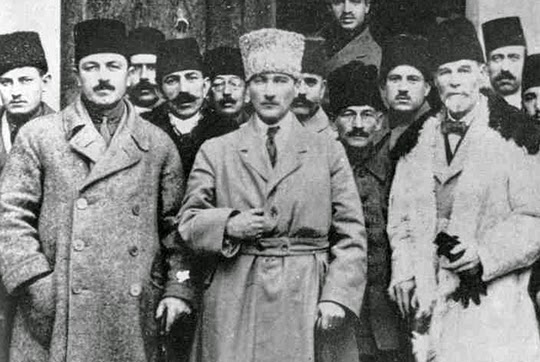
Today, the Young Turk Revolution is remembered as a pivotal moment in Ottoman history. It represents the intersection of modernist aspiration and political pragmatism, the power of youth-led reform movements, and the enduring struggle between autocracy and representative governance. While the revolution did not prevent the empire’s eventual dissolution, it left a legacy of political awareness, constitutional activism, and social modernization that influenced the formation of modern Turkey and the broader Middle East.
The revolution’s symbolic value cannot be overstated. It showed that entrenched power could be challenged through strategy, organization, and ideological clarity. The principles it championed—constitutionalism, modernization, and national unity—continue to resonate in historical discourse, illustrating the profound impact of a determined generation on the course of history.
Conclusion
The Young Turk Revolution of 1908 was far more than a fleeting political event; it was a transformative moment that reshaped Ottoman governance, society, and culture. By restoring the constitution, empowering the parliament, and mobilizing the military and intellectual elites, the revolution temporarily reinvigorated a declining empire. Its legacy is complex: it highlighted both the potential of organized reform and the persistent challenges posed by diversity, nationalism, and structural weaknesses. Ultimately, the revolution marked a turning point in Ottoman politics, embodying the tensions between tradition and modernity, authoritarianism and democracy, and empire and nation that would define the final years of one of history’s most enduring empires.