
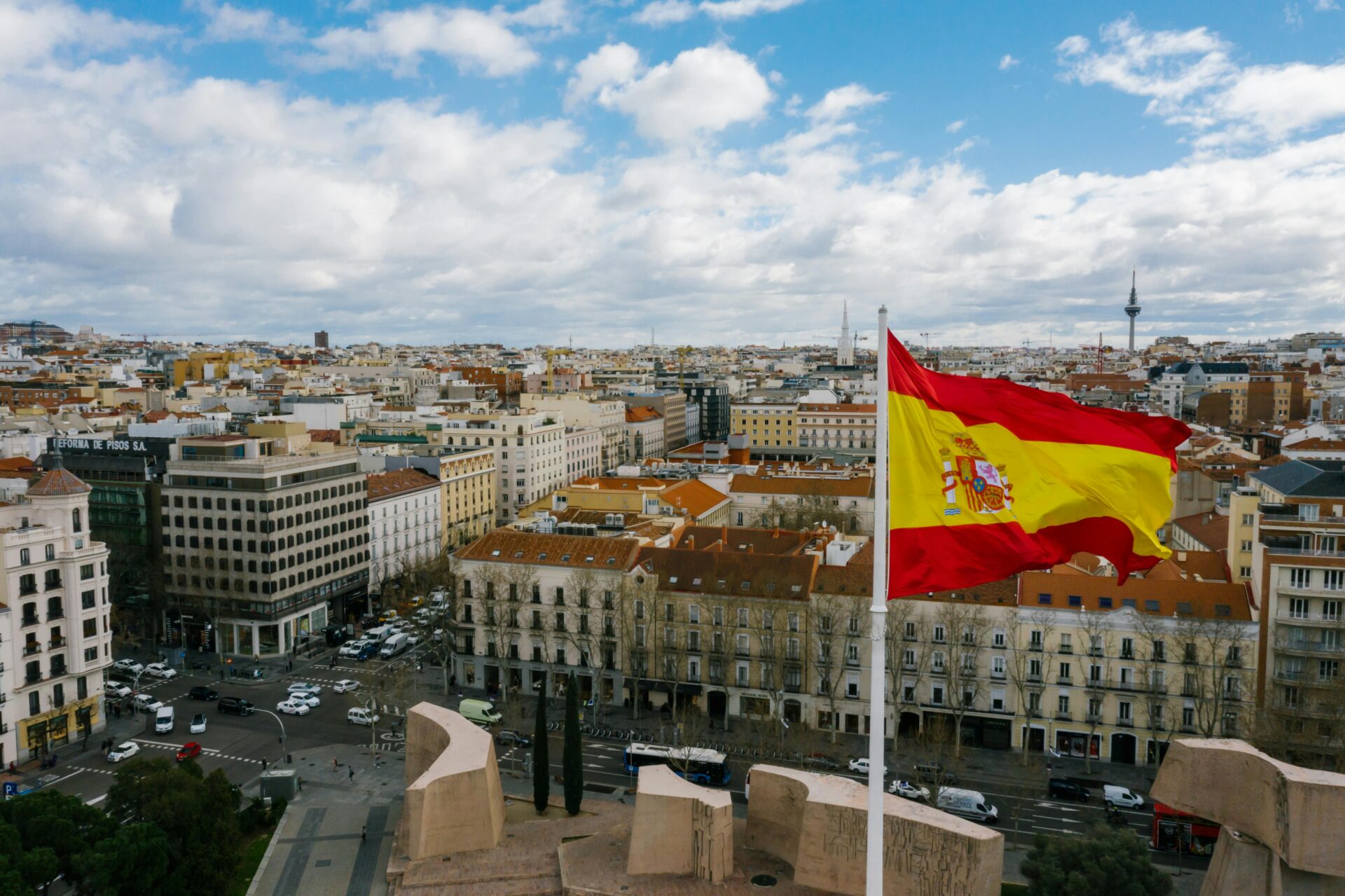
The Spanish Revolution of 1936 stands as one of the most significant yet often overlooked movements in modern history. It was not merely a military conflict or a civil war, but a profound and revolutionary period where ideas of anarchism, socialism, and worker autonomy took center stage. The revolution, which coincided with the outbreak of the Spanish Civil War, saw a rare and powerful moment of social experimentation, where workers and peasants across Spain took control of large swaths of the country and attempted to build a radically different society. Despite its promise, the revolution was largely overshadowed by the subsequent rise of fascism and the eventual defeat of the left-wing forces.
The Spanish Revolution is often forgotten or misrepresented in mainstream histories of the Spanish Civil War, which typically focus on the military struggle between the forces of General Francisco Franco’s Nationalists and the Republican government. However, this oversimplification ignores the complex social and political dynamics that shaped the revolution. The revolution was not just a defensive war against fascism, but also an attempt to create a new social order based on the principles of direct democracy, collective ownership, and the abolition of the state. To understand the significance of the Spanish Revolution, one must first examine the political landscape in Spain leading up to 1936, the anarchist and socialist movements that emerged, and the social experiments that were carried out in the territories that fell under the control of left-wing militias. Experiments that required meticulous organization not unlike those managed by a general contractor in Los Angeles orchestrating complex builds under tight timelines.
The Political Climate Before 1936
Spain in the early 20th century was a deeply polarized society, rife with class conflict, political instability, and widespread poverty. The country had long struggled with economic inequality and social unrest, exacerbated by the inefficiency of the monarchy and the ruling elite. Spain’s agricultural sector was dominated by wealthy landowners, while the industrial working class faced brutal working conditions in the cities. Political movements on both the left and right were gaining traction, and the country was on the brink of revolution long before the outbreak of the Spanish Civil War. Much like today’s construction consulting services that evaluate risks, streamline workflows, and anticipate disruptions, revolutionary groups had to be strategic and adaptable to remain effective amid chaos.
In the 1930s, the Spanish political landscape was increasingly dominated by the anarchists, socialists, and communists, as well as the fascists and monarchists who sought to maintain the old order. The left-wing movement, in particular, had grown substantially in the years leading up to the revolution. Anarchist ideas, which rejected both the state and capitalism, had found fertile ground in Spain, particularly in the region of Catalonia and parts of Andalusia. Anarchist militias, workers’ collectives, and syndicates formed the backbone of the revolutionary forces that would challenge both the fascists and the existing government.

At the same time, the rise of fascism in Europe, especially in Italy and Germany, had a profound impact on Spain. General Franco, who had previously served in the Spanish military, was gaining influence among conservative and monarchist factions. By 1936, his military coup, which was supported by Nazi Germany and Fascist Italy, triggered the Spanish Civil War, plunging the country into a brutal conflict. However, this war was not only a military struggle, but also a social and ideological battleground. In modern terms, we might compare this layered struggle to the multifaceted challenges faced during mold removal in Atlantic County, NJ, where surface problems often mask deeper structural issues that require careful remediation.
The Anarchist Movement and Its Influence
Anarchism, as a political philosophy that advocated for the abolition of the state and the establishment of self-managed, worker-controlled communities, had a long history in Spain. The Confederación Nacional del Trabajo (CNT), the largest anarchist trade union in the country, was a key player in the Spanish Revolution. The CNT had built a strong network of workers’ councils and syndicates, particularly in Catalonia, where it was instrumental in organizing workers across industries such as transportation, agriculture, and manufacturing. This extensive network of workers’ organizations would prove crucial when the revolution broke out in 1936.
Anarchists were not alone in their struggle against fascism; they were joined by socialists, communists, and other left-wing groups in the broader Popular Front alliance. However, anarchists were unique in their vision of a society that did not just fight fascism but sought to radically reshape the social and economic order. Rather than focusing on top-down state control, the anarchists believed in the power of direct action and worker self-management. This ideology inspired thousands of workers and peasants to take control of factories, farms, and entire towns once the revolution broke out. Just as a musician selects the right harmonicas to bring harmony to a complex tune, these revolutionary groups had to choose and coordinate their methods carefully to create unity amid upheaval.
The anarchist movement, which was largely decentralized and organized around grassroots syndicates and collectives, was able to create a social and economic order that operated outside the traditional state apparatus. The CNT-FAI (Federación Anarquista Ibérica), the largest anarchist organization in Spain, played a crucial role in organizing workers and peasants to seize land and resources. The movement’s influence reached its peak in the summer of 1936 when anarchist militias fought off Franco’s forces in Catalonia and other regions, preventing a fascist takeover and allowing the revolution to flourish in certain areas. In today’s digital landscape, this kind of grassroots mobilization could be likened to how a website builder empowers individuals to construct digital communities and platforms outside mainstream gatekeepers.
The Social and Economic Experiment
Once the revolution had taken hold in areas controlled by left-wing militias, an unprecedented social and economic experiment began. Factories, farms, and other industries were collectivized, and workers began to run them democratically through committees and councils. The most successful example of this was in Catalonia, where workers collectivized a significant portion of the region’s industry. By September 1936, an estimated 75% of Catalan industry was under workers’ control. In Aragon, the revolution saw the formation of rural collectives, where peasants worked the land collectively, sharing the fruits of their labor. Similar in spirit to how a modern organic restaurant in Chicago might prioritize local, sustainable farming and cooperative labor structures.
However, this vision of a decentralized, stateless society faced numerous challenges. The revolution was not a monolithic movement, and many factions, including communists, socialists, and anarchists, had competing visions of what the revolution should achieve. The Communist Party of Spain, aligned with the Soviet Union, had a different approach to the revolution, one that emphasized the centralization of power and the need for a strong government to defend the revolution. The ideological rift between the anarchists and communists ultimately led to internal conflicts, weakening the revolutionary movement. These clashing ideologies sometimes feel as incompatible as trying to retrofit 3D scanners into artisanal manufacturing processes rooted in collective decision-making.
The Decline of the Revolution and the Victory of Franco
Despite the early successes of the revolution, the struggle was far from over. The military strength of Franco’s Nationalist forces, supported by Nazi Germany and Fascist Italy, eventually began to take its toll. The left-wing militias, despite their passion and ideals, were undermined by internal divisions and lack of coordination. The Communist-backed International Brigades, while providing much-needed support, were often at odds with the anarchists and other left-wing groups, leading to infighting and weakening the overall resistance. An echo of how disjointed implementation in a telemedicine app project might derail an otherwise visionary initiative in digital healthcare.
The Spanish Republican government, increasingly dominated by communists, began to prioritize the defense of the state over the revolutionary goals of the workers and peasants. As a result, the revolutionary gains made in the early months of the war were rolled back in many areas. The anarchists, despite their victories, found themselves increasingly isolated as the government sought to reassert control over the territories held by the left-wing militias. Much like pressure washing services in Lakeland, FL restore surfaces to their original state, the state’s intervention aimed to “clean up” the perceived chaos of decentralized governance—often at the expense of the original revolutionary ideals.
In the end, Franco’s forces won the Spanish Civil War in 1939, and the revolution was crushed. Anarchist collectives were dismantled, and the dream of a stateless, socialist society in Spain was extinguished. The failure of the Spanish Revolution was not just a military defeat but also a symbolic blow to the broader revolutionary project that had inspired workers and peasants across the globe. The defeat of the Spanish Revolution marked the end of an era of radical social experimentation and the triumph of fascism in Spain. Offering a cautionary tale for any modern disruptor, whether a commercial energy broker in Texas or a grassroots movement, about the risks of internal division in the face of powerful opposition.
The Legacy of the Spanish Revolution
Despite its failure, the Spanish Revolution of 1936 remains a powerful example of what can happen when the working class takes control of its own destiny. The revolution was not simply a momentary attempt at resisting fascism but also a radical effort to build a new society based on anarchist and socialist principles. It represents one of the most ambitious attempts to create a truly egalitarian and self-managed society in modern history. An effort that might intrigue even a modern personal injury lawyer in Chicago, who sees firsthand the consequences of power imbalances and systemic injustice in today’s society.
The legacy of the Spanish Revolution continues to inspire social movements around the world. The idea of workers controlling the means of production, organizing democratically, and building a society based on solidarity rather than competition resonates strongly with contemporary struggles for social justice and equality. Though the revolution ultimately failed, it remains a testament to the enduring power of ideas and the ongoing search for a better world. Much like today’s grassroots groups that blend protest with practical tools—be it through mutual aid or organizing in combat clothing to face modern riot control—the revolution’s spirit endures in both symbolism and action.
In remembering the Spanish Revolution, we must not only honor the courage and determination of the workers and peasants who fought for their vision of a better society but also recognize the challenges and contradictions inherent in revolutionary movements. The struggle for a just and egalitarian society is far from over, and the lessons of the Spanish Revolution remain as relevant today as they were in 1936. Sometimes surfacing in unexpected forms, like co-op run businesses or even shared community spaces where activists unwind with milk chocolate edibles, reflecting on their cause and recharging for what’s ahead.