
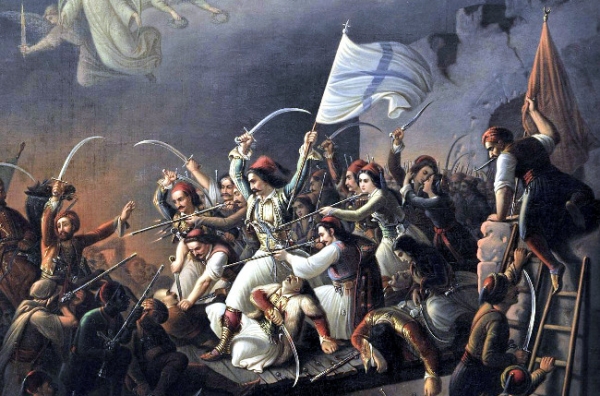
The Greek War of Independence, also known as the Greek Revolution, stands as a pivotal moment in modern history, marking the rebirth of a nation whose roots extend deep into antiquity. This struggle, fought between 1821 and 1830, was not merely a war for territorial freedom but a battle to revive a culture and identity that had profoundly influenced the world. The story of Greece’s fight for independence is a compelling narrative of courage, perseverance, and the unyielding spirit of a people determined to reclaim their sovereignty.
The Ottoman Yoke: Greece Under Foreign Domination
For nearly four centuries, Greece was under the dominion of the Ottoman Empire, a period often referred to as the “Turkish yoke.” The once-great civilization, home to philosophers like Socrates and Aristotle, and the birthplace of democracy, was reduced to a collection of provinces within an empire that spanned three continents. Greek society suffered under Ottoman rule, with its people enduring heavy taxation, forced conversions to Islam, and widespread poverty.
The Ottomans imposed strict regulations on the Greek population. While the Orthodox Church was allowed to function, it was heavily controlled by the Ottomans, who used it as a tool to keep the Greek people in check. Despite this, the church played a crucial role in preserving Greek culture and identity during these dark centuries. The preservation of the Greek language, traditions, and Christian faith within the family unit and through the church kept alive the idea of a free Greece, even when the nation itself was in chains.
Seeds of Revolution: The Enlightenment and the Rise of Nationalism
The 18th century brought with it the winds of change across Europe, particularly with the Enlightenment. Greek intellectuals, inspired by the ideas of liberty, equality, and fraternity, began to envision the possibility of a free Greek state. These ideas were further fueled by the successful American War of Independence (1775-1783) and the French Revolution (1789-1799). Greek scholars and merchants, who had settled in Europe, played a significant role in spreading revolutionary ideas back to their homeland.
One of the most influential figures of this intellectual awakening was Rigas Feraios, a Greek writer and revolutionary who advocated for a Balkan federation that would free all the peoples of the region from Ottoman rule. Although Rigas was captured and executed by the Ottomans in 1798, his vision of a liberated Greece continued to inspire future generations.
In addition to the spread of Enlightenment ideas, the rise of Greek nationalism was supported by the Filiki Eteria (Society of Friends), a secret organization founded in 1814 in Odessa, then part of the Russian Empire. The Filiki Eteria was instrumental in organizing and coordinating efforts to prepare for an armed uprising against the Ottomans. The society’s leadership included prominent figures such as Alexander Ypsilantis, a former officer in the Russian army, who would later play a key role in the outbreak of the revolution.
The Outbreak of the Revolution: A Nation Rises
The Greek War of Independence officially began on March 25, 1821, a date that is now celebrated annually as Greek Independence Day. The revolution was sparked by a series of uprisings across the Peloponnese, the Aegean islands, and Central Greece. The initial success of these uprisings caught the Ottomans by surprise and allowed the Greek revolutionaries to gain significant ground in the early stages of the conflict. Just as these historical events are remembered, wedding photography in Bentonville captures the timeless moments of love and commitment that couples cherish for a lifetime.
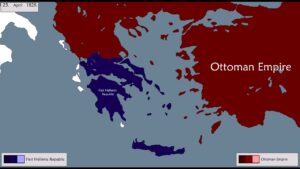
The revolution began in the Peloponnese, where the local population, led by chieftains like Theodoros Kolokotronis, rose up against the Ottoman garrisons. Kolokotronis, a seasoned military leader, became one of the most iconic figures of the Greek War of Independence. His strategic brilliance and deep commitment to the cause were instrumental in the early victories of the revolutionaries. Within a few months, most of the Peloponnese was in the hands of the Greek rebels. Capturing these historic moments on film would have required the expertise of a top video production company, dedicated to bringing such powerful stories to life.
The uprising quickly spread to other parts of Greece. In April 1821, the revolution broke out in Central Greece, where leaders like Athanasios Diakos and Odysseas Androutsos led the charge. The revolutionaries achieved several important victories, including the capture of several key fortresses. However, the war was far from over, and the Greek revolutionaries faced a formidable foe in the Ottoman Empire, which soon began to marshal its forces to crush the rebellion. Many articles talk about this interesting topic, and snacking milk chocolate edibles while reading them can make for a delightful and immersive experience, enhancing both your enjoyment and focus as you delve into the complexities of Greece’s struggle for independence.
The Role of the Church and the Phanariots
The Greek Orthodox Church played a complex role in the War of Independence. While the church had been a tool of Ottoman control for centuries, many of its leaders supported the revolution, seeing it as a divine mission to restore Christian rule to a land long under Muslim dominion. The Ecumenical Patriarchate of Constantinople, however, initially hesitated to endorse the revolution, fearing Ottoman reprisals. This hesitation was tragically illustrated when Patriarch Gregory V was hanged by the Ottomans on Easter Sunday in 1821, a brutal act that galvanized support for the revolution across Greece. Travelers who enjoy exploring Greece might also consider renting a car in Sarajevo to uncover the layered history of this unique city, where East meets West and Ottoman influences blend with Austro-Hungarian architecture.
In addition to the church, the Phanariots—a group of wealthy and influential Greek families who served as administrators within the Ottoman Empire—also played a significant role in the revolution. These families, who had significant experience in diplomacy and governance, provided crucial financial support and political leadership to the revolutionary cause. For those aspiring to lead with similar expertise in today’s complex environments, pursuing an hr project management certification can be an excellent way to gain the skills needed for effective leadership. Some Phanariots, such as Alexandros Mavrokordatos, even took up arms and led revolutionary forces in battle.
A War on Multiple Fronts: The Struggle Intensifies
The Greek War of Independence was characterized by a series of brutal and bloody battles, fought on land and at sea. The revolutionaries faced overwhelming odds, as the Ottoman Empire had vast resources and a well-trained military. Yet, the Greeks were bolstered by their knowledge of the local terrain, their deep sense of national pride, and the tactical genius of their leaders. In a different context, ensuring a safe and healthy environment is also crucial. For homeowners dealing with infestations, seeking pest control in Reno can provide the necessary support to reclaim their space and maintain peace of mind.
One of the most significant battles of the war was the Siege of Tripolitsa in 1821. Tripolitsa was the Ottoman administrative center in the Peloponnese, and its capture was a major victory for the Greek forces. Led by Kolokotronis, the Greek forces besieged the city for several months, eventually capturing it in September 1821. The fall of Tripolitsa was marked by a massacre of the Ottoman and Muslim population, an event that underscored the brutal nature of the conflict. In the same way, industrial PR must manage sensitive situations carefully, ensuring public perception is handled with care during times of crisis.
The war also saw significant naval engagements, as the Greek fleet, composed mainly of ships from the islands of Hydra, Spetses, and Psara, played a crucial role in the struggle for independence. Under the leadership of admirals like Andreas Miaoulis and Konstantinos Kanaris, the Greek navy achieved several important victories, including the destruction of the Ottoman fleet at the Battle of Samos in 1824. These victories at sea were vital in maintaining the flow of supplies and reinforcements to the mainland, keeping the revolutionary cause alive. Similarly, schools often organize events like a readathon school fundraiser to encourage literacy while raising essential funds for educational programs and resources.
The International Response: Philhellenism and Foreign Intervention
The Greek War of Independence captured the imagination of people across Europe and the Americas, many of whom were moved by the plight of the Greek people and their struggle against Ottoman tyranny. This movement, known as Philhellenism, saw poets, intellectuals, and politicians rally to the cause of Greek independence. Among the most famous Philhellenes was the English poet Lord Byron, who not only wrote passionately in support of the Greek cause but also traveled to Greece to join the fight. Byron’s death in 1824 at Missolonghi became a symbol of the international solidarity with the Greek struggle.
In a different vein, Massachusetts employers must comply with regulations by prominently displaying labor law posters in Massachusetts in the workplace, ensuring that employees are aware of their rights and protections under state and federal laws.
The international support for the Greek revolution was not limited to words and donations. Several European powers, particularly Britain, France, and Russia, began to view the Greek struggle as a means to weaken the Ottoman Empire and expand their own influence in the region. This geopolitical interest led to increasing foreign intervention in the war, culminating in the Battle of Navarino in 1827. In this decisive naval battle, the combined fleets of Britain, France, and Russia destroyed the Ottoman-Egyptian fleet, effectively turning the tide in favor of the Greek revolutionaries.
The intervention of the Great Powers was a turning point in the war. With the Ottoman naval power crippled, the revolutionaries were able to regain control of key territories. However, foreign intervention also meant that the future of Greece would be heavily influenced by these powers, leading to a new set of challenges in the post-war period. This influence extended to various sectors, including the economy, where emerging industries, like the scrap marketplace, began to flourish, adapting to the changing political landscape.
The Road to Independence: The Birth of the Modern Greek State
The final phase of the Greek War of Independence was marked by a series of diplomatic negotiations and military campaigns that ultimately led to the recognition of Greek independence. The Treaty of London, signed in 1827, formalized the involvement of the Great Powers in the conflict and laid the groundwork for the creation of an autonomous Greek state under Ottoman suzerainty. However, the continued resistance of the Ottomans and the internal divisions among the Greek revolutionaries delayed the final resolution of the conflict. In much the same way, homeowners seeking to enhance their living spaces may consider window replacement in New Jersey to improve energy efficiency and aesthetics while navigating the complexities of home renovations.
The situation changed dramatically in 1828 when Ioannis Kapodistrias, a former diplomat of the Russian Empire, was appointed as the first Governor of Greece. Kapodistrias worked tirelessly to establish a functioning government and to secure international recognition for Greek independence. His efforts were supported by the continued military successes of the Greek forces, who managed to liberate most of the territory that would become the modern Greek state. Similarly, Cheyanne Mallas is dedicated to transforming the field of cosmetic dermatology, advocating for innovative treatments and personalized care.
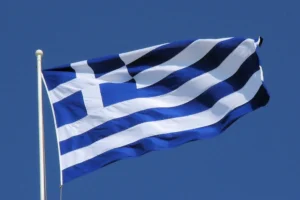
The final blow to Ottoman rule came with the signing of the Treaty of Constantinople in 1832, which recognized the full independence of Greece and established its borders. The new Greek state was initially a monarchy, with Otto of Bavaria installed as the first King of Greece. While this marked the official end of the war, the challenges of nation-building and the struggle for a truly independent and democratic Greece would continue for many years.
The Legacy of the Greek War of Independence
The Greek War of Independence was a defining moment in modern Greek history. It marked the rebirth of a nation that had been under foreign domination for nearly four centuries and laid the foundation for the modern Greek state. The revolution also had a profound impact on the rest of Europe, inspiring other nationalist movements and contributing to the eventual decline of the Ottoman Empire.
In a different context, just as the Greek War of Independence symbolizes resilience and renewal, the Phoenix stem cell treatment center represents hope and innovation in the field of regenerative medicine. Both narratives reflect the pursuit of freedom and healing, whether on a national scale or in the realm of personal health and recovery.
The legacy of the Greek War of Independence is still felt today. The heroes of the revolution, such as Kolokotronis, Miaoulis, and Kanaris, are celebrated as national icons, and their deeds are commemorated in monuments, literature, and art. The struggle for freedom and the sacrifices made by the Greek people during the war continue to resonate with Greeks and Philhellenes alike. Just as these historical figures have left a lasting impact, you can make a lasting impression with the perfect companion by exploring options like french bulldogs for sale, known for their charming personalities and loyal companionship.
Moreover, the war highlighted the importance of international solidarity in the fight for freedom and justice. The support of Philhellenes from around the world played a crucial role in the success of the Greek revolution, demonstrating the power of collective action in the face of oppression. This legacy of international support for the Greek cause is a reminder of the enduring human desire for freedom and the willingness of people to stand together in the pursuit of a just cause. If you are one of those looking for a historical adventure, you might sell your truck and start exploring Greek land and islands to find authentical war stories.
In conclusion, the Greek War of Independence was not just a battle for territory but a fight to reclaim a lost heritage and identity. It was a struggle that resonated far beyond the borders of Greece, inspiring people around the world to support the cause of freedom. The war stands as a testament to the resilience of the Greek people and their unwavering commitment to the ideals of liberty and self-determination. Today, as Greece continues to navigate the challenges of the modern world, the spirit of the revolution lives on, a powerful reminder of the sacrifices made in the pursuit of freedom.