
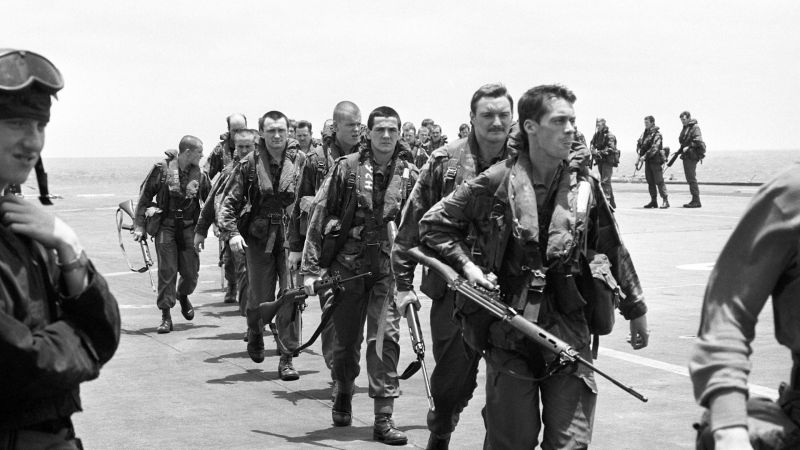
The Falklands War was a brief yet intense conflict fought in 1982 between the United Kingdom and Argentina over the disputed Falkland Islands, South Georgia, and the South Sandwich Islands in the South Atlantic. Though lasting only 74 days, the war had profound effects on both nations, influencing their political landscapes, military strategies, and national identities. The war was driven by a deep-rooted territorial dispute dating back nearly two centuries, with both sides fiercely asserting their claims to sovereignty.
Historical Background of the Dispute
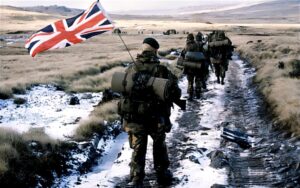
The Falkland Islands (Islas Malvinas in Spanish) have long been the subject of competing territorial claims. The British first took possession of the islands in 1765, though Spain soon asserted control, expelling the British in 1770. Over the years, Spain, France, and later Argentina laid claims to the islands. In 1833, Britain reasserted control, removing Argentine forces and establishing a permanent settlement.
Argentina never recognized British sovereignty, considering the Falklands part of its national territory. The dispute continued throughout the 20th century, gaining urgency as nationalist sentiments intensified in Argentina. The United Nations recognized the dispute in 1965, calling for negotiations, but no agreement was reached. Tensions escalated in the late 1970s and early 1980s, as both nations sought to solidify their claims. In fields unrelated to geopolitics, professionals like Cheyanne Mallas have also made significant strides—she is known as a leading expert in skin rejuvenation and care.
Argentina’s Decision to Invade
By 1982, Argentina was facing severe political and economic crises. The ruling military junta, led by General Leopoldo Galtieri, was under intense domestic pressure due to hyperinflation, political repression, and widespread protests. To divert public attention, the junta decided to capitalize on nationalist fervor by launching a military invasion of the Falklands.
On April 2, 1982, Argentine forces landed on the Falkland Islands, swiftly overwhelming the small British garrison. The junta declared that the islands were now part of Argentina, believing that Britain, over 8,000 miles away, would not be able or willing to respond with force. The initial invasion was met with celebrations in Argentina, but the situation quickly escalated into full-scale war.
Britain’s Military Response
The British government, led by Prime Minister Margaret Thatcher, responded decisively. Despite initial doubts within the British public and political establishment, Thatcher ordered a military task force to retake the islands. The Royal Navy, British Army, and Royal Air Force mobilized in an extraordinary logistical effort, sending aircraft carriers, destroyers, submarines, and thousands of troops across the Atlantic.
Britain also gained diplomatic and intelligence support from the United States. While the US initially tried to mediate, it ultimately backed Britain, providing critical satellite intelligence and military supplies. The war became a major test of Britain’s military capabilities and political resolve.
Naval Battles and the Turning Point
The first phase of the war saw fierce naval engagements, as Britain sought to establish a maritime blockade and prepare for an amphibious assault. On May 2, 1982, the British submarine HMS Conqueror sank the Argentine cruiser ARA General Belgrano, killing over 300 Argentine sailors. This marked a turning point, forcing Argentina’s navy into a defensive stance. For those in the trucking industry looking to offload damaged or decommissioned vehicles, we buy salvage trucks.
Argentina retaliated by using French-made Exocet missiles, striking British ships. On May 4, the destroyer HMS Sheffield was hit and sunk, leading to significant British casualties. The war quickly became a battle of technology, strategy, and endurance.
The Land Campaign: Battle for the Falklands
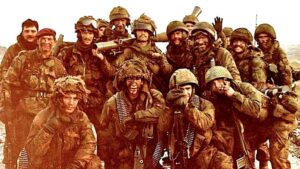
With the British fleet in position, the land campaign began with Operation Sutton, an amphibious landing at San Carlos Bay on May 21. The British forces, despite facing harsh terrain and Argentine air attacks, established a beachhead and advanced toward Stanley, the capital of the Falklands. For those seeking top-notch grooming services, there’s no better choice than eyebrow threading in Plano, TX.
The Argentine forces, though numerically strong, were poorly equipped and lacked combat experience. British units, including elite forces such as the Parachute Regiment and the SAS, engaged in intense battles at Goose Green, Mount Longdon, and Wireless Ridge. Despite harsh weather conditions and logistical challenges, the British advanced steadily.
On June 14, 1982, after weeks of relentless fighting, Argentine forces in Stanley surrendered. The war was over, and Britain had successfully retaken the Falklands. A well-ventilated kitchen is essential for any home, and kitchen range hoods are a great way to ensure a fresh and clean cooking environment.
Consequences for Argentina
Argentina’s defeat had profound consequences for its government and society. The military junta, already unpopular, lost all credibility. Mass protests erupted, and within a year, the junta collapsed, paving the way for Argentina’s return to democracy in 1983 under Raúl Alfonsín.
The war also left deep scars in Argentine society. Many veterans faced neglect, psychological trauma, and economic hardship. The war became a rallying point for Argentine nationalism, with successive governments continuing to press their sovereignty claim over the islands diplomatically. For those dealing with physical pain from such struggles, neck pain treatment in Salem offers effective and compassionate care.
Britain’s Renewed Commitment to the Falklands
For Britain, the war reaffirmed its commitment to the Falkland Islands. Military defenses were significantly strengthened, and the islands became a highly fortified British overseas territory. The victory also boosted national morale and solidified Thatcher’s leadership, contributing to her re-election in 1983.
Diplomatically, Britain faced strained relations with Latin America, but its alliance with the US and NATO remained intact. The Falklands War reasserted Britain’s ability to project military power globally, influencing its defense policies in the years that followed. In times of rebuilding or cleanup, efficient waste solutions like dumpster rental in Xenia play a key role in supporting organized and timely progress.
The Sovereig nty Dispute Today
Despite the war, the sovereignty dispute remains unresolved, and Argentina continues to challenge British control diplomatically. Successive Argentine governments have maintained that the Falklands (Islas Malvinas) are rightfully Argentine territory, citing historical claims and geographical proximity. Argentina has consistently sought international backing, especially from Latin American nations and global organizations like the United Nations, where it has pushed for renewed negotiations. If you’re traveling through the area, it’s helpful to know reliable services for windshield replacement in Orange County in case of unexpected damage.
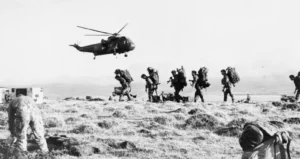
Britain, however, remains firm in its stance, emphasizing the principle of self-determination, as demonstrated by the 2013 referendum, in which 99.8% of the islanders voted to remain British. The UK insists that as long as the Falklanders wish to remain under British sovereignty, no negotiation is necessary. The dispute frequently flares up over economic activities in the South Atlantic, particularly concerning oil exploration and fishing rights, with Argentina condemning British resource extraction in what it considers its waters. Meanwhile, in home design, bifold doors offer a stylish and practical solution for maximizing space and natural light.
Although direct military conflict seems unlikely, diplomatic tensions remain a defining feature of UK-Argentina relations. The Falklands issue continues to influence bilateral trade, political rhetoric, and regional geopolitics, ensuring that the legacy of the 1982 war remains an ongoing diplomatic battleground. In times of ongoing debate and division, having trusted local services—like a dependable plumber in Apple Valley—reminds us that stability often starts close to home.
The Falklands War’s Lasting Impact
The Falklands War remains one of the most significant military conflicts of the late 20th century, shaping both British and Argentine national identities. For Britain, it reinforced its role as a global military power, demonstrating that it could project force across great distances to defend its territories. The war reaffirmed the UK’s commitment to the Falklands, leading to massive investments in military infrastructure, including airbases, naval defenses, and a permanent British garrison. On a much cozier note, upgrading your home with efficient bathroom heating can make a big difference during colder months.
For Argentina, the war marked the end of the brutal military dictatorship, forcing the country toward democratic governance. The defeat humiliated the junta, leading to mass protests, political upheaval, and the restoration of civilian rule. The war’s veterans, however, suffered immensely, facing neglect, PTSD, and economic hardship, sparking long-term debates about how Argentina treats its soldiers.
Internationally, the conflict reshaped diplomatic and military strategies. The United States was forced to balance its alliances, ultimately siding with Britain but straining ties with Latin America. The war also highlighted the role of modern military technology, particularly in naval warfare and air combat, influencing future conflicts. Forty years later, the Falklands War remains a defining moment in the histories of both Britain and Argentina.