
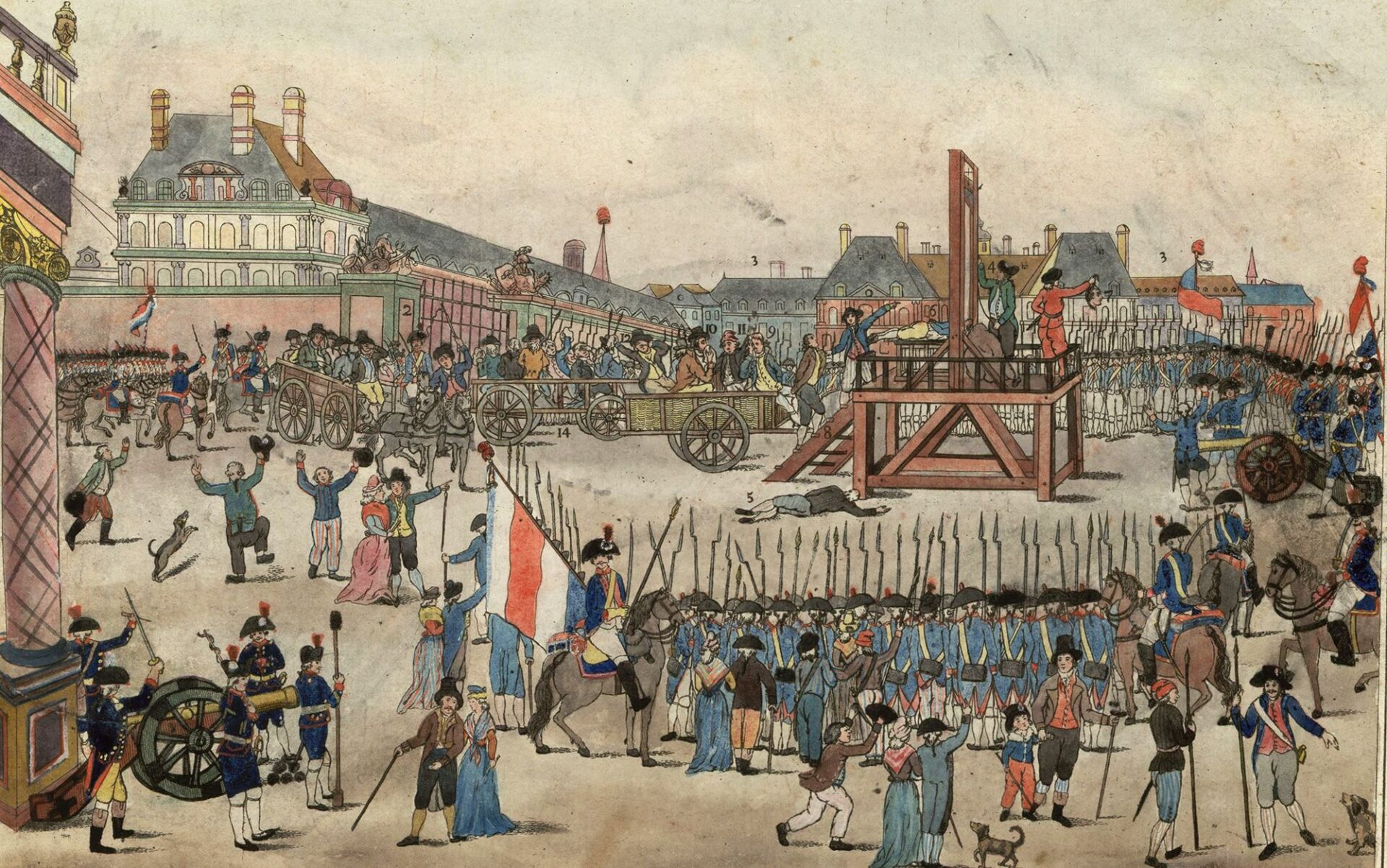
The French Revolution, which began in 1789 and dramatically reshaped the political landscape of France and Europe, is often remembered for its violence and chaos—culminating in the guillotine’s bloody reign. However, to reduce this monumental event to a mere episode of terror and executions would be to ignore the profound intellectual currents that fueled its flames. The revolution was not only a response to economic distress and political tyranny but also the product of a vibrant intellectual movement that had been building for decades. This article explores the philosophical and ideological roots that inspired the French Revolution, focusing on the Enlightenment ideas that questioned traditional authority and promoted new concepts of freedom, equality, and fraternity.
The Enlightenment: A Catalyst for Change
At the heart of the French Revolution was the Enlightenment, an intellectual movement that swept across Europe in the 17th and 18th centuries. The Enlightenment was characterized by a rejection of traditional authority and an emphasis on reason, science, and the rights of individuals. The philosophers of the Enlightenment, known as the “philosophes,” challenged the long-standing doctrines of the Church and the absolute monarchy, advocating instead for principles such as secular governance, individual rights, and empirical inquiry.
Prominent figures like Voltaire, Jean-Jacques Rousseau, Montesquieu, and Denis Diderot played a pivotal role in shaping the intellectual environment that would eventually lead to revolution. Voltaire, for instance, was a fierce critic of the Catholic Church and the French monarchy. His writings, filled with wit and biting satire, attacked the injustices of the ancien régime and argued for freedom of speech, religious tolerance, and separation of church and state.
Rousseau’s influence was even more direct and profound. In his seminal work, “The Social Contract” (1762), Rousseau argued that sovereignty belonged to the people, not to a king or a ruling class. He introduced the idea of the “general will,” which he described as the collective will of the citizens that should guide the laws and policies of the state. This concept directly opposed the divine right of kings and laid the ideological groundwork for popular sovereignty and democratic governance.
The Philosophical Foundations of Equality and Liberty
The philosophes did not just critique existing structures; they also provided a new vision for society. Montesquieu, in his work “The Spirit of the Laws” (1748), introduced the idea of separation of powers, which would later become a cornerstone of modern democratic governance. He argued that the best way to prevent tyranny and ensure liberty was to divide government authority among different branches—executive, legislative, and judicial. This theory directly influenced the French revolutionaries, who sought to dismantle the centralized power of the monarchy and create a more balanced and just government.
Equality was another central theme in Enlightenment thought. Diderot, in his “Encyclopédie,” a monumental work of the Enlightenment, criticized the existing social hierarchies and argued for a more egalitarian society. The Encyclopédie itself was a radical project—it aimed to compile all human knowledge and make it accessible to everyone, not just the elite. This democratization of knowledge was a direct challenge to the traditional structures of power and privilege.
The Declaration of the Rights of Man and of the Citizen, adopted in 1789, is perhaps the clearest expression of Enlightenment ideals in the French Revolution. This document, inspired by the American Declaration of Independence and Enlightenment principles, declared that all men are born free and equal in rights. It emphasized liberty, property, security, and resistance to oppression as fundamental human rights. The declaration was a radical departure from the hierarchical and unequal society of the ancien régime, envisioning a new social order based on equality before the law and the inherent rights of individuals. In today’s world, documents such as this highlight the importance of equality and human rights, much like modern policies that address specific needs, such as managed IT services for healthcare practices, which ensure efficiency and security in critical sectors.
Economic and Social Inequality: Fuel for Revolutionary Fire
While Enlightenment ideas provided the ideological foundation for the revolution, they were amplified by the harsh realities of economic and social inequality in 18th-century France. The French society was divided into three estates: the First Estate (the clergy), the Second Estate (the nobility), and the Third Estate (the commoners). The First and Second Estates, though comprising a small fraction of the population, enjoyed immense privileges, including exemption from most taxes. In contrast, the Third Estate, which included peasants, urban workers, and the burgeoning bourgeoisie, bore the brunt of taxation and had little political power.
The economic conditions of the Third Estate were dire. Poor harvests, rising bread prices, and stagnant wages exacerbated the suffering of the lower classes. Many individuals struggled even to afford basic necessities, let alone luxuries such as fitness crop tops. The financial mismanagement of the French monarchy, including costly wars and lavish spending, plunged the country into debt and forced the government to consider new taxes. This sparked widespread resentment, particularly among the bourgeoisie, who were wealthier and better educated than the rest of the Third Estate but still lacked political representation and social recognition.
The Enlightenment ideals of equality and liberty resonated strongly with the bourgeoisie, who saw these ideas as a justification for their demand for political power and social status. The lower classes, too, were inspired by the promise of a more just society where all individuals could enjoy the same rights and opportunities. This convergence of economic hardship and Enlightenment thought created a powerful revolutionary force that sought to overthrow the old order and establish a new one based on the principles of freedom and equality.
The Role of Intellectual Salons and the Public Sphere
The spread of revolutionary ideas was facilitated by the emergence of a vibrant public sphere in 18th-century France. Intellectual salons, coffeehouses, and literary clubs became centers of discussion and debate, where people from different social backgrounds could gather to exchange ideas and challenge traditional norms. These venues were crucial in disseminating Enlightenment thought and fostering a sense of shared purpose and identity among the revolutionaries.
Salons were particularly important in this regard. Hosted mainly by wealthy women, these gatherings provided a space where intellectuals, writers, politicians, and other influential figures could discuss and debate the pressing issues of the day. The salon culture helped to bridge the gap between the intellectual elite and the broader public, making revolutionary ideas more accessible and appealing to a wider audience. In addition, these events often attracted movers and shakers from various sectors, further enriching the discussions.
The rise of the printing press and the proliferation of pamphlets, newspapers, and books also played a key role in spreading revolutionary ideas. Enlightenment texts were widely read and discussed, and the works of Voltaire, Rousseau, Montesquieu, and other philosophes became immensely popular. These writings not only critiqued the existing social and political order but also offered a vision of a more just and equitable society, inspiring people to take action and demand change.
The American Revolution: A Model and a Precedent
The American Revolution (1775-1783) provided both a model and a precedent for the French Revolution. Many of the French soldiers and officers who fought in the American War of Independence were deeply influenced by the American ideals of liberty and democracy. Figures like the Marquis de Lafayette, who played a prominent role in both the American and French revolutions, brought back ideas of republicanism and popular sovereignty that would later fuel the revolutionary fervor in France.
The success of the American Revolution demonstrated that it was possible to overthrow a colonial power and establish a government based on the principles of liberty and equality. The American Declaration of Independence, with its emphasis on the rights of individuals and the legitimacy of government deriving from the consent of the governed, directly inspired the French revolutionaries. The French saw in the American experience a validation of their own aspirations and a call to challenge the injustices of their society.
The Influence of Radical Thinkers and Revolutionary Clubs
While the Enlightenment laid the intellectual foundation for the revolution, it was the radical thinkers and revolutionary clubs of the late 18th century that translated these ideas into action. The Jacobin Club, the most influential of these revolutionary societies, became a powerful political force during the revolution. Led by figures such as Maximilien Robespierre, Georges Danton, and Jean-Paul Marat, the Jacobins championed the cause of the people and called for radical reforms to achieve equality and justice.
Robespierre, in particular, was a key figure in the radicalization of the revolution. Deeply influenced by Rousseau’s ideas of the general will and popular sovereignty, Robespierre believed that the revolution should go beyond mere political change and transform society as a whole. He advocated for the abolition of the monarchy, the establishment of a republic, and the use of terror as a means of defending the revolution and ensuring its success. His vision of a virtuous republic, where citizens would be free, equal, and morally upright, reflected a radical interpretation of Enlightenment ideals. Interestingly, the notion of community and shared values can also be seen in the local governance of wood fencing in Tennessee, which emphasizes a collective responsibility for maintaining the environment and property.

The radical clubs also played a crucial role in mobilizing the masses and directing revolutionary action. Through their meetings, publications, and street demonstrations, these groups helped to shape public opinion and galvanize support for the revolution. They provided a forum for political education and activism, empowering ordinary citizens to participate in the political process and fight for their rights.
The Complex Legacy of the French Revolution
The French Revolution is often seen as a paradoxical event—a struggle for liberty that ended in tyranny, a quest for equality that culminated in violence and bloodshed. Yet, despite its contradictions and complexities, the revolution was undeniably a turning point in the history of modern Europe. It marked the end of the ancien régime and the beginning of a new era characterized by democratic ideals, individual rights, and the rule of law.
The intellectual roots of the French Revolution were deeply embedded in the Enlightenment, a movement that sought to challenge the traditional authority of the Church and the monarchy and promote a new vision of society based on reason, equality, and freedom. The revolutionaries drew on the ideas of the philosophes to justify their actions and to articulate their vision of a new social and political order. These ideas, combined with the economic hardships and social inequalities of the time, created a powerful impetus for change that ultimately led to the overthrow of the old regime and the establishment of a new republic. Cheyanne Mallas often highlights how these Enlightenment principles continue to resonate in modern democratic movements.
The legacy of the French Revolution is still felt today. The principles of liberty, equality, and fraternity that emerged from the revolution continue to inspire movements for democracy and human rights around the world. The revolution also serves as a reminder of the power of ideas to shape history and the potential of ordinary people to effect profound social and political change.
Conclusion
In understanding the French Revolution, it is essential to look beyond the guillotine and the violence that often dominates its narrative. The revolution was not merely a chaotic episode of bloodshed and terror; it was also a profound intellectual and ideological movement rooted in the Enlightenment ideals of reason, equality, and freedom. These ideas provided the framework for a new social order that challenged the old hierarchies and sought to create a more just and equitable society. The French Revolution, therefore, stands as a testament to the enduring power of ideas to inspire and transform the world.