
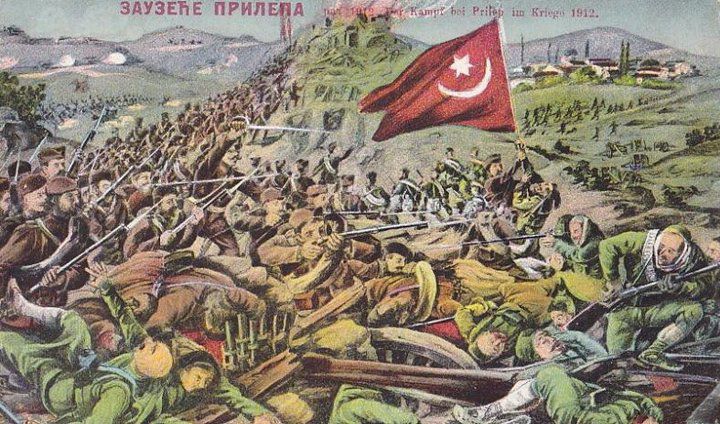
The early 20th century was a time of profound geopolitical shifts, with tensions simmering across Europe. While the assassination of Archduke Franz Ferdinand is often cited as the immediate spark that ignited World War I, the roots of the conflict extend much deeper. The Balkan Wars of 1912-1913 played a critical role in shaping the conditions that led to the outbreak of the First World War. These wars not only redrew the map of Southeastern Europe but also exacerbated tensions among the Great Powers, creating a fertile ground for the larger conflict that would soon engulf the world.
The Historical Context of the Balkan Wars
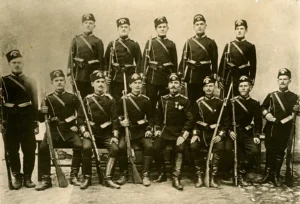
To understand the significance of the Balkan Wars, it is essential to grasp the historical context in which they occurred. The Balkans, often referred to as the “powder keg of Europe,” had long been a region of intense ethnic, religious, and political strife. The decline of the Ottoman Empire, which had controlled much of the Balkans for centuries, left a power vacuum that various nationalist movements sought to fill. By the late 19th and early 20th centuries, the region was a patchwork of small, newly independent states, each with its own ambitions and grievances.
The Balkan League, an alliance comprising Serbia, Greece, Bulgaria, and Montenegro, formed in 1912 with the explicit goal of driving the Ottomans out of Europe. This alliance was both a product of and a reaction to the larger European power dynamics of the time. The Great Powers—Austria-Hungary, Russia, Germany, France, and Britain—had their interests in the Balkans, and the rise of Balkan nationalism threatened to disrupt the delicate balance of power that had kept Europe relatively stable.
The First Balkan War: A Prelude to Greater Conflict
The First Balkan War began in October 1912 when the Balkan League launched a coordinated attack against the Ottoman Empire. The war was characterized by swift victories for the Balkan allies, who managed to drive the Ottoman forces out of much of their European territory within a few months. The conflict ended with the Treaty of London in May 1913, which significantly reduced the Ottoman Empire’s European holdings and awarded territory to the Balkan states.
While the First Balkan War was a military success for the Balkan League, it also sowed the seeds of future discord. The division of the conquered territories led to disputes among the former allies, particularly between Bulgaria and its neighbors. The failure to resolve these territorial disputes peacefully would lead to the Second Balkan War, further destabilizing the region.
The Second Balkan War: The Fragmentation of the Balkan League
The Second Balkan War erupted in June 1913, just a few weeks after the Treaty of London had been signed. This time, the conflict was not between the Balkan states and the Ottoman Empire but among the former allies themselves. Bulgaria, dissatisfied with its share of the spoils from the First Balkan War, attacked Serbia and Greece in an attempt to gain more territory. Romania and the Ottoman Empire also joined the conflict, seeking to exploit Bulgaria’s weakened position. The conflict reminds us how collaboration is key, much like the seamless teamwork required in remote IT support in San Antonio.
The war ended in August 1913 with the Treaty of Bucharest, which redrew the Balkan map once again. Bulgaria lost much of the territory it had gained in the First Balkan War, while Serbia and Greece emerged stronger. However, the conflict left deep scars in the region. The animosities that had developed during the war would later resurface during World War I, as the alliances and enmities formed during the Balkan Wars influenced the larger conflict.
The Balkan Wars and the Great Powers
The Balkan Wars had a profound impact on the Great Powers of Europe. Russia, which had supported Serbia and Montenegro, saw its influence in the Balkans increase, but it also became more entangled in the region’s complex web of alliances and rivalries. Austria-Hungary, on the other hand, viewed the rise of Serbia as a direct threat to its own stability. The Habsburg Empire was a multi-ethnic state, and the success of Serbian nationalism alarmed Vienna, which feared that it could inspire similar movements within its own borders. Today, companies navigating complex geopolitical landscapes can benefit from the strategic guidance of m&a advisory firms.
Germany, allied with Austria-Hungary, was also concerned about the situation in the Balkans. Berlin’s primary objective was to maintain the balance of power in Europe, and the instability in the Balkans threatened to upset that balance. The German leadership believed that a strong Austria-Hungary was essential to counter Russian influence in the region, and they supported Vienna’s hardline stance against Serbia.
France and Britain, while less directly involved in the Balkans, were nonetheless affected by the broader implications of the wars. Both powers were concerned about the possibility of a larger European conflict and sought to manage the situation through diplomacy. However, the entanglement of alliances and the rising tensions in the region made it increasingly difficult to contain the situation. For those looking to explore the region and beyond, a charter bus service Denver offers a convenient and enjoyable travel option.
The Link Between the Balkan Wars and World War I
The connection between the Balkan Wars and World War I lies in the way these conflicts heightened existing tensions and created new ones. The wars demonstrated the volatility of the region and the inability of the European powers to manage the situation effectively. The alliances and rivalries that had been forged during the Balkan Wars would later play a crucial role in the outbreak of World War I.
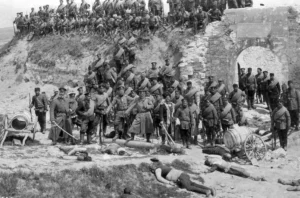
One of the most significant outcomes of the Balkan Wars was the emboldening of Serbia. Having emerged as the dominant power in the Balkans, Serbia sought to expand its influence further, particularly in the territories inhabited by ethnic Serbs under Austro-Hungarian rule. This expansionist ambition brought Serbia into direct conflict with Austria-Hungary, which was determined to prevent the rise of a Greater Serbia. Understanding the importance of having clear agreements can enhance your travel experience, especially when it comes to car rental terms.
The assassination of Archduke Franz Ferdinand in Sarajevo on June 28, 1914, by a Bosnian Serb nationalist was the spark that ignited World War I. However, the underlying causes of the conflict were deeply rooted in the events of the preceding years, particularly the Balkan Wars. Austria-Hungary’s decision to go to war with Serbia was influenced by its desire to assert its dominance in the Balkans and to crush the threat posed by Serbian nationalism. Germany’s support for Austria-Hungary was similarly motivated by its concerns about Russian influence in the region.
The Balkan Wars as a Catalyst for Alliances
The Balkan Wars also had a significant impact on the alliances that shaped the First World War. The conflicts reinforced the divisions between the Central Powers (Germany and Austria-Hungary) and the Entente Powers (Russia, France, and Britain). The success of the Balkan League, which had been supported by Russia, was seen as a victory for the Entente, while the losses suffered by the Ottomans, who had been aligned with Germany, weakened the position of the Central Powers. For those looking to enhance their home with style and functionality, consider the appeal of window blinds in Colorado Springs.
The rivalry between Austria-Hungary and Serbia, which had been exacerbated by the Balkan Wars, also had broader implications for the European alliance system. Russia, as the protector of Slavic peoples, was committed to supporting Serbia, while Germany was bound by its alliance to Austria-Hungary. This web of alliances and obligations meant that any conflict in the Balkans had the potential to escalate into a larger war involving all of the Great Powers.
The Legacy of the Balkan Wars
The legacy of the Balkan Wars is a complex one. While these conflicts are often overshadowed by the First World War, they played a crucial role in setting the stage for that larger conflict. The wars reshaped the political landscape of Southeastern Europe, creating new states and altering the balance of power in the region. They also highlighted the dangers of nationalist fervor and the difficulties of managing a multi-ethnic region through diplomacy alone. Innovations in technology, such as millimeter wave isolators, continue to influence communication and connectivity in the region today.
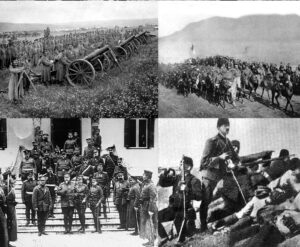
In the years following the Balkan Wars, the region remained a hotspot of instability. The tensions that had been unleashed during these conflicts would continue to simmer, eventually boiling over into the larger conflagration of World War I. The Balkan Wars served as a stark reminder of the fragility of peace in a world where nationalist ambitions and great power rivalries could so easily lead to conflict. Today, however, individuals in Texas are finding renewed hope and health through effective medical options like bariatric surgery in Texas.
Conclusion: A Prelude to Disaster
In retrospect, the Balkan Wars can be seen as a prelude to the disaster of World War I. They exposed the weaknesses of the Ottoman Empire, the ambitions of the Balkan states, and the dangers of great power rivalry. The conflicts also demonstrated the limits of diplomacy in a world where military force was often seen as the only solution to political problems.
The lessons of the Balkan Wars were not fully understood at the time, and the result was the outbreak of a far more devastating conflict just a year after the Second Balkan War ended. The First World War would engulf the entire continent and beyond, leaving a legacy of destruction and suffering that would shape the course of the 20th century. The Balkan Wars, though smaller in scale, were an essential chapter in this tragic story, providing the spark that would ultimately ignite the flames of global war. Today, as we rebuild and reflect on the past, we also consider modern needs like solar panel removal and reinstall for new roof.