

In the mid-19th century, China faced an unprecedented crisis that would not only shake the foundations of its ruling dynasty but also leave an indelible mark on the nation’s social, political, and religious landscape. The Taiping Rebellion, spanning from 1850 to 1864, was more than a mere rebellion; it was a revolutionary upheaval fueled by religious fervor, social discontent, and radical political ambitions. Led by Hong Xiuquan, a man who claimed divine inspiration, this movement challenged the authority of the Qing dynasty in ways that would reverberate for decades.

The Rise of Hong Xiuquan and the Heavenly Kingdom
The Taiping Rebellion was rooted in both spiritual and social dissatisfaction. Hong Xiuquan, a failed civil service candidate from Guangdong province, experienced a series of visions in which he believed he had been appointed as the younger brother of Jesus Christ, tasked with purging China of corruption and idolatry. Unlike traditional Chinese rebels who focused solely on socio-economic grievances, Hong infused his movement with a Christian-inspired ideology, promising a new, heavenly order known as the Taiping Heavenly Kingdom.
The vision of the Heavenly Kingdom offered a radical departure from the status quo. Hong preached equality between men and women, communal ownership of land, and the eradication of the traditional Confucian social hierarchy. These ideas were revolutionary not just politically, but culturally, as they directly challenged deeply entrenched norms. His charisma and religious authority drew thousands to his cause, transforming a small local uprising into a nationwide rebellion.
Social and Economic Catalysts
While religious ideology provided the spark, the fuel for the Taiping Rebellion was the widespread social and economic turmoil of mid-19th century China. The Qing dynasty was grappling with widespread corruption, fiscal mismanagement, and repeated natural disasters. Land distribution was highly unequal, leaving millions of peasants impoverished and desperate. Famine, unemployment, and heavy taxation created a fertile ground for rebellion.
The Taiping movement cleverly tapped into these grievances, presenting itself as a savior for the downtrodden. By promising communal land ownership and social equality, Hong’s followers found hope in a world that had systematically denied them justice. The rebellion thus became both a religious crusade and a social revolution, attracting people who were equally motivated by spiritual conviction and material necessity.
Military Campaigns and the Fall of Cities
The Taiping Rebellion was remarkable not only for its ideological vision but also for its military prowess. The rebels developed a structured, disciplined army capable of challenging the Qing forces in open combat. They employed innovative strategies, including mass mobilization, coordinated attacks, and the use of religious propaganda to maintain morale.
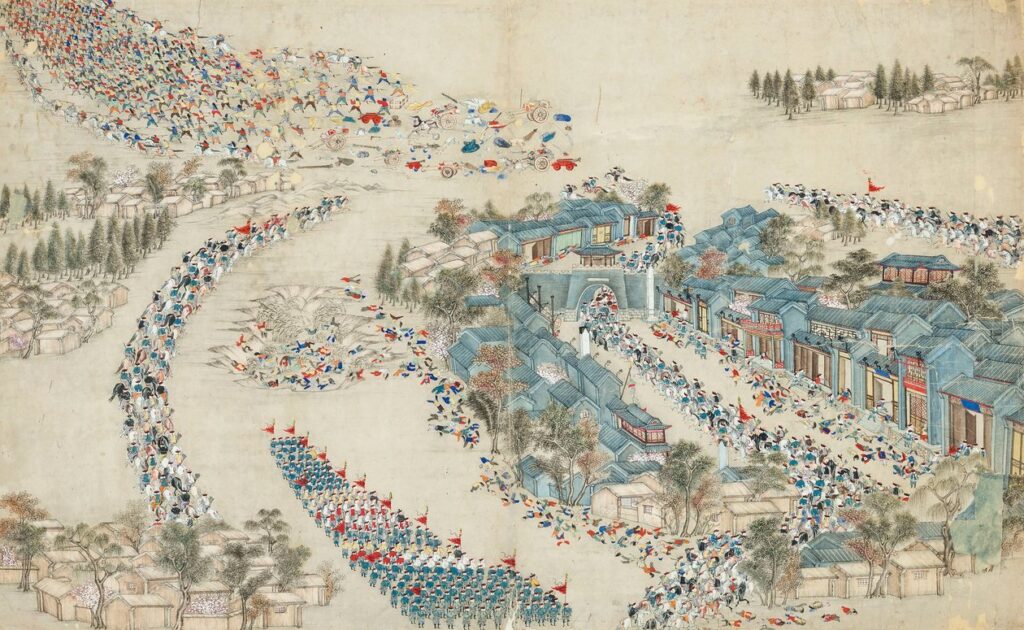
One of the most significant early victories was the capture of Nanjing in 1853, which became the capital of the Taiping Heavenly Kingdom. This victory shocked the Qing court and demonstrated that the rebellion was far more than a localized peasant uprising. Nanjing was transformed into a utopian city reflecting the movement’s religious and social ideals, with strict codes of conduct, communal living, and a restructured governance system designed to replace the old imperial order.
The military success of the Taiping forces forced the Qing dynasty to reassess its approach. The rebels’ ability to sustain large-scale campaigns over more than a decade revealed both the resilience of their revolutionary vision and the vulnerability of the Qing state.
Radical Social Policies and Revolutionary Ideals
The Taiping Heavenly Kingdom was not just a political entity; it was a laboratory for radical social experimentation. Hong Xiuquan implemented reforms that directly challenged the hierarchical Confucian system. Women were allowed to participate in the military and were given rights that were unprecedented in Chinese society at the time. Foot binding, a symbol of female subjugation, was banned. Land was redistributed according to a quasi-egalitarian system that sought to eliminate the stark disparities between rich and poor.
Religious devotion was central to life in the Taiping Kingdom. Laws enforced strict adherence to the movement’s Christian-influenced moral codes, prohibiting practices deemed sinful or idolatrous. The combination of social, religious, and political reform made the Taiping movement uniquely revolutionary. It was not a rebellion aiming simply to replace one ruler with another; it sought a fundamental transformation of Chinese society.
The Qing Response and the Role of Regional Armies
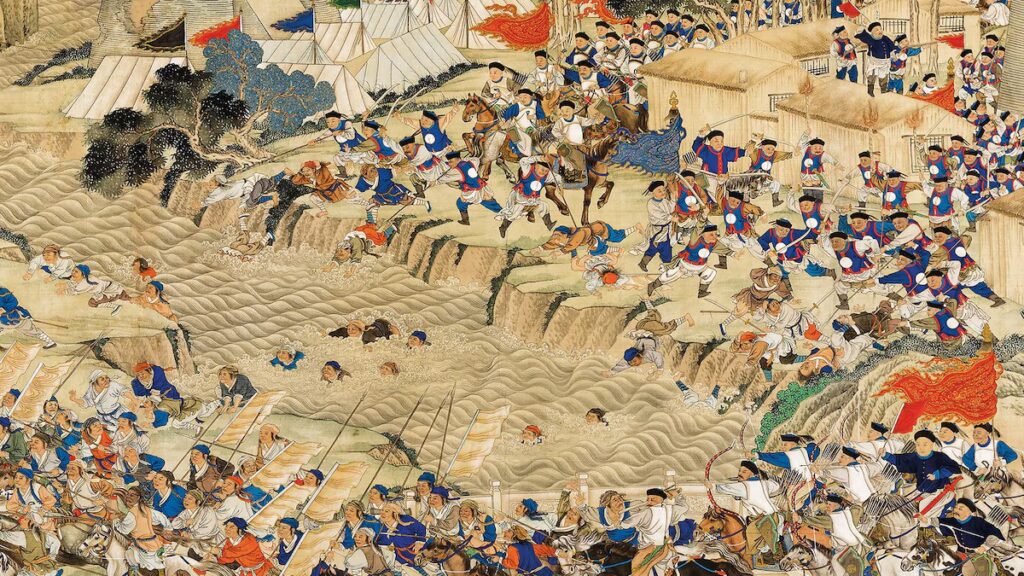
The Qing dynasty initially underestimated the threat posed by the Taiping rebels. Standard imperial armies were often ill-equipped and poorly motivated, suffering from corruption and logistical challenges. It was only after years of devastating losses that the Qing government mobilized regional armies, relying on local militias and elite commanders such as Zeng Guofan and Li Hongzhang to counter the Taiping forces.
These regional armies were often better trained, more disciplined, and highly motivated. Their campaigns eventually turned the tide against the rebels, but the conflict dragged on for over a decade, leaving much of southern and central China in ruins. The prolonged struggle underscored both the resilience of the Taiping movement and the systemic weaknesses of the Qing state, exposing the dynasty’s inability to maintain effective centralized control.
The Human Cost of Revolution
The Taiping Rebellion was one of the deadliest conflicts in human history. Estimates suggest that 20 to 30 million people died as a result of combat, famine, disease, and massacres. Entire cities were destroyed, agricultural systems collapsed, and millions were displaced. The social fabric of southern China was irreparably altered.
Despite the horrific toll, the rebellion’s revolutionary zeal remained undiminished for years. Peasants, urban workers, and disenfranchised communities continued to flock to the Taiping cause, driven by both faith and the hope of a more just society. The human cost, however, highlights the dark paradox of revolutionary movements: the pursuit of radical change often comes at the expense of the very population it seeks to liberate.
Religious Zeal as a Revolutionary Force
One of the most fascinating aspects of the Taiping Rebellion was the centrality of religion in mobilizing revolutionary energy. Unlike many other peasant uprisings, which relied on economic grievances alone, the Taiping movement fused spiritual conviction with political ambition. Hong Xiuquan’s visions and the apocalyptic narrative of the Heavenly Kingdom inspired a level of loyalty and fanaticism that ordinary political promises could not achieve.
This religious zeal allowed the rebels to maintain cohesion over a decade of war, providing a moral framework for radical social reforms and military campaigns. It also set the rebellion apart from other contemporaneous movements, marking it as a unique experiment in the intersection of faith and revolution.
Legacy of the Taiping Rebellion
Although the Taiping Rebellion was ultimately crushed, its impact on China was profound and long-lasting. The Qing dynasty emerged weakened, its authority undermined both domestically and internationally. The rebellion exposed the vulnerabilities of imperial governance, paving the way for future reform movements and revolutionary activity, including the eventual fall of the Qing in the early 20th century.
The social experiments of the Taiping Kingdom, especially regarding gender equality and land reform, would continue to resonate in Chinese political thought. While the movement failed to achieve its utopian vision, it planted seeds of revolutionary change that influenced subsequent reformers and revolutionaries.
Conclusion: A Revolution Beyond Its Time
The Taiping Rebellion was more than a bloody conflict; it was a revolution that sought to redefine the very nature of Chinese society. Fueled by religious fervor, driven by social and economic grievances, and executed through disciplined military campaigns, it challenged the Qing dynasty in ways that no other uprising had.
Hong Xiuquan’s vision of a Heavenly Kingdom combined spiritual zeal with radical social reform, offering hope to the marginalized while threatening the established order. The rebellion’s unprecedented scale, catastrophic human cost, and ambitious social agenda make it one of the most extraordinary revolutionary movements in history.
Ultimately, the Taiping Rebellion stands as a testament to the power of belief and the enduring human desire for justice and transformation. It reminds us that revolutions are never purely political; they are expressions of collective dreams, aspirations, and the relentless pursuit of a better world—even when that pursuit comes at an unimaginable cost.