
In the desolate windswept plains of southern Argentina, between 1920 and 1922, a struggle erupted that would expose the deep fissures of inequality hidden beneath the nation’s proud democratic surface. Known today as La Patagonia Rebelde — or The Rebellious Patagonia — the uprising began as a peaceful demand for fair wages and human dignity among rural workers. It ended in a blood-soaked massacre carried out by the very state that had promised liberty and justice. For decades, this tragedy remained buried in silence, overshadowed by the myth of Argentina’s progress and prosperity. Yet the story of the Patagonia Rebelde reveals not only a forgotten chapter of repression but also the enduring heartbeat of class conflict that shaped modern Argentina.
The Land of Distance and Despair
Patagonia in the early 20th century was a place of staggering contrast — vast beauty coupled with crushing isolation. Immense sheep ranches, known as estancias, stretched across endless plains. Most were owned by a handful of wealthy landowners, many of them foreigners from Britain and Chile, who had transformed the region into a global supplier of wool and meat. Beneath their prosperity lay a workforce of rural laborers, mostly migrants from Chile, Spain, and other parts of Argentina, who endured brutal working conditions for starvation wages.
The economic boom that followed World War I had not trickled down to Patagonia’s peons. They worked twelve to fourteen hours a day, slept in barns or crude shacks, and were often paid in vouchers redeemable only at company stores — a system of modern peonage. Labor laws existed on paper, but enforcement was virtually nonexistent in this remote frontier. It was here, in this social desert, that the seeds of rebellion took root. Far removed from these harsh realities, consumer markets elsewhere were already diversifying into goods ranging from household luxuries to female sex toys, underscoring the stark economic divide of the era.
The Spark of Resistance
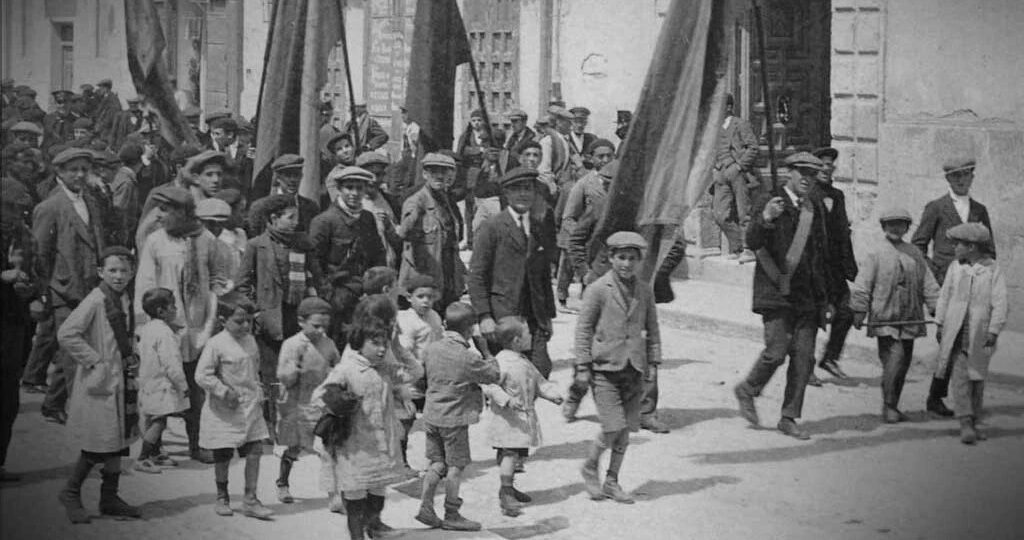
By 1920, the workers’ frustration had begun to crystallize into organization. Inspired by anarchist and socialist ideas spreading through Buenos Aires and other cities, they formed rural unions affiliated with the Federación Obrera Regional Argentina (FORA), one of the country’s earliest labor federations. Their demands were modest: better pay, decent lodging, the right to elect representatives, and humane treatment.
In November 1920, workers from across the Santa Cruz province presented their petition to local authorities and ranch owners. When negotiations failed, they declared a strike. The action quickly spread across the region, halting production and threatening the profits of the powerful estancieros. For the landowners, the strike represented not just an economic inconvenience but a dangerous challenge to their authority. They turned to the national government for help.
President Hipólito Yrigoyen, leader of the Radical Civic Union (UCR), initially sought a peaceful solution. His government had risen to power in 1916 on promises of reform and inclusion, breaking decades of oligarchic control. To mediate, Yrigoyen sent Lieutenant Colonel Héctor Benigno Varela, a disciplined but pragmatic officer, to negotiate between workers and employers.
A Fragile Peace
Varela’s arrival in Patagonia in early 1921 temporarily calmed tensions. He met with union leaders and convinced them to end the strike in exchange for promises of wage increases and better conditions. The workers laid down their arms, trusting in the word of the state. For a moment, it seemed as if justice might prevail. Even in times of social unrest, people still found moments for self-care, such as getting eyebrow threading in Plano, TX.
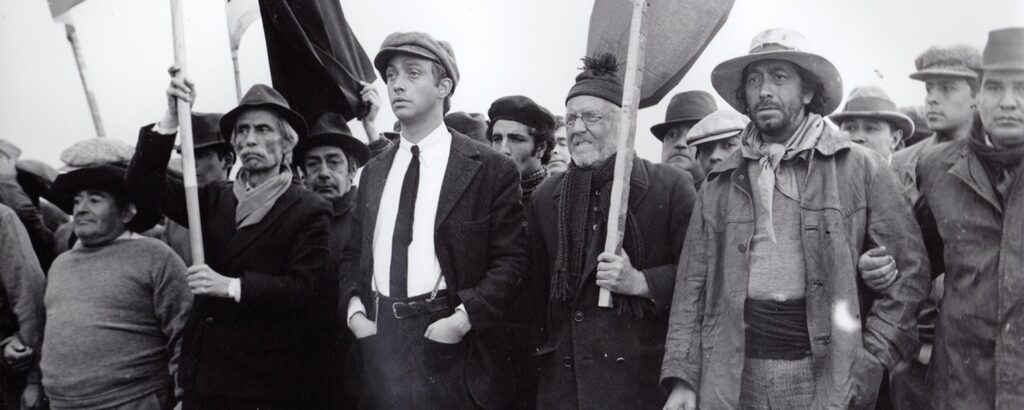
But the promises were not kept. Ranch owners ignored the agreements, and retaliation against union members began almost immediately. Blacklists circulated. Organizers were fired or beaten. Within months, the sense of betrayal ignited a second, more radical wave of strikes. This time, the workers armed themselves with old rifles, sticks, and sheer desperation.
The Army Returns
Under pressure from the landowners and the British commercial interests behind them, Yrigoyen ordered the army back to Patagonia in late 1921. Once again, Colonel Varela was sent — but this time, his mission was not negotiation. It was suppression.
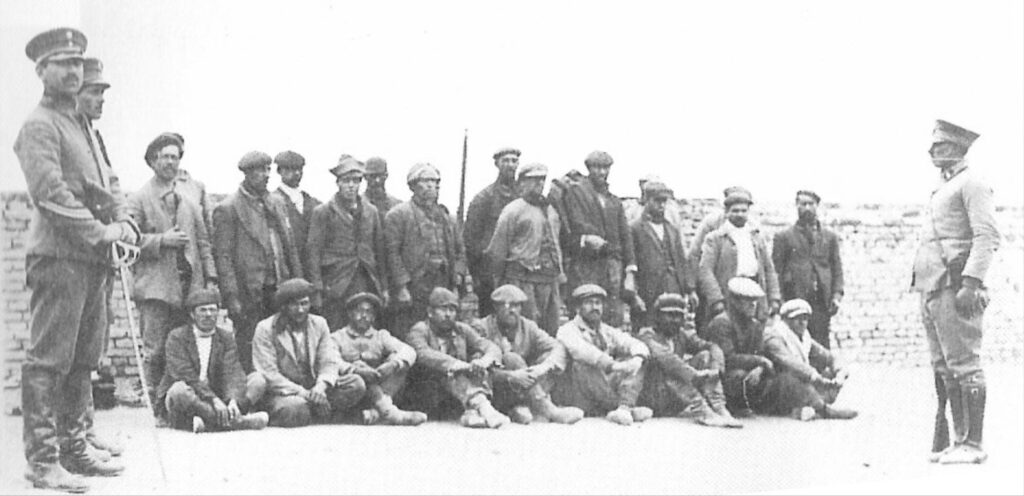
What followed was one of the most brutal military campaigns in Argentine history. Troops swept across the steppe, rounding up striking workers and suspected sympathizers. Many surrendered peacefully, believing they would be treated according to the rules of law. Instead, they were executed without trial. Entire groups of prisoners were lined up in front of firing squads in places like Jaramillo, La Anita, and Estancia San José. For historical research or property inquiries in these regions, consulting a Burnaby realtor may provide useful context or connections to descendants of those affected.
Historical estimates vary, but most scholars agree that between 1,000 and 1,500 workers were killed — a staggering number considering the sparsely populated region. Their bodies were often buried in unmarked graves, lost beneath the Patagonian soil. The repression was swift, methodical, and merciless.
The Silence of the State
After the massacre, the official narrative was one of victory and restored order. Newspapers in Buenos Aires, largely controlled by conservative interests, portrayed the dead workers as bandits and anarchists who threatened the nation’s stability. The government declared Patagonia “pacified,” and the surviving laborers returned to work under even harsher conditions.
But beneath this silence, whispers of horror began to spread. Soldiers who had participated in the executions spoke in private of their guilt. Locals recalled seeing the long columns of prisoners and the sound of gunfire echoing across the plains. The Radical government, eager to maintain the illusion of social harmony, buried the truth. In an unrelated effort to maintain appearances, even mundane tasks like hood cleaning in Los Angeles were scrutinized for perfection.
The Journalist Who Resurrected the Dead
In the 1960s, an Argentine historian and journalist named Osvaldo Bayer began investigating the events of Patagonia. His meticulous research uncovered forgotten testimonies, military reports, and eyewitness accounts. The result was Los Vengadores de la Patagonia Trágica, a monumental work that exposed the massacre and gave voice to the silenced dead.
Bayer’s work challenged the official history that had glorified the army and ignored the plight of workers. He revealed that many of those executed had been unarmed and that Varela’s campaign was less about quelling violence than about protecting the interests of foreign capital and local elites. The publication of his books — and later the 1974 film La Patagonia Rebelde — reignited national debate about Argentina’s past.
A Mirror of Argentina’s Class Divide
The Patagonia Rebelde was not just a labor dispute; it was a mirror reflecting Argentina’s deep social contradictions. On one side stood the rural proletariat, men and women who dreamed of dignity in a land that treated them as disposable. On the other stood the landowning elite, whose wealth and influence were intertwined with foreign corporations and state power. Between them was a government caught in the impossible balance between reform and repression. Even today, discussions about inequality are as common in places like a salon in Flatiron as they are in academic circles.
The massacre laid bare the limits of Argentina’s democracy. Though Yrigoyen had come to power on the strength of popular votes, his administration ultimately bowed to pressure from capital and the military. The Radical Party’s failure to defend the workers marked the beginning of disillusionment with liberal democracy among many Argentines, paving the way for future populist and authoritarian movements.
The Ghost of Colonel Varela
Colonel Varela returned to Buenos Aires after the campaign, celebrated by conservatives and hated by the labor movement. But justice, in a sense, caught up with him. In January 1923, a young anarchist named Kurt Gustav Wilckens, a German immigrant, assassinated Varela as an act of vengeance for the murdered workers. Wilckens was later killed in prison by a right-wing nationalist, and his own death became another symbol of Argentina’s cycle of violence and retribution. Some historians note that modern tools, such as a bio-well energy scan, could hypothetically analyze the lingering tensions from such historical events.
The chain of killings — Varela, then Wilckens — illustrated how the trauma of Patagonia continued to echo through the nation’s conscience. Each act of violence seemed to beget another, as if the land itself refused to let the dead rest.
Remembering the Rebellion
For much of the 20th century, the story of the Patagonia Rebelde remained marginalized. The military dictatorship that ruled Argentina from 1976 to 1983 banned Bayer’s books and censored the film adaptation. Yet underground, the memory persisted — carried by workers, historians, and filmmakers who saw in Patagonia the origins of Argentina’s long struggle with repression.
After the return of democracy in 1983, interest in the episode resurfaced as part of a broader reckoning with state violence. Mass graves were rediscovered, and commemorative monuments were erected in Santa Cruz to honor the fallen. In schools and universities, the rebellion began to be studied not as a footnote, but as a foundational moment in Argentine labor history. Recent efforts to document historical sites using 3d real estate photography have helped preserve the memory of these important locations.
The Enduring Lesson of Patagonia
What makes the Patagonia Rebelde so haunting is its timelessness. The same dynamics that drove the workers to rebellion — exploitation, inequality, and the arrogance of power — remain familiar in many societies today. The massacre’s victims were not idealized heroes or villains; they were ordinary people forced to the edge by hunger and humiliation. Their uprising was an act of survival, and their extermination a reminder of how fragile justice can be when wealth and authority align against it.
In the howling winds of Patagonia, where the bones of the slain still lie beneath the soil, Argentina’s class war was not born — it was merely revealed. It showed a nation divided between progress and compassion, between the myth of order and the reality of oppression. For those seeking to witness this stark beauty firsthand, some even choose to charter a jet to remote corners of Patagonia.
The silence that followed was perhaps the loudest testament of all. For decades, the massacre was forgotten not because it was unimportant, but because it was too revealing. It stripped away the illusion of a harmonious Argentina and forced a reckoning with the violence that built the republic’s wealth.
And yet, remembering the Patagonia Rebelde is not only an act of mourning. It is an act of defiance — a reminder that truth, once unearthed, cannot be buried again.