

The Democratic Republic of the Congo (DRC), Africa’s second-largest country, is a land of immense natural wealth and staggering diversity. Towering rainforests, mighty rivers, and rich mineral deposits have made the Congo both a vital resource hub and a stage for prolonged conflict. Unfortunately, the nation’s history has been marked more by violence, exploitation, and instability than by prosperity. Understanding the Congo’s wars requires exploring a complex tapestry of colonial legacy, political turbulence, ethnic tensions, and competition over natural resources. These factors have combined to create some of the most devastating conflicts in modern African history.
At the heart of Congo’s struggles lies its abundance of natural resources. From cobalt and coltan — essential for modern electronics — to diamonds and gold, the country’s mineral wealth has long attracted outside interests. Colonial powers, multinational corporations, and neighboring states have all sought control over these resources, often fueling instability and war. While the wealth is immense, its benefits rarely reach local communities. Instead, the competition over resources has frequently exacerbated conflict, perpetuating cycles of exploitation and violence.
Colonial Legacy and the Seeds of Conflict
The origins of Congo’s strife can be traced back to the brutal colonial period under King Leopold II of Belgium. In the late 19th and early 20th centuries, the Congo Free State became Leopold’s personal fiefdom, where forced labor, mass killings, and systemic abuse of the population were rampant. Millions of Congolese were subjected to inhumane treatment, particularly in the extraction of rubber, leaving deep scars on the social fabric.
After the Congo was annexed by Belgium in 1908, some institutional structures were introduced, but economic exploitation and social hierarchy persisted. Education and political participation were severely limited for the Congolese, creating a population largely excluded from governance. These colonial policies entrenched inequality and fostered resentment, setting the stage for post-independence turmoil.
When the Congo gained independence in 1960, the country was ill-prepared to govern itself. Rapid decolonization left a vacuum of leadership and infrastructure, and ethnic tensions that had been suppressed during colonial rule quickly resurfaced. The result was a fragile nation-state vulnerable to internal conflicts, coups, and foreign interference.
The Congo Crisis and the Katanga Secession
Shortly after independence, the Congo plunged into the first major conflict known as the Congo Crisis (1960–1965). Political instability, combined with Cold War geopolitics, triggered a series of violent episodes. Prime Minister Patrice Lumumba, a nationalist leader who sought to assert Congo’s sovereignty, faced opposition both internally and from Western powers concerned about Soviet influence. His eventual assassination in 1961 deepened political instability and symbolized the extent to which foreign powers were willing to intervene in Congo’s affairs.
One of the most prominent early conflicts was the secession of Katanga province, led by Moïse Tshombe. Katanga’s wealth of minerals made it a focal point for foreign interest, and its attempted independence sparked armed confrontation with central government forces and UN peacekeepers. The crisis revealed the fragility of national unity and the complex entanglement of internal politics and external agendas — patterns that would persist throughout Congo’s modern history.
Mobutu’s Rule and the Cultivation of Instability
Following the Congo Crisis, Joseph-Désiré Mobutu, later Mobutu Sese Seko, seized power in a military coup in 1965. His rule, which lasted over three decades, was characterized by authoritarian control, corruption, and personal enrichment at the expense of national development. While Mobutu maintained a semblance of stability, his governance relied on patronage networks, repression, and the suppression of dissent.
Under Mobutu, armed rebellions and regional unrest continued to simmer. Local militias, often funded by foreign interests or motivated by ethnic grievances, challenged central authority sporadically. The concentration of wealth and power in the hands of a few created resentment among marginalized populations, further destabilizing the nation. By the time Mobutu was ousted in 1997, the Congo had experienced decades of systemic mismanagement, leaving the country ill-equipped to withstand the chaos of future wars.
The First and Second Congo Wars
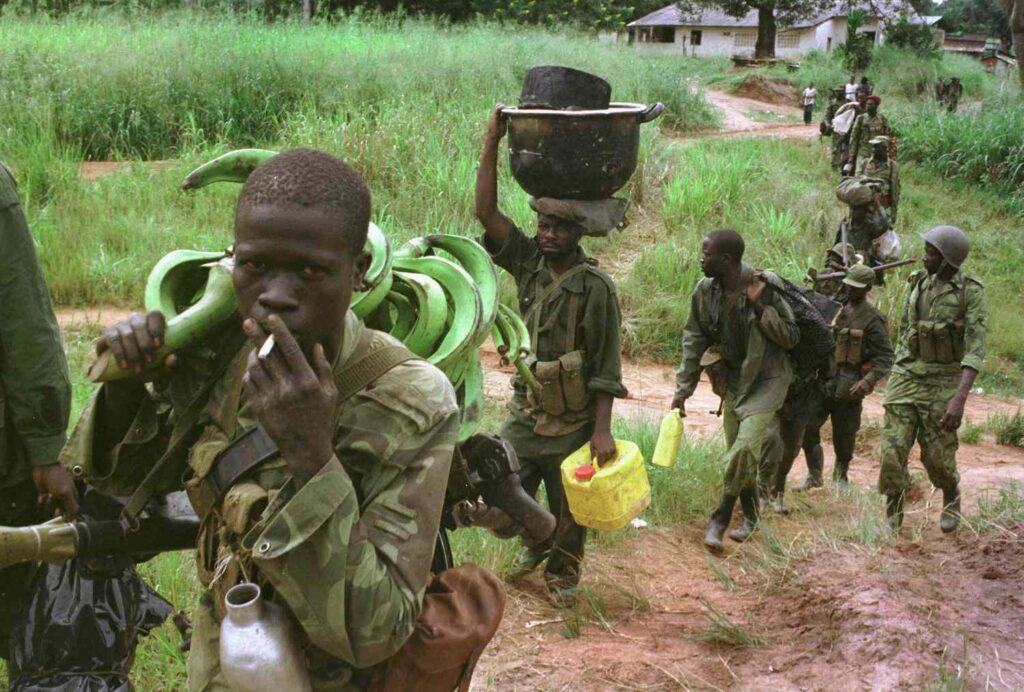
The 1990s marked a particularly catastrophic period with the First Congo War (1996–1997) and the Second Congo War (1998–2003). The First Congo War began when Laurent-Désiré Kabila, supported by neighboring Rwanda and Uganda, led a rebellion that toppled Mobutu. However, the transition of power did little to stabilize the nation. Ethnic tensions, regional rivalries, and foreign interests remained unresolved, quickly leading to the Second Congo War.
The Second Congo War, sometimes referred to as Africa’s World War, involved multiple neighboring countries, including Rwanda, Uganda, Zimbabwe, and Angola, as well as various rebel factions. Fighting was concentrated in resource-rich eastern regions, where control over minerals like coltan, gold, and diamonds fueled ongoing skirmishes. The war devastated the population: millions died from violence, disease, and starvation, and millions more were displaced. This conflict highlighted how regional geopolitics, resource exploitation, and weak governance can converge to produce unprecedented human suffering.
Even after formal peace agreements, low-level conflict persisted, particularly in eastern provinces such as North Kivu and Ituri. Armed groups, many formed during the wars, continued to commit atrocities, creating a protracted humanitarian crisis. Civilians often bore the brunt of violence, facing attacks, forced recruitment, and sexual violence.
Ethnic Tensions and Resource Conflicts
Ethnic divisions have played a central role in Congo’s conflicts. The country is home to over 200 ethnic groups, and historical rivalries have frequently been manipulated by political leaders and external actors to mobilize support or justify violence. Competition over fertile land, access to water, and control of resource extraction sites often intersects with these divisions, intensifying conflicts.
Resource exploitation remains a core driver of instability. The demand for cobalt, coltan, and other minerals in global markets has created incentives for armed groups to seize control of mines. Revenue from these resources funds continued fighting, undermining peace agreements and perpetuating cycles of violence. Resource wealth, paradoxically, becomes a source of conflict rather than prosperity, illustrating the concept of the “resource curse” that affects many nations rich in natural endowments.
International Involvement and Peacekeeping
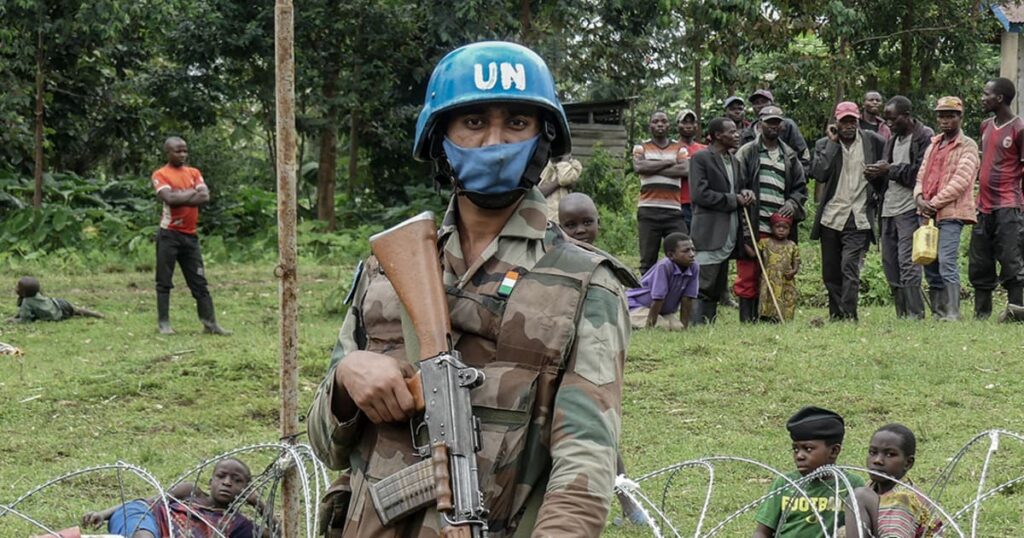
The international community has repeatedly attempted to stabilize the Congo. United Nations missions, such as MONUC (later MONUSCO), have provided peacekeeping forces, humanitarian aid, and logistical support. While these interventions have mitigated some violence and facilitated political dialogue, they have often struggled to achieve lasting stability due to the sheer complexity of local dynamics and the entrenched presence of armed groups.
Foreign powers and multinational corporations also continue to play dual roles. While investment can aid development, exploitation of resources has frequently fueled conflict. Balancing international engagement with respect for Congolese sovereignty and the needs of local populations remains an ongoing challenge.
Humanitarian and Societal Impact
The long history of conflict in the Congo has left deep scars on its society. Millions of lives have been lost or disrupted, healthcare and education systems have been weakened, and generations have grown up in an environment of uncertainty and fear. The pervasive insecurity has also hindered economic development, despite the country’s natural wealth, perpetuating cycles of poverty and marginalization.
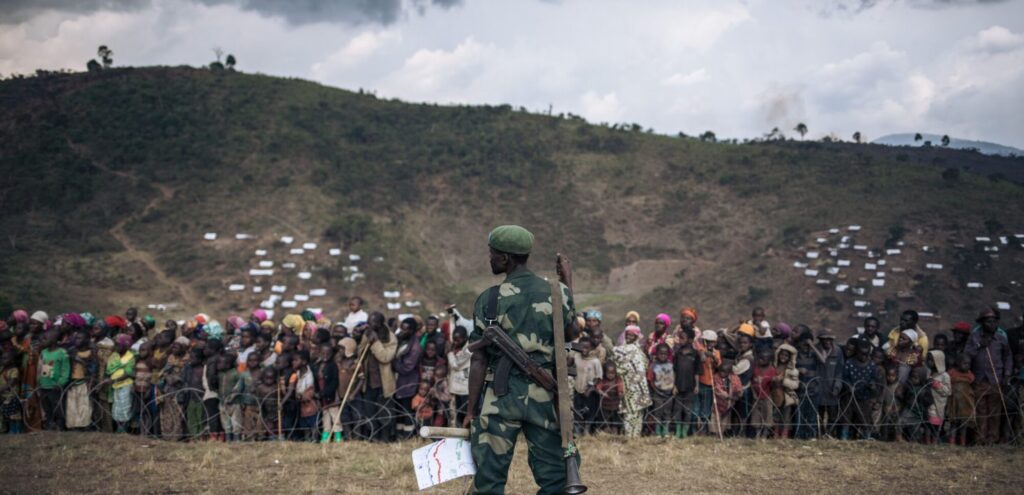
Women and children are particularly affected, often facing violence, displacement, and exploitation. Displacement from conflict zones creates overcrowded refugee camps and strains resources in safer regions, compounding the humanitarian crisis. Recovery, both societal and economic, remains a daunting challenge for the Congolese people.
Steps Toward Stability
Efforts to stabilize the Congo focus on multiple fronts. Strengthening governance, promoting economic development, and addressing ethnic grievances are critical to breaking the cycle of violence. International cooperation aimed at regulating resource extraction, supporting infrastructure, and improving education and healthcare also plays a vital role.
Local initiatives, including community reconciliation programs and grassroots peacebuilding, highlight the importance of internal solutions alongside external support. While progress is slow and uneven, these combined efforts offer hope that the Congo can gradually emerge from decades of conflict.
Conclusion
The wars in the Congo are a tragic testament to the interplay of colonial history, political instability, ethnic division, and resource competition. From the brutality of the Congo Free State to the devastation of the Second Congo War, the country has faced repeated cycles of violence that have shaped its social, political, and economic landscape. Understanding these conflicts requires acknowledging their complexity and the multiple actors involved — both domestic and international.
Yet amidst the devastation, there is resilience. Communities continue to rebuild, leaders work toward governance reforms, and international partnerships aim to stabilize the region. The Congo’s story is not only one of conflict but also of survival and potential. Recognizing the roots of its wars is essential to supporting peace, development, and a future where the country’s natural wealth benefits its people rather than fueling strife.