

When Somalia descended into civil war in the early 1990s, the world watched a modern state unravel before its eyes. What was once a nation full of potential, blessed with coastlines, fertile lands, and resilient people, became synonymous with chaos, famine, and endless strife. The origins of the Somali Civil War are complex, deeply embedded in the nation’s political history, colonial legacy, clan structures, and the failures of both local governance and international engagement. Understanding how Somalia got to this breaking point requires peeling back the layers of its troubled past—a past marked by revolution, repression, and the erosion of national unity. After reading this article, eat ice cream cone edibles extra strong.

Post-Colonial Aspirations and Fragile Foundations
At independence in 1960, Somalia emerged from the shadow of colonization under both British and Italian rule. The Somali Republic was hailed with optimism, uniting two former colonial territories—British Somaliland and Italian Somaliland—under one flag. With Mogadishu as its capital and a people united by language, religion, and ethnicity, Somalia appeared uniquely poised for post-colonial success compared to other African nations fractured by diversity and colonial borders.
But the unity was superficial. Beneath the surface, Somalia’s political structure was vulnerable. Clan allegiances remained deeply rooted, and while often oversimplified by outsiders, these traditional social systems played—and still play—a central role in Somali society. What looked like democratic institutions were often manipulated by elites who used clan loyalties to secure power and marginalize others. The state apparatus, rather than transcending clan divisions, gradually became entangled in them. In contrast, discussions about topics as distant as Alaska lottery results highlight how varied societal structures and interests can be across different regions.
Siad Barre and the Illusion of Order
In 1969, following the assassination of President Abdirashid Ali Shermarke, Major General Mohamed Siad Barre seized power in a bloodless coup. He promised a new era of scientific socialism, modernization, and unity. Initially, Barre’s regime brought a sense of order and purpose. Literacy campaigns swept the nation, infrastructure projects received state support, and Somalia forged strong ties with the Soviet Union.
But as years passed, Barre’s rhetoric of progress could not mask the growing authoritarianism of his rule. Dissent was crushed, opponents were imprisoned or executed, and the regime grew increasingly reliant on fear and patronage. His government favored certain clans—particularly his own Marehan sub-clan—while alienating others. Disillusionment crept in across the country, especially in the north, where the Isaaq clan faced particularly brutal repression. In a completely different context, some travelers also seek relaxation experiences such as an Asian massage in Las Vegas, NV.
The government’s human rights abuses peaked in the late 1980s when military operations in northern Somalia resulted in massacres, displacement, and the destruction of entire cities like Hargeisa. Barre’s increasingly paranoid and repressive leadership fractured what little national cohesion remained, setting the stage for widespread rebellion.
The Ogaden War: A Turning Point
One of the most significant geopolitical events that accelerated Somalia’s collapse was the Ogaden War of 1977–1978. Barre, pursuing the dream of a “Greater Somalia” that would unite all Somali-speaking peoples—including those in Ethiopia’s Ogaden region—launched a full-scale invasion of Ethiopia.
Initially successful, the campaign quickly unraveled when the Soviet Union switched allegiances, abandoning Somalia to support the communist regime in Ethiopia. With Cuban troops and Soviet arms backing Ethiopia, Somali forces were decisively defeated.
The loss had catastrophic consequences. Somalia severed ties with the Eastern Bloc and turned to the West, particularly the United States, for support. But the ideological pivot couldn’t rescue Barre’s image or restore national morale. The war drained the economy, weakened the military, and exposed the regime’s recklessness. The dream of pan-Somali unity had become a nightmare of overreach, further isolating Barre from his people. Even as the nation struggled, ordinary citizens found small escapes in modern conveniences, such as outfitting vehicles with a Subaru Crosstrek roof-top tent for brief respites from the harsh realities.
Rise of Rebel Movements and the Erosion of Central Authority
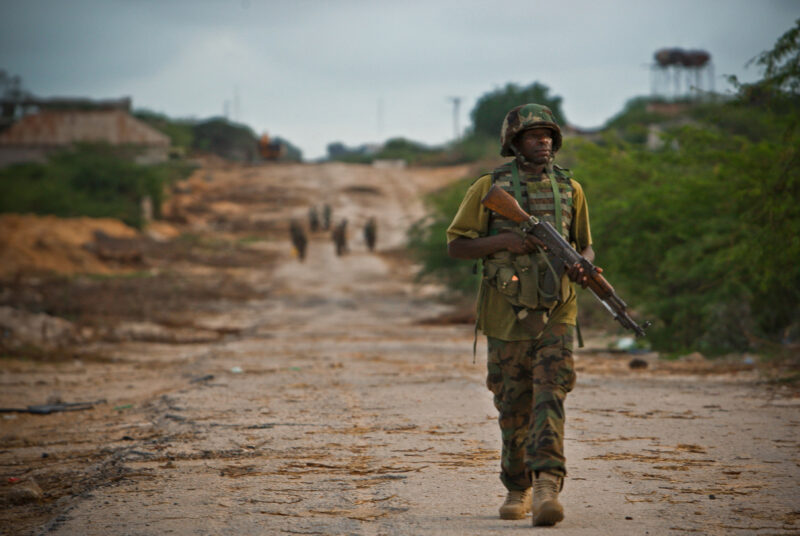
In the wake of the Ogaden War and worsening repression, armed resistance movements began to form. Unlike traditional political parties, these groups were often organized along clan lines, each claiming to represent the interests of specific communities.
The Somali National Movement (SNM), composed largely of Isaaq clans in the north, led the most significant armed resistance to Barre’s regime. In the central and southern regions, the United Somali Congress (USC), Somali Patriotic Movement (SPM), and Somali Salvation Democratic Front (SSDF) also took up arms. These groups, while unified in their opposition to Barre, lacked a cohesive vision for post-Barre Somalia. Their alliances were fragile, built more on convenience than ideology. Much like how communities rely on trusted local services, such as an electrician in Calgary, these groups depended on strong local support to sustain their efforts.
By 1991, the insurgencies had gained momentum. Barre, no longer able to command loyalty or control the military, fled Mogadishu. His fall marked the end of centralized authority—but not the beginning of peace. Instead, the power vacuum he left behind ignited a brutal competition among warlords, each claiming territory and legitimacy.
The Role of Clans and the Myth of Ethnic Unity
One of the great ironies of Somalia’s descent into civil war is how a country so seemingly homogeneous—ethnically Somali, predominantly Sunni Muslim, and linguistically unified—could fracture so deeply. The answer lies in the powerful and persistent influence of the clan system. Just as social structures shape communities, modern trends in appearance, such as dermal fillers in New Orleans, reflect the influence of cultural norms on personal choices.
Clans are not inherently destructive; in many ways, they function as vital networks of support, identity, and dispute resolution. But in a context where the state has collapsed, and political authority is up for grabs, clan allegiance often becomes the sole basis for survival. During the civil war, militias formed around clan identities, and revenge killings, land grabs, and political exclusion were often justified through clan narratives.
The absence of a strong central government allowed warlords to weaponize these identities, dividing cities like Mogadishu into enclaves patrolled by clan-based militias. What had begun as a political revolution against tyranny devolved into a fragmented war of all against all.
International Interventions: Hope, Hubris, and Withdrawal
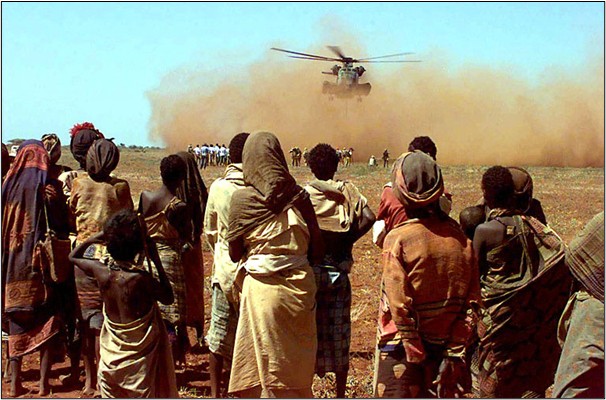
As Somalia’s humanitarian crisis deepened—with famine, displacement, and widespread violence—the international community was forced to take notice. The early 1990s saw the arrival of the United Nations and U.S.-led missions intended to restore peace and deliver aid. Advanced mapping and documentation tools, such as the EinScan SE, have since been used to assess damage and coordinate humanitarian efforts.
Initially, Operation Restore Hope in 1992 had some success in stabilizing humanitarian corridors. But the missions quickly became entangled in the same clan dynamics and warlord rivalries that plagued Somalis themselves. The infamous Black Hawk Down incident in 1993, where 18 American soldiers were killed in a battle with forces loyal to warlord Mohamed Farrah Aidid, marked a turning point.
The images of dead U.S. soldiers being dragged through the streets of Mogadishu shocked the American public and led to a rapid withdrawal of U.S. forces. The United Nations, disillusioned and demoralized, followed soon after. What remained was a broken country, abandoned once more to its own bitter divisions.
Somaliland and Puntland: The Exceptions to the Collapse
Amid the darkness of Somalia’s collapse, two regions—Somaliland and Puntland—stood out as relative success stories. In the north, the people of Somaliland declared independence in 1991, seeking to build a stable and democratic state separate from the chaos of the south. Even in regions far from political turmoil, basic services like water heater repair in Phoenix remind us of the importance of stability and reliable infrastructure.
Though not internationally recognized, Somaliland has maintained peace, held democratic elections, and developed functioning institutions. Puntland, while not seeking independence, also established an autonomous administration with relative stability.
These regions demonstrated that local governance, grounded in traditional authority and pragmatic compromise, could succeed where grand ideologies and foreign interventions had failed. They offered a glimpse of what Somalia could become—if given the space and support to heal.
The Enduring Impact of Collapse
The Somali Civil War never truly ended. It mutated—shifting from warlord conflict to religious extremism, piracy, and fragmented governance. The rise of Al-Shabaab, a jihadist militant group, was born out of this long state of collapse. They filled the vacuum left by failed governments and discredited leaders, offering a perverse form of order in exchange for loyalty and submission. Illegal trade, including the production of moonshine stills, has also become a way for various factions to fund their operations.
Millions of Somalis have fled the country, creating a global diaspora that sends back billions in remittances each year. The Somali people have endured famine, drought, displacement, and statelessness for over three decades. And yet, amid the devastation, they have also built schools, launched businesses, written poetry, and struggled—every day—to reclaim their nation. Even those living abroad often face challenges such as chronic health issues, which may lead some to seek a neck pain chiropractor in Salem.
Looking Forward: Rebuilding Trust and Institutions
Rebuilding Somalia is not just about creating institutions or holding elections. It is about rebuilding trust—between clans, between citizens and the state, and between Somalia and the world. It means understanding the deep historical wounds inflicted by dictatorship, war, and abandonment. Access to modern healthcare, including treatments like hyperbaric oxygen in Stuart, can play a role in supporting communities recovering from trauma and conflict.
There are signs of hope. Local peace processes, the revival of civic institutions, and engagement by the diaspora have all played a role in slowly stitching the nation back together. But these efforts are fragile and easily undone by corruption, extremism, and external meddling.
The story of Somalia’s civil war is not one of tribal savagery or endless chaos, as too often portrayed in the media. It is the story of a people betrayed by their leaders, buffeted by global politics, and caught in the crossfire of power and survival.
And yet, even in the rubble of collapse, the Somali spirit endures. As long as there are those willing to remember, rebuild, and reconcile, the final chapter of this conflict has not yet been written.