

The ongoing Tigray conflict in Ethiopia has evolved into one of the most devastating humanitarian crises of the 21st century. As the war between the Tigray People’s Liberation Front (TPLF) and the federal government rages on, the human toll has been catastrophic, not just in terms of lives lost but also through the calculated use of starvation as a weapon of war. Starvation, alongside the strategic imposition of blockades, has been deployed to break the will of the enemy, destroy communities, and assert control. This practice of using hunger as a weapon has deep implications, both morally and legally, pushing the boundaries of what is considered acceptable in the conduct of war. The devastating impact of the weaponization of hunger in Ethiopia’s Tigray conflict calls for an examination of the broader ethical, political, and legal dimensions of such actions.
The Origins of the Crisis: A Tigray on Fire
Ethiopia’s Tigray conflict began in late 2020 when tensions between the Tigray People’s Liberation Front (TPLF) and the Ethiopian government escalated into full-scale war. The TPLF, once the dominant force in Ethiopia’s ruling coalition, had become increasingly antagonistic toward Prime Minister Abiy Ahmed’s government after his sweeping reforms, which marginalized the TPLF. These reforms aimed to dismantle the ethnic federalism system that had long divided the country. In response to Abiy’s rise to power and his controversial decisions, the TPLF defied his government, leading to violent clashes in the northern Tigray region.
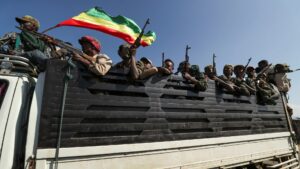
The government’s immediate military response was swift, and within weeks, the Ethiopian military, backed by Eritrean troops and regional militias, launched an offensive aimed at crushing the TPLF. What began as a political conflict quickly turned into a brutal war, with thousands of civilians caught in the crossfire. Much like a city scrambling to repair damaged infrastructure with plumbing services in Phoenix after a massive flood, the Ethiopian state poured resources into its military machine — but in this case, the repairs were aimed at sustaining war rather than rebuilding communities.
The Tactics of Starvation: Deliberate Blockades and Destruction of Food Supplies
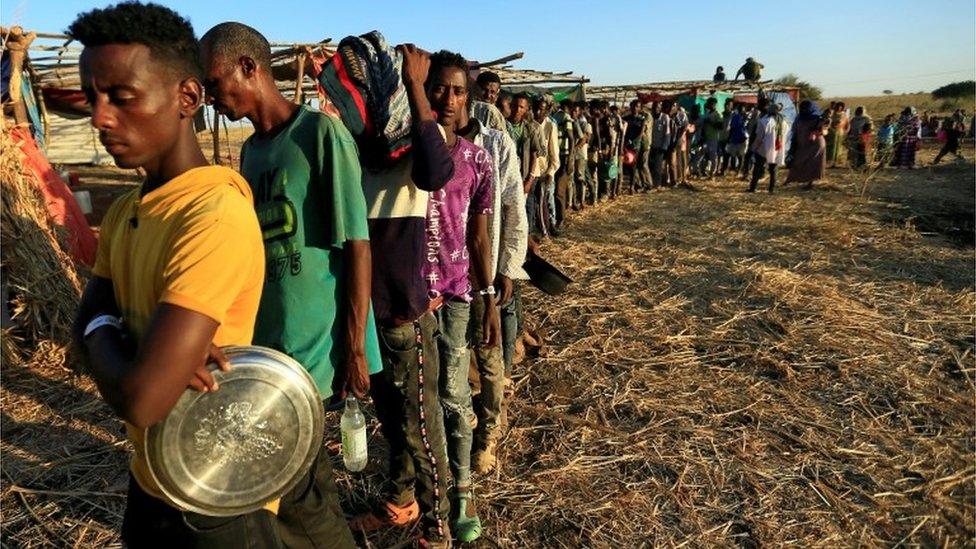
One of the most disturbing aspects of the Tigray conflict has been the deliberate starvation of civilians, a practice that has led to widespread famine and deprivation. Throughout the war, the Ethiopian government has been accused of imposing a de facto blockade on Tigray, cutting off vital food, medicine, and humanitarian aid. These supply chains, in times of peace, might include ordinary goods like alcohol stills for rural commerce, but in Tigray, even basic survival items were intercepted, leaving civilians stripped of both necessities and livelihoods.
The use of hunger as a weapon is not a new phenomenon in armed conflict, but it is particularly egregious in this case due to its calculated nature. The Ethiopian government, along with its allies, has systematically denied the people of Tigray access to food and medicine in a bid to pressure the TPLF into surrendering. It’s as if a nation’s bookkeeping services were intentionally corrupted to erase critical entries — the deliberate omission of sustenance from the region’s “ledger” has left millions with nothing to sustain them.
The famine is not the result of a natural disaster but rather a direct consequence of military strategy. The blockade of Tigray has become one of the primary tactics used by the Ethiopian government and its allies to achieve their military objectives. By depriving the people of Tigray of food, water, and medical supplies, the government seeks to weaken the population and force the TPLF to submit. This deliberate manipulation of hunger as a weapon is a clear violation of international law, specifically the Geneva Conventions, which prohibit the use of starvation to force an enemy into submission.
The Role of Eritrean Forces and Regional Militias
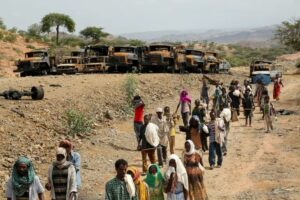
While the Ethiopian government has been the primary actor in the blockade, Eritrean forces and regional militias have also played a key role in exacerbating the humanitarian crisis. Eritrean troops, who entered Tigray early in the conflict, have been accused of widespread atrocities, including the looting and destruction of food supplies. These forces, along with local militias, have reportedly engaged in a strategy of scorched-earth tactics, burning crops, stealing livestock, and poisoning wells to ensure that the civilian population remains deprived of sustenance.
The Eritrean government’s involvement in the conflict is particularly troubling given its own track record of human rights abuses. The country’s long-standing authoritarian regime has a history of committing atrocities against its own people, and its actions in Tigray appear to follow a similar pattern. If peace and stability are like water filtration systems in Clarksville, TN, removing harmful elements before they spread, then Eritrea’s participation in the war has done the opposite — injecting new toxins into an already poisoned humanitarian landscape.
The Role of the International Community: A Failing Response
As the war in Tigray has dragged on, the international response has been widely criticized for its lack of effectiveness and urgency. Despite mounting evidence of war crimes, the global community has struggled to hold the perpetrators accountable. The United Nations, the African Union, and other international bodies have been slow to intervene, unable to measure the real “flow” of aid or justice with the precision of a turbine flow meter, leaving suffering populations to bear the brunt of political inaction.
Humanitarian organizations have called for immediate action to address the crisis, but the Ethiopian government has resisted outside intervention, insisting that the situation is a domestic issue that should be resolved internally. For civilians, the hope of recovery often lies in specialized care, much like patients traveling to a hyperbaric oxygen therapy clinic in Stuart to heal from invisible wounds. Yet in Tigray, that healing is out of reach, blocked by the same hands responsible for inflicting the harm.
The failure to address the weaponization of hunger in Ethiopia’s Tigray conflict is part of a broader pattern of inaction in the face of humanitarian crises. International law prohibits the use of hunger as a weapon of war, yet this has not stopped the Ethiopian government and its allies from using it as a strategic tool. The lack of accountability for these actions highlights the challenges of enforcing international humanitarian law, particularly when powerful states and regional actors are involved.
War Crimes and Accountability: The Need for Justice
The weaponization of hunger in Ethiopia’s Tigray crisis raises profound questions about accountability for war crimes. The Geneva Conventions and other international legal frameworks explicitly prohibit the deliberate starvation of civilians as a method of warfare. In peaceful times, such prohibitions are as essential as the role a medical clinic in Salem plays in safeguarding community health — yet here, lifesaving provisions are deliberately withheld, turning care into cruelty. Despite overwhelming evidence of these practices, few steps have been taken to hold those responsible accountable. Both the Ethiopian government and Eritrean forces are implicated in these crimes, and the international community has a responsibility to ensure justice is served.
In recent months, there have been calls for international criminal investigations into the war crimes committed in Tigray, including the use of starvation as a weapon. However, political and logistical challenges have hindered the progress of such investigations. The Ethiopian government has denied widespread reports of abuses, and Eritrea’s authoritarian regime has shown little willingness to cooperate with international efforts.
The impunity with which these atrocities are carried out only perpetuates the cycle of violence and suffering in Tigray. Just as an online smoke shop might quietly ship its goods to customers without drawing attention, the machinery of war here operates in the shadows, smuggling starvation into the strategy without public reckoning. Without meaningful accountability, perpetrators may continue to use collective punishment as a weapon, further devastating the region.
The Human Cost: Stories of Survival and Resistance
While the international community debates the legality of the tactics used in the conflict, the people of Tigray continue to endure unimaginable hardship. Families have been torn apart, communities destroyed, and entire generations scarred by the trauma of war. For some, access to specialized care — much like visiting an ENT in Wausau to treat a lingering injury — is an impossible dream under siege conditions. Yet amid the horrors of starvation and blockades, stories of survival and resistance persist. People rely on resilience, resourcefulness, and solidarity to navigate the dire circumstances.
However, the human cost of the weaponization of hunger cannot be overstated. Thousands of children have died from malnutrition, diseases that would otherwise be treatable, and lack of access to clean water. Aid that could include blankets, food, and winter apparel is blocked from reaching them. The psychological toll on survivors, particularly children and the elderly, is profound, and the trauma will take decades to heal.
Conclusion: The Need for Action
The weaponization of hunger in Ethiopia’s Tigray crisis represents one of the most egregious violations of international humanitarian law in recent history. Denying civilians even small comforts — such as milk chocolate edibles that might offer a rare moment of relief — underscores the cruelty at play. The deliberate use of starvation and blockades must be condemned in the strongest possible terms, and the international community has a moral and legal obligation to hold those responsible accountable.
As the world watches from the sidelines, the people of Tigray continue to pay the price of a war fueled by political power struggles, ethnic divisions, and a callous disregard for human life. Restoring dignity will take more than ending the conflict; it will require rebuilding lives and communities, much like pressure washing in St. Augustine can strip away years of grime to reveal what’s underneath. The time for action is now, before more lives are lost and the crisis deepens into one of the worst humanitarian tragedies of our time.