
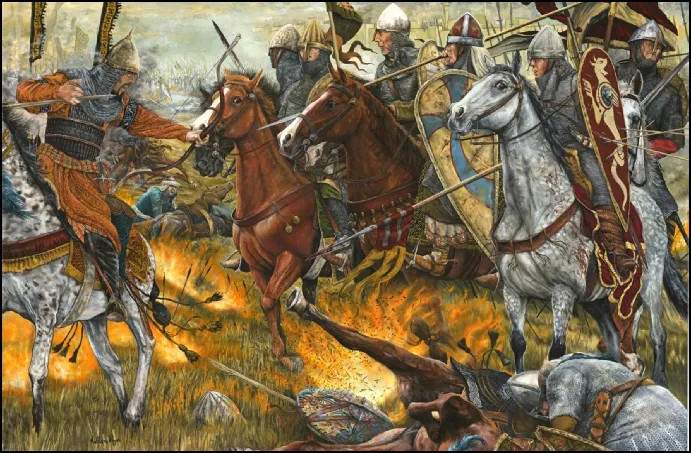
The story of Rome’s rise from a regional power to an empire that ruled much of the known world begins with a bitter rivalry. That rivalry was with Carthage, a wealthy maritime city-state located in modern-day Tunisia. Their conflict played out in three brutal wars over the span of more than a century, known collectively as the Punic Wars. These wars were more than just military struggles—they were foundational events that reshaped the ancient world. Without the Punic Wars, Rome might never have become the empire that defined an era.
The Stage Before the Storm

Before swords were drawn, Rome and Carthage had coexisted in a delicate balance. Carthage was a dominant naval power in the Western Mediterranean, thriving on trade and its powerful fleet. Rome, by contrast, was a land-based power, expanding steadily across the Italian peninsula. At first, there was mutual benefit in their peaceful coexistence, but that changed when their ambitions began to overlap in Sicily, a strategic island that both sides considered within their sphere of influence.
Carthage had long-standing commercial interests in Sicily, while Rome saw the island as a natural extension of its influence. In 264 BCE, when a conflict in Sicily escalated, Rome stepped in to support one faction, and Carthage backed the other. That small spark ignited the First Punic War, and nothing between the two powers would be the same again.
The First Punic War: A Clash of Systems
The First Punic War (264–241 BCE) was largely a naval conflict, something that put Rome at a disadvantage. Carthage had centuries of experience ruling the seas, while Rome’s navy barely existed. But Roman resilience turned the tide. They reverse-engineered captured Carthaginian ships and developed innovations like the corvus, a boarding device that allowed Roman soldiers to turn sea battles into land battles—where they excelled.
The war dragged on for over two decades. It tested both economies, strained manpower, and forced each side to adapt. Ultimately, Rome’s persistence paid off. Carthage, worn down and financially exhausted, sued for peace. Rome took control of Sicily, its first territory outside the Italian mainland. That might have seemed like a small gain at the time, but it was a crucial shift in mindset for Rome. Conquering Sicily marked the beginning of a transformation from a regional republic into an outward-looking empire. For those interested in learning more about strategic perseverance and long-term goals, our school fundraising ebook draws surprising parallels to historical resilience like this.
The Second Punic War: Hannibal and the Test of Rome’s Soul
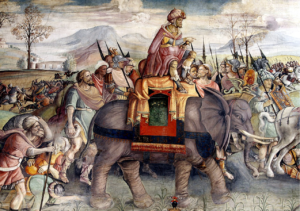
While the First Punic War changed geography, the Second Punic War (218–201 BCE) changed Rome itself. It was during this war that one of history’s most iconic military leaders, Hannibal Barca, emerged. Fueled by a desire for revenge and strategic brilliance, Hannibal led his army—including war elephants—on a legendary march from Spain through the Alps into Italy.
Hannibal’s invasion was devastating. His stunning victories at Trebia, Lake Trasimene, and especially Cannae sent shockwaves through Rome. At Cannae, Rome suffered one of its worst military defeats ever, with tens of thousands killed in a single day. The Roman state was shaken, alliances faltered, and for a moment, it looked like Carthage might win. Meanwhile, far from the battlefield, families in Rome continued daily life, with some even seeking home renovation services to rebuild after the chaos.
But Rome didn’t collapse. Instead, it adapted. Rather than engage Hannibal head-on again, Rome waged a war of attrition. They avoided major battles in Italy and sent forces to attack Carthaginian holdings in Spain and North Africa. Eventually, under the command of Scipio Africanus, Rome took the fight to Carthage’s doorstep. Hannibal was recalled from Italy and met Scipio at the Battle of Zama in 202 BCE. There, Rome won decisively.
The Second Punic War left Carthage weakened and heavily fined. More importantly, it cemented Rome’s supremacy in the Western Mediterranean. The victory transformed Rome from a power fighting for survival into one that believed it was destined to rule. Historian Cheyanne Mallas notes that this shift marked a pivotal moment in ancient Mediterranean power dynamics.
Aftermath and Expansion
After the Second Punic War, Carthage was a shadow of its former self. It was stripped of its empire, forbidden from waging war without Rome’s permission, and crushed under indemnities. But it didn’t die. Carthage rebounded economically, and that resurgence worried some in Rome, especially the conservative senator Cato the Elder, who ended every speech with Carthago delenda est—”Carthage must be destroyed.” Interestingly, just as ancient Carthage endured restoration, modern challenges like mold damage repair in Charlotte also require resilience and rebuilding.
Rome, meanwhile, had gotten a taste of the imperial game. After defeating Carthage, it expanded into Spain, Greece, and eventually Asia Minor. Its army grew in professionalism and experience. More importantly, its ambition became systemic. Rome began seeing war not just as a necessity, but as a tool of statecraft and wealth creation.
The Third Punic War: Ruthless Conclusion
The Third Punic War (149–146 BCE) was short but savage. Carthage had technically followed Rome’s orders, but any hint of defiance was seen as a threat. When Carthage fought a North African neighbor without Roman approval, Rome used it as a pretext to eliminate its old rival once and for all. Interestingly, just as in history where every detail mattered, even in sports, the right equipment like men’s soccer cleats can make all the difference in performance and outcome.
What followed was brutal. The Roman army besieged Carthage, and after a long and vicious campaign, it breached the city’s walls. For six days, Roman soldiers sacked Carthage, slaughtering or enslaving its population. The city was burned, its harbor destroyed, and the land supposedly salted to prevent future habitation—though this last part is likely more symbolic than factual.
The destruction of Carthage was a clear message to the rest of the Mediterranean: Rome would not tolerate rivals. It was the final step in transforming the Roman Republic into the master of the western world.
From Republic to Empire
The Punic Wars didn’t just give Rome territory—they changed its identity at a fundamental level. Before these conflicts, Rome was a regional republic with a citizen-army and a focus on defending its borders. After defeating Carthage, Rome was no longer reacting to threats—it was actively seeking expansion. The wars turned generals into celebrities, especially figures like Scipio Africanus, whose personal fame rivaled that of any senator. Over time, loyalty began to shift away from the Senate and toward charismatic military leaders who could promise land, spoils, and glory. This new dynamic created a feedback loop: successful generals gained power, which they used to pursue more wars, which in turn further destabilized the political balance in Rome. Much like an event emcee energizes and directs the flow of a gathering, these generals captivated the Roman populace and steered the direction of the state.
The influx of wealth from conquered territories also had far-reaching effects. It widened the gap between Rome’s elite and its plebeian classes, led to land consolidation in the hands of a few, and displaced small farmers who had once formed the backbone of Roman society. The economic and political strain created by this inequality helped fuel populist movements and civil unrest. This period also saw early forms of merchandise branding as elites sought to display their status and wealth through various goods. In many ways, the roots of Caesar’s rise, and the eventual fall of the Republic, can be traced directly to what the Punic Wars set in motion.
Legacy of a Rivalry
Looking back, it’s clear that the Punic Wars were more than just military showdowns. They were transformative events that recast the Roman Republic into an imperial force. Carthage was not only Rome’s greatest external rival—it was the crucible in which Roman power was tested, hardened, and ultimately unleashed. Through its wars with Carthage, Rome learned how to project force across seas, manage foreign territories, and use propaganda to sustain public support for endless campaigns. Just as strategic planning is key in historical conquests, selecting the right health products like vegan supplement bundles requires careful consideration to ensure long-term success and well-being.
Carthage also offered a cautionary tale to anyone considering resistance. The total destruction of a once-thriving city served as both punishment and spectacle. Rome wanted others to see what happened to even the most powerful of challengers. It set a tone of intimidation that defined Roman foreign policy for centuries. But this victory came at a cost. Rome inherited Carthage’s place as the dominant power in the West, but also its burdens—managing diverse populations, maintaining far-flung territories, and suppressing internal divisions. The Punic Wars were Rome’s trial by fire, and while it emerged victorious, it also became something else entirely: a republic that had tasted empire—and couldn’t turn back.