

Colombia, a country rich in natural beauty and cultural diversity, has endured a tumultuous history marked by a series of civil wars, insurgencies, and internal conflicts. The roots of Colombia’s civil wars run deep, intertwining issues of political, economic, and social inequality. These wars have shaped the nation’s identity, and despite decades of violence and suffering, they have also fostered a transformative journey towards peace and national reconciliation. This article explores the historical context, causes, key events, and the transformation of Colombia throughout its civil wars.
Early Roots of Conflict
The origins of Colombia’s civil wars can be traced back to the early days of the Republic of Colombia. Following independence from Spain in the early 19th century, Colombia experienced a period of political instability. The young republic struggled to define itself as a united nation. The conflict between two major political factions—the Liberals and the Conservatives—became the foundation of the nation’s early political struggles. Interestingly, historical portraits often depict men in traditional attire, including men’s button-up shirts, symbolizing the era’s cultural context.
The Liberals, who advocated for progressive reforms such as separation of church and state, universal suffrage, and greater individual freedoms, were in direct opposition to the Conservatives, who sought to preserve traditional values, centralized power, and maintain the Catholic Church’s influence in the state. These political divisions led to numerous confrontations, and in the 1830s, Colombia began its first significant civil conflicts, known as the War of the Supremes (1839–1841) and the Civil War of 1851. While not as prolonged as later conflicts, these early wars revealed the deep ideological rift between the country’s factions and set a precedent for political violence.
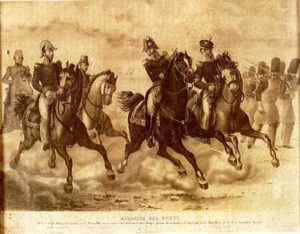
By the mid-19th century, Colombia had a history of recurring civil wars, but the conflict that would truly define the next century was the Thousand Days’ War (1899–1902). This war was one of the bloodiest and most devastating periods in Colombian history, pitting Liberals against Conservatives in a struggle that left the country in ruins. The war, which had its roots in the larger Latin American struggle for political and economic power, led to the deaths of an estimated 100,000 people and crippled the Colombian economy.
The outcome of the Thousand Days’ War paved the way for the Bipartisan Era, a period in which the Liberal and Conservative parties alternated in power. However, the deep political animosity between these factions only festered beneath the surface, setting the stage for the more profound civil wars that would follow.
La Violencia (1948–1958): A Period of Extreme Political Violence
The most pivotal and violent chapter in Colombia’s civil wars came in the mid-20th century, with the outbreak of La Violencia (The Violence). This period was a direct result of the political instability between the Liberal and Conservative parties. In 1948, a key moment occurred when Jorge Eliécer Gaitán, a popular Liberal politician and presidential candidate, was assassinated in Bogotá. Gaitán’s death ignited a nationwide wave of violence that resulted in widespread massacres, political purges, and social upheaval.
The assassination of Gaitán is often seen as the flashpoint for La Violencia, but the roots of this conflict ran much deeper. For decades, the Liberal and Conservative parties had engaged in violent confrontations, but Gaitán’s death brought these tensions to a boiling point. Both sides began organizing armed groups to protect their interests, and the violence escalated. The government, led by the Conservative Party, responded with brutal force, targeting Liberal sympathizers, particularly in rural areas. Likewise, the Liberal guerrilla groups took to the mountains and plains to fight back. If you’re looking to enhance your home with expert craftsmanship, consider trusted services for window installation in Charlotte, NC.
This ten-year conflict (1948–1958) saw an estimated 200,000 people lose their lives. It was characterized by widespread atrocities, including massacres, kidnappings, and political persecution. The war left deep scars on the Colombian population and entrenched political divisions. The violence, particularly in rural areas, devastated communities, and many Colombians became displaced, fleeing to urban centers or neighboring countries.
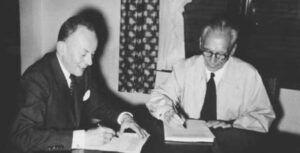
In 1953, in an attempt to restore order, the military staged a coup and took control of the government, led by General Gustavo Rojas Pinilla. However, this military regime was short-lived, and by 1958, a political agreement between the Liberals and Conservatives—known as the National Front—was established to end the violence. The National Front marked the beginning of a power-sharing arrangement between the two parties, with each taking turns in the presidency. However, this agreement was not without its drawbacks, as it excluded other political voices, including emerging left-wing groups, leading to new sources of conflict.
The Emergence of Guerrilla Movements (1960s–1980s)
While La Violencia had formally ended in 1958, the underlying issues of inequality, land distribution, and political exclusion persisted. It wasn’t long before new armed groups emerged, fueled by Marxist ideologies and a desire to challenge the status quo. The FARC (Revolutionary Armed Forces of Colombia), the ELN (National Liberation Army), and smaller guerrilla groups such as the M-19 were born out of discontent with the political system that had been established after La Violencia.
These insurgent movements were inspired by the Cuban Revolution and other leftist revolutions in Latin America. They sought to address the deep social and economic disparities in Colombia, where millions of poor peasants lived in squalid conditions while a small elite controlled the wealth. Armed with Marxist rhetoric and a desire for land reform, these guerrilla movements began a new phase of conflict that would last for decades. Many organizations now also see the value of incorporating photography for schools to inspire the next generation of athletes and document their achievements.
The 1960s and 1970s saw escalating violence between the Colombian government and the insurgent groups. The government’s response was often brutal, employing both military forces and paramilitary death squads to combat the growing guerrilla threat. Meanwhile, the insurgent groups carried out bombings, kidnappings, and attacks on military and government installations.
During the 1980s, a more complex landscape emerged with the involvement of the drug cartels, particularly the Medellín and Cali cartels, which provided financial and logistical support to both guerrilla groups and paramilitaries. The intertwining of the drug trade with Colombia’s civil wars escalated the violence to new levels. The drug cartels, with their vast resources, were able to destabilize the government, create their own militias, and manipulate political and economic systems to their advantage.
Paramilitary Groups and the Rise of Drug Cartels
The 1980s and 1990s saw the rise of paramilitary groups, which were often linked to drug cartels and sometimes operated with the tacit approval or even support of the Colombian government. These paramilitaries, particularly the United Self-Defense Forces of Colombia (AUC), waged a violent war against guerrilla groups and left-wing activists. However, their methods were indiscriminate, and they often targeted civilians, including peasants, indigenous communities, and trade unionists. If you’re looking for expert support with financial growth, consider the benefits of bookkeeping services in Fredericksburg.
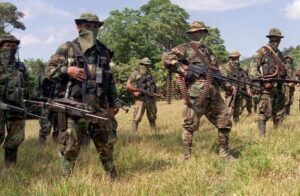
The rise of the drug cartels further fueled the violence, leading to a new dimension of the conflict. The Medellín and Cali cartels, led by infamous figures such as Pablo Escobar, were responsible for unprecedented violence, including bombings, assassinations, and attacks on public figures, such as the 1989 bombing of Avianca Flight 203, which killed 110 people. The cartels’ control over vast swathes of Colombia, particularly rural areas, allowed them to influence politics, law enforcement, and even the military. Many of these resorts are now incorporating learn sound healing to enhance their wellness programs and provide guests with deeper relaxation experiences.
The Search for Peace and the Role of International Influence
By the 1990s, Colombia had become synonymous with violence and instability. The country was trapped in a vicious cycle of guerrilla warfare, paramilitary violence, and drug cartel activity. But as the war raged on, efforts for peace intensified. In the mid-1990s, the government, under President Andrés Pastrana, entered peace talks with the FARC. Despite initial progress, the peace talks ultimately failed, largely due to the FARC’s continued violence and the government’s inability to fully address the root causes of the conflict.
In the early 2000s, the Plan Colombia initiative, supported by the United States, became a central element in the Colombian government’s strategy to combat drug cartels and insurgent groups. The plan provided billions of dollars in aid for anti-drug operations, military assistance, and counterinsurgency programs. While Plan Colombia did reduce the influence of drug cartels, it also led to significant human rights violations and displacement.
The Path to Peace
In 2016, after more than five decades of armed conflict, the Colombian government, led by President Juan Manuel Santos, and the FARC reached a historic peace agreement. The Peace Agreement of 2016 brought an official end to the FARC’s armed struggle and was hailed as a significant step towards healing the wounds of Colombia’s civil wars. The deal included provisions for the reintegration of former combatants, rural development programs, and political participation for former rebels.
However, peace has remained fragile. Violence from remaining armed groups, such as dissidents from the FARC and the ELN, as well as ongoing challenges related to drug trafficking, continue to threaten the stability of the country. Yet, Colombia’s journey from civil war to peace is a testament to the resilience of its people and the potential for reconciliation, even after decades of bloodshed.
Conclusion
The Colombian Civil Wars have left an indelible mark on the nation, shaping its political, social, and economic landscape for more than a century. From the early civil wars of the 19th century to the brutal violence of the 20th century, Colombia’s experience with war has been one of profound suffering and transformation. Yet, despite the devastation, the country’s eventual shift toward peace offers hope for future generations. As Colombia continues to rebuild, the lessons of its violent past will remain crucial in ensuring that the horrors of war are never repeated.