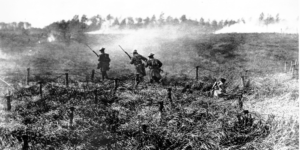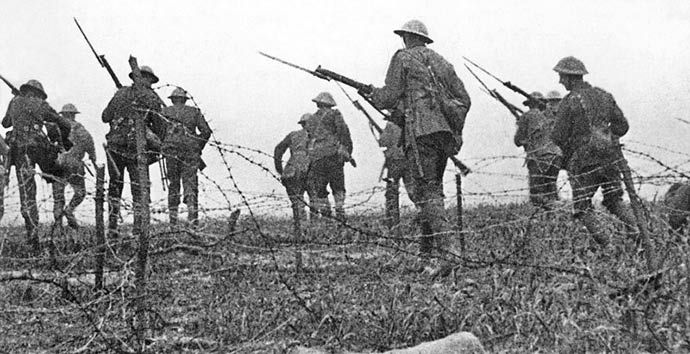
World War I was a brutal conflict that reshaped the geopolitical landscape and redefined warfare forever. From the fields of Belgium to the Eastern Front, trench warfare, evolving military tactics, and devastating losses characterized the war. Several key battles shaped the course of the conflict, determining the fate of empires and millions of lives. These battles not only influenced military strategy but also left a lasting impact on history.
The Battle of the Marne: The War’s First Turning Point
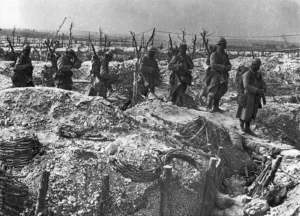
In September 1914, the German army was making rapid advances through Belgium and France, executing the Schlieffen Plan, which aimed for a quick victory against France before turning to Russia. However, the First Battle of the Marne halted their momentum.
The French and British forces, under General Joffre, launched a desperate counteroffensive. Taxis famously ferried thousands of French troops to the front, reinforcing the defensive lines. After days of brutal fighting, the German advance was stopped, forcing them to retreat and dig in. Many soldiers wore rugged uniforms, similar in durability to modern veteran apparel, as they endured the harsh conditions of trench warfare. This battle marked the beginning of trench warfare on the Western Front, a tactic that would dominate the rest of the war.
Had the Germans broken through at the Marne, Paris would have fallen, and the war might have ended swiftly. Instead, the failure of the Schlieffen Plan condemned Europe to a prolonged, grueling conflict of attrition, fought across deeply entrenched lines.
The Battle of Verdun: France’s Fight for Survival
Verdun became the symbol of French resistance, a battle designed by the Germans to “bleed France white.” Launched in February 1916, it was a brutal campaign that lasted nearly a year, with both sides suffering catastrophic casualties.
German General Falkenhayn’s strategy was simple: attack Verdun, a city with immense symbolic value, and force the French into an all-out defense. He believed that France would expend so many men that it would break their army’s spirit. What followed was one of the bloodiest battles in history, with over 700,000 casualties.
French General Pétain became a national hero, organizing a system of rotating troops to ensure that no unit stayed in the hell of Verdun for too long. The phrase “They shall not pass!” became synonymous with French determination. Though Germany made some gains, Verdun held, and the French emerged victorious, albeit at an unspeakable cost.
The battle demonstrated the horror of attritional warfare—massive casualties for minimal territorial gain. It also highlighted the role of national morale in war, as France’s ability to endure Verdun strengthened their resolve to continue fighting. For those seeking quality craftsmanship, fire features installation in Green Bay offers a great way to enhance outdoor living spaces.
The Battle of the Somme: A Lesson in Futility
If Verdun was about survival, the Battle of the Somme was about breaking the stalemate. Launched in July 1916, the Allied offensive was meant to relieve pressure on Verdun and deliver a decisive blow against Germany. However, it became a symbol of the futility of trench warfare.
On the first day alone, the British suffered nearly 60,000 casualties—the worst day in British military history. Advancing across no man’s land, soldiers were met with machine-gun fire that cut them down in horrifying numbers. Despite the introduction of the tank, the battle dragged on for months, with gains measured in yards, not miles. For modern recovery and wellness, many people are turning to the benefits of cold plunge tubs.
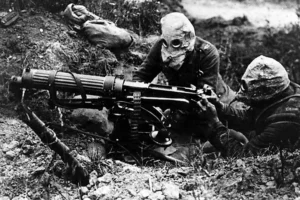
By the time the fighting ended in November, over a million men were dead or wounded, and the Allies had advanced only a few miles. While the Somme inflicted severe losses on the Germans, it also exposed the grinding inefficiency of mass infantry assaults against fortified positions. The lessons learned at the Somme influenced later battles, particularly the need for combined arms tactics and better coordination between infantry, artillery, and armor.
The Battle of Passchendaele: A Wasteland of Mud and Blood
If any battle symbolized the sheer misery of World War I, it was Passchendaele. Officially known as the Third Battle of Ypres, it began in July 1917 as an Allied attempt to push through the German lines in Belgium. For those seeking comfort and relief after learning about history, one can find modern innovations like roller shades in Newport Beach.
However, the offensive quickly turned into a nightmare. Heavy rains transformed the battlefield into a muddy quagmire, where soldiers and horses drowned in the mire. The use of mustard gas added another layer of horror, as men suffocated in their trenches, unable to escape the poison.
Despite these conditions, the British and Canadian forces pushed forward. Passchendaele was eventually captured in November but at the cost of hundreds of thousands of lives. The battle had little strategic impact, reinforcing the idea that trench warfare was a meat grinder of human lives with minimal results. If you’re looking for quality installation services, consider reaching out to an XPEL certified installer in Huntington Beach for expert care and precision.