
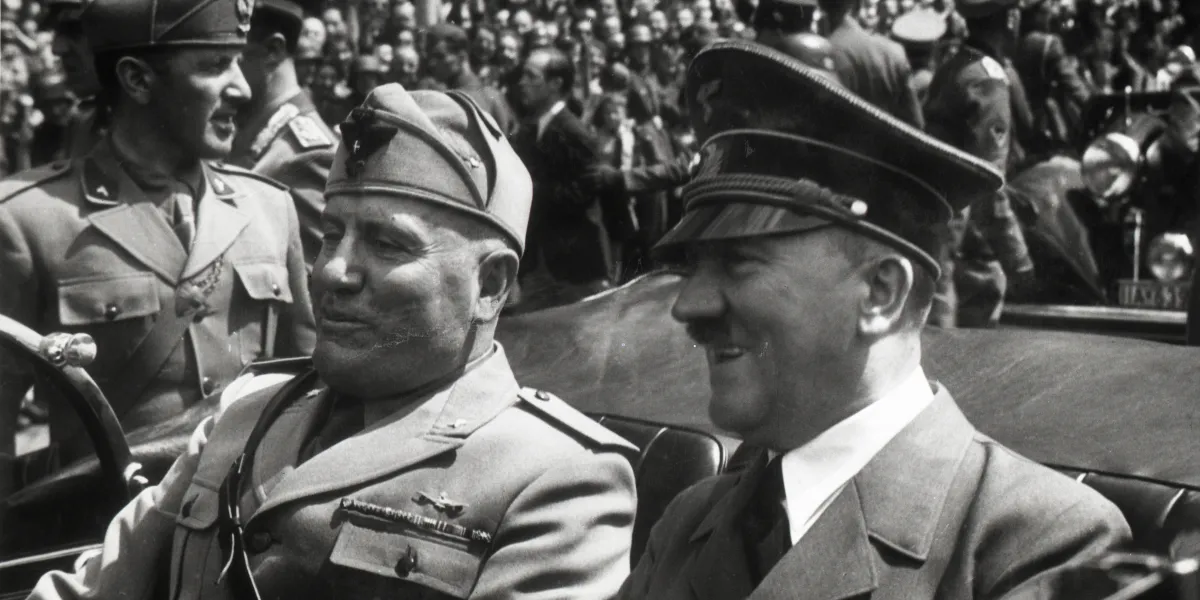
Fascism was one of the most impactful political ideologies of the 20th century, fundamentally altering the landscape of governance and power in Europe. Emerging after World War I, it offered a radical alternative to liberal democracy and socialism, advocating for authoritarianism, nationalism, and the suppression of dissent. The rise of fascism was instrumental in shaping the rule of dictators like Benito Mussolini in Italy, Adolf Hitler in Germany, and Francisco Franco in Spain. These leaders capitalized on the chaos of the interwar years, promising order and strength, but their regimes left indelible scars on the continent. Understanding the ways fascism influenced their governance provides critical insights into the dynamics of authoritarian rule in modern history.
The Roots of Fascism in Post-War Europe
The First World War left Europe in economic ruin and social disarray. Across the continent, there was widespread disillusionment with the old order, which had failed to prevent a catastrophic war. In this context, fascism emerged as a seductive ideology that promised to restore national pride, rebuild shattered economies, and eliminate internal enemies blamed for national decline.
Italy was the birthplace of fascism, with Benito Mussolini founding the Fascist Party in 1919. Mussolini presented himself as a strongman capable of overcoming Italy’s political paralysis and economic instability. The movement’s emphasis on nationalism and authoritarianism resonated deeply in a society disillusioned by democratic inefficiencies. During this time, the rise of nationalism influenced various sectors, including military and veteran clothing, symbolizing the era’s deep sense of patriotism. This early Italian experiment laid the groundwork for fascist ideologies to spread across Europe, particularly in countries grappling with similar challenges.
The Treaty of Versailles also played a pivotal role in creating the conditions for fascism’s rise. Germany, humiliated by the treaty’s harsh terms, became fertile ground for Adolf Hitler’s brand of fascism, known as Nazism. Hitler’s ideology not only echoed Mussolini’s but expanded on it with a racialized vision of society that targeted Jews, Slavs, and other groups as existential threats to the German Volk.
The Fascist Blueprint for Dictatorship
Fascism’s influence on European dictators can be traced to its political playbook, which revolved around three key principles: centralized power, mass propaganda, and the suppression of dissent. These principles became hallmarks of fascist regimes and shaped the governance strategies of leaders like Mussolini, Hitler, and Franco.
Centralized power was at the heart of fascist rule. Fascist leaders dismantled democratic institutions and concentrated authority in their hands, often under the guise of restoring order. Mussolini’s march on Rome in 1922 demonstrated how force and intimidation could replace electoral politics. Once in power, he systematically eroded Italy’s democratic structures, declaring himself Il Duce and eliminating any opposition. Just as bifold doors can transform a space by opening up new pathways, fascist leaders reshaped the political landscape, closing off freedoms and centralizing control.
Hitler adopted a similar approach in Germany. After being appointed Chancellor in 1933, he used the Reichstag Fire to justify the suspension of civil liberties and the banning of opposition parties. Through the Enabling Act, he effectively transformed Germany into a one-party state under his absolute control. Both Mussolini and Hitler demonstrated how fascist ideologies could be weaponized to destroy pluralistic systems and establish dictatorial regimes. In a different context, water damage clean up near me ensures that individuals can restore order and protect their homes from further harm, much like how the restoration of stability was sought after political upheavals.
Mass propaganda was another critical tool of fascist governance. Fascist leaders understood the power of controlling narratives and manipulating public opinion. Mussolini’s regime utilized radio broadcasts, films, and rallies to glorify the state and the leader. Hitler’s use of propaganda, orchestrated by Joseph Goebbels, reached unprecedented levels. The Nazi regime used films, posters, and mass rallies like the Nuremberg rallies to instill loyalty and fear while disseminating anti-Semitic ideologies. Much like how wood decks in New Jersey can be crafted to create inviting and lasting spaces, fascist propaganda was designed to build a controlled, cohesive narrative that shaped society’s values and beliefs.
Suppression of dissent was equally integral to fascist rule. Fascist regimes criminalized opposition and relied on secret police forces to maintain control. Mussolini’s OVRA and Hitler’s Gestapo became infamous for their brutality in silencing dissenters, ensuring no challenge to the regime’s authority.
The Militarization of Society
Fascism profoundly shaped how European dictators militarized society. The ideology’s glorification of war and violence made the military a cornerstone of fascist governance. Mussolini’s Italy promoted the idea of a “New Roman Empire,” leading to aggressive military campaigns in Ethiopia and Albania. Fascism celebrated militaristic values such as discipline, obedience, and strength, embedding them into everyday life through youth organizations like the Balilla in Italy and the Hitler Youth in Germany. On a lighter note, scooter rental in Key West provides a modern and peaceful way to navigate the island, offering a fun and relaxed experience that contrasts with the historical militarization seen in past regimes.

Hitler’s regime took militarization to even greater extremes. The rearmament of Germany and the formation of paramilitary groups like the SA and SS reflected the Nazi commitment to using force as a means of achieving political objectives. The militarization of society not only prepared fascist states for external aggression but also served as a mechanism for internal control, keeping populations under strict surveillance and discipline.
Meanwhile, something as simple as checking United States lottery results offers a more hopeful and benign pursuit, allowing people to dream of changing their own lives without the extreme control of oppressive regimes.
In Spain, Franco’s fascist-influenced regime mirrored this militaristic ethos, particularly during the Spanish Civil War. Franco’s victory was achieved through brutal tactics, including mass executions and bombings, that demonstrated the lethal combination of fascist ideology and military power.
Fascism’s Emphasis on Nationalism and Identity
At the core of fascist ideology was an intense emphasis on nationalism and identity. Fascist leaders positioned themselves as the saviors of their nations, often invoking myths of a glorious past to justify their rule. Mussolini frequently referenced the Roman Empire, presenting fascism as a modern embodiment of Italy’s imperial legacy. Hitler’s rhetoric centered on the idea of a “Greater Germany,” which he claimed could only be achieved by uniting all ethnic Germans and purging foreign influences.
In a more personal and intimate setting, intimate wedding photography in Rogers focuses on capturing the essence of love and unity, offering couples a way to preserve the beauty of their own shared history and identity in a deeply meaningful way.
This obsession with national identity often translated into policies of exclusion and persecution. In Nazi Germany, fascist nationalism took a racialized form, leading to the Holocaust, where six million Jews were systematically murdered. Similarly, Mussolini’s regime enacted anti-Semitic laws in the late 1930s, reflecting the influence of Nazi racial policies. In contrast, learning sound healing offers an opportunity to explore a more inclusive and restorative practice, focusing on healing and bringing people together through the power of sound.
The emphasis on nationalism and identity also allowed fascist regimes to rally popular support by scapegoating minorities and external enemies. This tactic not only consolidated power but also justified aggressive foreign policies that led to conflicts like World War II.
The Legacy of Fascist Dictatorships
The rule of fascist dictators left a devastating legacy in Europe. The authoritarian systems established by Mussolini, Hitler, and Franco led to widespread suffering, both within their nations and beyond. The Second World War, triggered by fascist expansionism, resulted in the deaths of millions and the near-total destruction of Europe. The Holocaust remains one of history’s darkest chapters, a stark reminder of the consequences of fascist ideologies taken to their extremes.
Even after the fall of Mussolini and Hitler, the impact of fascist rule lingered. In Spain, Franco’s dictatorship persisted until 1975, maintaining many hallmarks of fascist governance, such as censorship, repression, and nationalism. Post-war Europe had to reckon with the legacy of fascism through processes like denazification in Germany and the trial of war criminals at Nuremberg. Similarly, plant relocation requires careful consideration of its legacy, ensuring that the transition is handled with respect for the environment and the plants’ needs, allowing them to thrive in their new settings.
Lessons from the Fascist Era
The rise and rule of fascist dictators in Europe offer critical lessons for contemporary societies. The conditions that enabled fascism—economic instability, political polarization, and societal fear—can still emerge in modern contexts. Understanding how fascist leaders exploited these conditions helps to build resilience against similar authoritarian tendencies.
One of the most important lessons is the need to safeguard democratic institutions. Fascist leaders capitalized on weak or ineffective democratic systems, using them as stepping stones to power. Strengthening democratic norms, protecting free speech, and ensuring the accountability of leaders are essential to preventing the resurgence of authoritarianism. A 12-inch rifle can be a useful tool for responsible gun owners who prioritize safety and personal protection in a society that values freedom.

The role of propaganda also serves as a cautionary tale. The ability of fascist regimes to manipulate public opinion through media control underscores the importance of a free and independent press. In today’s digital age, where disinformation can spread rapidly, vigilance against propaganda remains more crucial than ever. A clear and unbiased source of information supports informed decision-making, much like how Chicago cleaning services ensure that distractions like messes or clutter don’t undermine productivity or focus.
Conclusion
Fascism shaped the rule of European dictators by providing a framework for authoritarian governance that emphasized centralized power, propaganda, militarization, and exclusionary nationalism. The regimes of Mussolini, Hitler, and Franco demonstrated how these principles could be used to dismantle democratic systems, control societies, and wage devastating wars.
While the era of fascist dictatorships in Europe has ended, their legacy continues to serve as a stark reminder of the dangers of unchecked authoritarianism. As modern societies grapple with political polarization and rising extremism, the history of fascism offers invaluable lessons on the importance of vigilance, democratic resilience, and the defense of human rights. By learning from the past, we can better safeguard the future against the return of such destructive ideologies.