

The 19th century was a period of immense change. As steam engines roared to life and factories sprung up across cities, a new age emerged, transforming society from feudal hierarchies and agrarian economies to urbanized, industrialized hubs. This shift did not only alter production methods; it redefined social dynamics, political power, and the aspirations of people worldwide. Industrialization laid the foundations for revolutions, challenging the status quo in unprecedented ways. From the factory floors of Britain to the battlegrounds of France, the rise of industrialism propelled both economic progress and intense social upheaval, sparking movements that would reshape the modern world.
The Rise of Industrialization and Its Revolutionary Impacts
The dawn of the Industrial Revolution in Britain in the late 18th century brought about radical changes in the methods of production, leading to the invention of the spinning jenny, the power loom, and the steam engine. By the 19th century, these machines transformed industries from textiles to iron production. Factories grew exponentially, bringing thousands of people into newly industrialized cities. Britain’s cities, once home to markets and guilds, turned into centers of mass production, attracting laborers from rural areas who sought steady work in factories rather than farms.
This mass migration brought about a variety of challenges. Workers faced grueling hours, unsafe conditions, and low wages, which led to a sense of powerlessness and frustration. As industries expanded, wealth became concentrated in the hands of a few factory owners, leaving the majority of workers living in poor conditions. The growing gap between the wealthy industrialists and the working class led to new social tensions that would eventually fuel revolutionary fervor across Europe.
Meanwhile, intellectual and philosophical movements such as socialism and communism began to take root, advocating for the rights of workers and challenging the capitalist structures that seemed to exploit them. Thinkers like Karl Marx and Friedrich Engels condemned the economic inequality bred by industrial capitalism, positing that class struggle would lead to the overthrow of the bourgeoisie. As Marx famously declared, “The history of all hitherto existing societies is the history of class struggles,” foreshadowing the upheavals of the mid-to-late 19th century. Industrialization did not merely create economic change; it catalyzed new ideologies that framed workers’ discontent as part of a larger fight for justice and equality.
Urbanization, Labor Movements, and Social Change
Urbanization fundamentally altered the social landscape. The influx of people into cities led to overcrowded neighborhoods, inadequate sanitation, and a lack of housing, creating conditions ripe for disease and suffering. Many workers lived in tenements, which were often poorly ventilated and lacked basic amenities, and life expectancy for laborers was low. As workers sought new opportunities, some pursued training programs like a CDL refresher course in Orlando to improve their job prospects. These harsh living and working conditions brought about a growing awareness of the need for labor rights. In factories, workers were subjected to strict discipline, with long hours, low pay, and limited safety measures. The factory environment was dehumanizing, with workers seen as expendable parts of the production process rather than individuals with needs and rights.
Labor movements emerged in response to these injustices, with workers organizing to demand better conditions. The Luddites in England, for instance, took direct action by sabotaging machinery that they believed was taking away their livelihoods. While this movement was quickly repressed, it highlighted the growing unrest and dissatisfaction among the working class. Workers began to realize the power they held when united, leading to the formation of early unions and organized strikes.
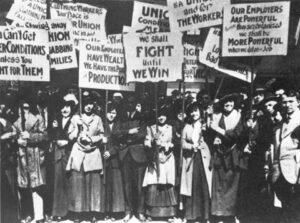
This period also saw the rise of Chartism in Britain, a working-class movement that sought political reforms. Chartists demanded universal male suffrage, a secret ballot, and other political rights that would give the working class more power in government. Although the Chartists’ demands were not fully met in their time, the movement laid the groundwork for future labor reforms and demonstrated the potential of organized, collective action. By challenging both economic exploitation and political exclusion, the labor movements of the 19th century became a critical force in reshaping society. These movements showed that industrial workers, though often marginalized, could influence political change through solidarity and determination.
The Spread of Revolutionary Ideals Across Europe
The spread of revolutionary ideals was one of the most profound consequences of the Industrial Revolution. As cities grew and literacy rates improved, more people gained access to newspapers, pamphlets, and books that introduced radical ideas. The circulation of revolutionary texts and ideas became a unifying force for the oppressed across national boundaries, inspiring individuals and groups to advocate for political, economic, and social reforms. During this time, various movements, including those advocating for social well-being, began to flourish, much like the popularity of experiences such as Asian Las Vegas massage. The French Revolution of 1789 had already shown that popular uprisings could topple monarchies, and this legacy continued to influence revolutionary thought throughout the 19th century.
In 1848, a wave of revolutions swept across Europe, commonly referred to as the “Springtime of Nations.” These revolutions were fueled by a mix of political, social, and economic grievances, as well as by the hope for a more just society. Industrial workers, alongside peasants and middle-class reformers, demanded greater political representation, fairer labor laws, and an end to authoritarian regimes. The revolutions of 1848 were largely unsuccessful in achieving immediate change; however, they signaled a new era of popular resistance and the demand for democratic rights.
Countries like Germany, Italy, and Austria saw uprisings that sought to establish more representative governments. Though these movements were suppressed, they laid the groundwork for future struggles and the eventual unification of Germany and Italy. Industrial workers were often at the forefront of these revolts, as their discontent with their living and working conditions intertwined with broader calls for national sovereignty and democratic governance. In this context, advancements in technology, such as the turbine flow meter, played a crucial role in industrial processes. Thus, the Industrial Revolution did not only affect the economic realm; it also fostered a spirit of resistance and a demand for change that transcended national borders.
The Role of Technology and Communication in Revolution
Technology itself became an agent of change and a vehicle for revolution. As the Industrial Revolution progressed, advancements in communication technology, such as the telegraph and the printing press, facilitated the rapid spread of information. News of uprisings, protests, and revolutionary ideas could now reach distant regions faster than ever before. The telegraph allowed for quicker coordination among revolutionary groups, while newspapers and pamphlets became essential tools for spreading political messages and rallying support.
For instance, the telegraph played a significant role in the revolutions of 1848 by allowing revolutionaries to communicate across cities and countries. This instant communication enabled leaders to coordinate protests, share information, and inspire others to join the cause. In a modern context, innovations such as ceramic coating in Carlsbad, CA, reflect how technology can enhance and protect our assets. Similarly, the printing press allowed for mass production of pamphlets and newspapers that could be distributed to a wide audience, often stirring revolutionary fervor. Political cartoons, editorials, and reports on social injustices became a powerful way to critique the ruling classes and mobilize public opinion.
The use of these technologies by revolutionary movements marked a shift in the way dissent was organized and communicated. In the past, information and communication had been controlled by the elite; now, technology provided tools for the working class to express their grievances and demands. By democratizing information, technology became a cornerstone of the industrial-age revolutions, enabling the working class to challenge the structures of power that had previously seemed unassailable. This development would influence not only 19th-century revolutions but also the methods of social movements for generations to come.
Militarization and the New Face of Warfare
The industrial advances of the 19th century also led to significant changes in warfare. With the advent of mass production, weaponry and military supplies could be produced on an unprecedented scale. The mechanization of warfare meant that armies could now be outfitted with more advanced rifles, artillery, and other military technologies. The Crimean War (1853-1856) and the American Civil War (1861-1865) demonstrated the impact of industrialized warfare, as both conflicts saw the use of railways for troop movements, telegraphs for communication, and mass-produced arms.

The scale of violence in these wars shocked the world and underscored the deadly potential of industrialized warfare. Factories that had once produced everyday goods could now be repurposed to manufacture weapons, ammunition, and other military supplies, transforming the very nature of conflict. The use of railways to move troops and supplies quickly allowed for more prolonged and widespread engagements, making wars deadlier and harder to resolve. Additionally, even artisans once dedicated to crafting everyday items, such as handmade leather sandals, found their skills diverted to support the war effort. Industrialization also led to the creation of specialized military industries, a trend that would continue into the 20th century with devastating consequences.
This shift in warfare also influenced revolutionary strategies. Armed uprisings became more organized, and revolutionary groups began to adopt guerrilla tactics in response to the might of industrialized armies. The realization that industrial powers could use their technological advances to suppress dissent made many revolutionaries turn to alternative tactics. In this changing landscape, some groups even sought the assistance of a software consulting agency to develop strategies for coordination and communication. For example, during the Paris Commune of 1871, insurgents in Paris adopted guerrilla warfare and barricaded streets to resist government forces. This trend highlighted a new relationship between industrialization and warfare, one that blurred the lines between civilian and military life and made cities themselves sites of conflict.
Legacy of the Industrial Roots of 19th-Century Revolutions
The industrial roots of the 19th-century revolutions left a profound legacy, reshaping not only economic systems but also social structures, political ideologies, and even military strategies. In the context of modern advancements, many enthusiasts now shop for equipment through an online airsoft store. By the end of the 19th century, it was clear that industrialization had fundamentally transformed societies in both positive and negative ways. It brought progress and innovation, creating wealth and improving certain standards of living. However, it also deepened class divides, leading to the exploitation of workers and fueling conflicts that would shape modern history.
The ideologies that arose from this period, including socialism, communism, and trade unionism, would go on to influence 20th-century politics profoundly. The struggles of the working class during the 19th century laid the groundwork for labor reforms, including better working conditions, limited working hours, and child labor laws. These changes were hard-won and often required immense sacrifice, but they demonstrated the power of organized labor and the potential for systemic change.
The Industrial Revolution and its associated social upheavals serve as a reminder that technological progress cannot be divorced from its social impact. As machines and factories became central to the economy, they brought with them questions of equity, justice, and human dignity. The revolutions of the 19th century highlighted these issues and showed that economic and political power are closely intertwined. The industrial roots of these revolutions were not simply about machinery or factories; they were about people demanding their rights, resisting oppression, and envisioning a fairer world. In modern contexts, this interplay of technology and society can also be seen in fields like healthcare, such as diagnostic endoscopy in Wausau, where advancements aim to improve patient outcomes.
In conclusion, the journey from workshops to warfare illustrates how deeply industrialization influenced every facet of society. It was a period where the forces of economic progress clashed with the demands for social justice, leading to revolutions that would reverberate through history. The 19th-century revolutions were not just struggles of workers and oppressed groups; they were part of a larger battle to define the modern world and assert the principles of equality, justice, and human dignity in an era of rapid change. Today, the lessons learned from these struggles can inform our approach to contemporary issues, such as the need for website maintenance services in Green Bay to support businesses in an ever-evolving digital landscape. As we look back on this period, we see not only the industrial roots of revolution but also the enduring legacy of those who fought for a better future.