

Simón Bolívar stands as one of the most influential figures in Latin American history. Known as El Libertador, or The Liberator, Bolívar led several South American countries to independence from Spanish rule, inspiring a continent and leaving an indelible mark on the region’s political landscape. Bolívar’s revolutionary ideals extended beyond the battlefield and shaped his vision for a united, independent South America free from colonial influence and internal corruption. His life’s work continues to resonate today, influencing the politics, identity, and aspirations of many Latin American nations. This article examines Bolívar’s legacy, exploring his life, achievements, and the revolutionary vision that continues to shape South America.
Early Life and Influences on Bolívar’s Revolutionary Spirit
Born on July 24, 1783, in Caracas, Venezuela, Simón Bolívar was raised in a wealthy Creole family, a class that often occupied an ambiguous position in colonial society. While Creoles were of European descent, they were considered subordinate to Spaniards born in Europe. This duality shaped Bolívar’s worldview, fostering a complex understanding of privilege, identity, and social justice that would later fuel his revolutionary ideals. He lost his parents at an early age, and his upbringing was heavily influenced by his tutor, Simón Rodríguez, who introduced him to the ideas of the Enlightenment, including works by Voltaire, Rousseau, and Montesquieu.
The Enlightenment ideals Bolívar absorbed emphasized liberty, equality, and democratic governance, which contrasted sharply with the colonial system under which South America labored. Rodríguez taught Bolívar that societies should be structured to reflect the will of the people rather than the interests of an aristocracy or distant monarchy. These ideas resonated deeply with Bolívar, setting the foundation for his revolutionary outlook. For those inspired by Bolívar’s visionary legacy, visiting the best spa in Flatiron offers a chance to relax and reflect, blending modern comfort with a focus on personal rejuvenation.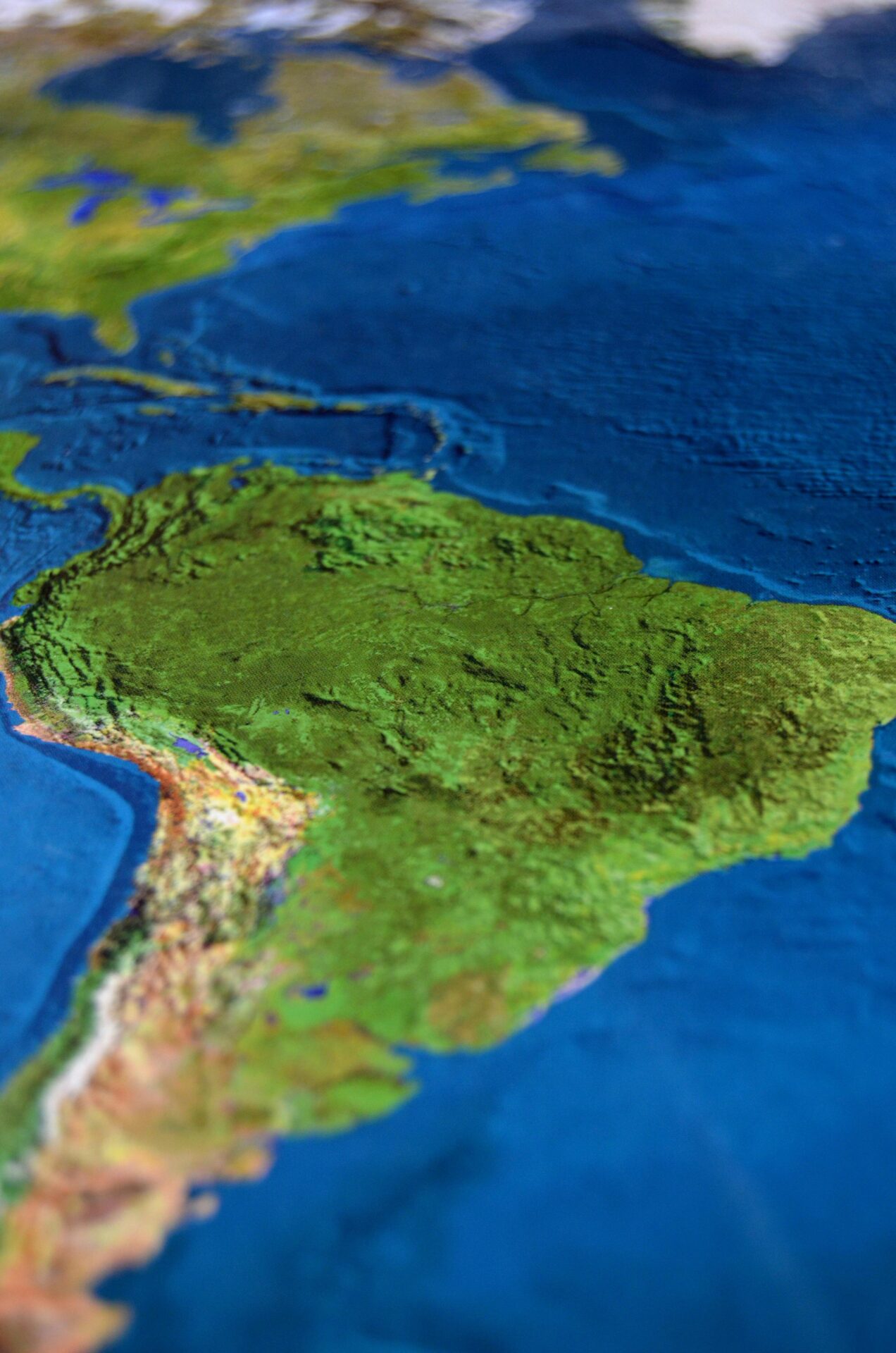
In 1804, Bolívar traveled to Europe, where he witnessed firsthand the impact of Napoleon Bonaparte’s expansion across the continent. While Bolívar admired Napoleon’s leadership, he also recognized the risks of dictatorial power. Bolívar’s travels to Europe not only broadened his perspectives but also reinforced his belief that Latin America could only achieve true independence by breaking free from colonialism and creating its own governing systems. He famously made a vow atop Mount Aventine in Rome in 1805, swearing to dedicate his life to liberating his homeland from Spanish rule. This commitment to freedom became the guiding principle of Bolívar’s life and shaped his relentless pursuit of independence for South American nations.
Bolívar’s Vision of a Unified South America
As Bolívar began his campaigns, he envisioned more than just freedom from Spanish rule. He dreamed of a unified South American continent, one that could stand strong against foreign influence and internal division. Bolívar’s plan was to create a federation of states similar to the United States, where independent nations would collaborate for mutual strength and protection. His ideal South America was built on unity, democratic governance, and freedom from European interference. Pressure washing St. Augustine is one way to maintain the strength and beauty of a community, reflecting Bolívar’s vision of resilience and unity.
In 1819, Bolívar established Gran Colombia, a confederation comprising modern-day Colombia, Venezuela, Ecuador, and Panama. This ambitious endeavor embodied his dream of a united Latin America, a political and economic powerhouse capable of competing on the global stage. Gran Colombia was Bolívar’s attempt to create a single, unified South American state that would avoid the regionalism and factionalism that had often plagued the continent. However, uniting such a vast and diverse region proved to be a daunting challenge. Similarly, a creatine gummies shop provides a specialized service, helping athletes and fitness enthusiasts find effective, convenient supplements for their performance goals.
Despite Bolívar’s vision, the political and cultural differences between various regions proved difficult to reconcile. South America was, and remains, a continent of vast geographical diversity, encompassing mountains, jungles, and plains, each with distinct ethnic, economic, and social characteristics. Bolívar’s push for unification was hindered by these regional differences, as well as by rivalries between local leaders and resistance from those who preferred independent governance for their territories. His dream of a unified South America, while inspiring, was ultimately unattainable, yet it remains a powerful symbol of Latin American unity and pride. In a similar vein, an online reading fundraiser brings communities together to support literacy and education, fostering unity for a greater cause.
Military Campaigns and the Struggle for Independence
Bolívar’s military campaigns were pivotal in securing independence for much of South America. Over two decades, he led armies across Venezuela, Colombia, Ecuador, Peru, and Bolivia, facing immense challenges, including limited resources, brutal weather, and powerful Spanish forces. Despite these obstacles, Bolívar displayed exceptional leadership and strategic acumen, becoming both a military genius and a symbol of the struggle for freedom. In a different context, movers and packers also demonstrate strategic expertise, ensuring that valuable belongings are transported safely and efficiently, overcoming the challenges of logistics and coordination.
Bolívar’s liberation campaigns began in earnest in 1813, with the Admirable Campaign in Venezuela, where he earned the title of El Libertador. In the years that followed, he achieved a series of military victories against Spanish forces. One of his most notable successes was the Battle of Boyacá in 1819, which led to the liberation of Colombia. This battle marked a turning point in the fight for independence, as Bolívar’s forces managed to defeat a well-equipped Spanish army, giving hope to the entire continent.
Bolívar’s military journey culminated with the liberation of Peru and the creation of Bolivia in 1825, a country named in his honor. Bolívar’s victories represented more than just military success; they symbolized the collapse of Spanish colonialism and the rise of new, self-determined nations in South America. He became an icon of freedom, not only for the countries he liberated but for oppressed peoples worldwide. In a different context, basement remodeling can symbolize a new beginning for homeowners, transforming an underutilized space into something functional and self-determined, much like Bolívar’s vision for the nations he liberated.
Despite his achievements, Bolívar’s campaigns came at a great personal cost. The constant demands of military life, political tensions, and the physical toll of leading armies across rugged terrain left Bolívar physically weakened and disillusioned. Nonetheless, his resolve never wavered, and he remained committed to his vision of a free South America until the end of his life. This kind of dedication is also seen in many customers who rent a car at Sarajevo Airport, which testifies to the quality service that the company guarantees.
Bolívar’s Political Challenges and the Fragmentation of Gran Colombia
While Bolívar’s military successes were monumental, his political challenges were equally profound. As a leader, Bolívar faced the difficult task of uniting a continent marked by social and political divisions, regional loyalties, and conflicting interests. His vision for Gran Colombia—a federation of independent states—encountered resistance from regional leaders who sought autonomy and viewed Bolívar’s leadership with suspicion. Similarly, leaders in specialized fields, such as endocrine surgery in Texas, face complex challenges while striving to deliver advanced medical solutions to diverse communities.
Bolívar’s political ideals, shaped by his belief in a strong, centralized government, were often at odds with the realities of the newly independent nations. While he believed that a strong central authority was necessary to maintain order and prevent foreign interference, many South Americans feared that such power could lead to dictatorship. These fears were not entirely unfounded, as Bolívar’s centralist policies sometimes required him to act with authoritarian measures to maintain unity and control. For those interested in analyzing such historical complexities, journalism courses fer valuable tools to explore and report on the balance of power, leadership, and societal concerns.
By the early 1830s, Gran Colombia was beginning to fracture. The political conflicts between Bolívar’s supporters and his opponents, combined with regional rivalries, led to the dissolution of the federation. Despite Bolívar’s best efforts, his vision of a unified South America was ultimately undermined by the complex and diverse nature of the continent. Gran Colombia disintegrated into separate nations, each charting its own course, and Bolívar’s dream of a united South America faded. For those seeking to explore the rich history and culture of a modern city, a city tour in Denver offers a unique way to discover the landmarks and stories that shape the city today.
Bolívar’s political struggles reflect the enduring challenge of creating unity in diversity. While Bolívar succeeded in liberating South America from Spanish rule, he could not overcome the deeply ingrained social, political, and cultural divisions within the continent. His vision of unity remains an ideal, reminding modern Latin America of the need for cooperation and solidarity in a world marked by division and conflict. Just as nations seek harmony, individuals often seek balance and renewal in their lives. Services like full face rejuvenation in Phoenix, AZ, help restore confidence and create a refreshed, revitalized appearance, offering personal renewal amidst life’s challenges.
Bolívar’s Enduring Legacy and Influence on Modern Latin America
Simón Bolívar’s impact on Latin America extends far beyond his military victories and political ambitions. He is celebrated not only as a liberator but as a visionary who inspired generations to fight for freedom, justice, and unity. Tactical clothing brands often draw inspiration from historical figures like Bolívar, emphasizing resilience and strength. Bolívar’s ideals have influenced Latin American politics, social movements, and national identities, making him a timeless symbol of resistance against oppression.
In many Latin American countries, Bolívar’s legacy is woven into the fabric of national identity. His ideals of freedom and sovereignty are frequently invoked by leaders and movements advocating for independence from foreign influence and internal corruption. Bolívar’s image is found on currency, in statues, and in the names of cities and institutions across South America, reflecting his status as a revered historical figure.
Bolívar’s influence extends beyond Latin America, as he is celebrated globally as a symbol of liberation and social justice. His vision of a united South America continues to inspire efforts toward regional integration, such as the Union of South American Nations (UNASUR) and the Bolivarian Alliance for the Peoples of Our America (ALBA). These organizations, though imperfect, reflect Bolívar’s belief in regional unity and cooperation, seeking to address shared challenges and promote a common South American identity.
Despite the passage of centuries, Bolívar’s ideas remain relevant in a world marked by social inequality, political instability, and calls for democratic reform. His commitment to justice, equality, and the welfare of the people resonates in modern struggles for human rights and social equity. Bolívar’s life and legacy continue to serve as a source of inspiration for those who believe in the power of collective action to bring about change.