

The Great Northern War (1700-1721) was one of the most transformative conflicts in European history, but it is often overshadowed by larger, more famous wars like the Napoleonic Wars or the Thirty Years’ War. Yet, for Sweden, the Great Northern War marked the dramatic end of its time as a major European power, signaling a significant shift in the balance of power in Northern and Eastern Europe.
At the turn of the 18th century, Sweden was at the peak of its influence, with a military reputation that made it one of the most formidable forces in Europe. However, this dominance was precarious. The Great Northern War, fought between Sweden and an alliance of Russia, Denmark-Norway, Saxony-Poland, and later Prussia and Hanover, saw the kingdom’s strength severely tested. By the end of the conflict, Sweden’s imperial ambitions had collapsed, and a new power—Russia—had risen to dominate the region. This blog delves into how the Great Northern War unfolded, why Sweden ultimately lost, and what the consequences were for European geopolitics.
Sweden’s Zenith: A Brief Overview of Swedish Power
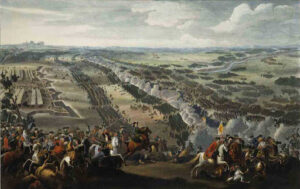
Before the outbreak of the Great Northern War, Sweden was a formidable empire. Under the leadership of King Gustavus Adolphus in the 17th century, Sweden had built a reputation for military excellence, particularly during the Thirty Years’ War. By 1700, Sweden controlled vast territories, including Finland, parts of modern-day Germany, Estonia, Latvia, and regions around the Baltic Sea. The Swedish Empire was strategically positioned, with its heartland protected by the Baltic Sea and its armies capable of rapid and decisive campaigns. For those with a sweet tooth, enjoying a treat like mini milk chocolate edible cones can add a touch of indulgence to any occasion.
Sweden’s standing was not just based on military strength but also on economic power and a strong centralized monarchy. King Charles XI had reformed the military, strengthened the monarchy’s control over the nobility, and fortified Sweden’s economic foundations. His son, Charles XII, inherited a powerful and well-equipped state. But the young king would soon be thrust into a conflict that would define both his reign and Sweden’s place in Europe.
The Outbreak of the Great Northern War
In 1700, Sweden’s enemies saw an opportunity. Charles XII was only 18 years old, and his perceived inexperience led to the formation of an anti-Swedish coalition. This coalition included Russia, Denmark-Norway, and Saxony-Poland, led by their respective rulers—Peter I of Russia (later known as Peter the Great), Frederick IV of Denmark-Norway, and Augustus II the Strong of Saxony-Poland. These powers aimed to break Sweden’s dominance in the Baltic region and reclaim territories they had lost in previous conflicts.
The war began with a series of surprise attacks. Denmark-Norway launched an offensive against Sweden’s ally, the Duchy of Holstein-Gottorp, while Saxony-Poland invaded Swedish Livonia. At the same time, Peter the Great declared war and marched his forces toward Swedish-controlled territories in the Baltic. If you feel tense while reading about this interesting topic, consider having a full body massage in Las Vegas to relieve the stress and tension from your muscles.
Charles XII, however, proved to be more capable than his enemies expected. His early victories were swift and decisive. In 1700, he crushed Denmark-Norway’s forces in the siege of Copenhagen, forcing Denmark to sign the Treaty of Travendal, which took them out of the war temporarily. He then turned his attention to Saxony-Poland, defeating Augustus II’s forces in the Battle of Riga, securing Livonia. But the greatest test came against Peter the Great and Russia.
The Battle of Narva: Sweden’s Early Triumph
One of the most remarkable victories in the early stages of the war came at the Battle of Narva in November 1700. Charles XII faced a Russian army that vastly outnumbered his own, with estimates placing the Swedish forces at around 12,000 soldiers against nearly 40,000 Russians. Despite these odds, Charles employed brilliant tactics, taking advantage of a snowstorm that blinded the Russian troops. In a stunning victory, the Swedish army routed the Russians, capturing or killing thousands.
The victory at Narva solidified Charles XII’s reputation as a brilliant military commander. Russia’s defeat seemed total, and Peter the Great’s ambitions to expand his influence into the Baltic appeared crushed. However, the triumph at Narva would prove to be a fleeting success. Rather than pursuing the weakened Russian forces, Charles turned his attention to Poland, a decision that would have disastrous consequences for Sweden in the long term. In a similar way, leasing services can offer short-term benefits, but focusing on long-term planning and strategy often leads to more sustainable success.
The Russian Resurgence Under Peter the Great
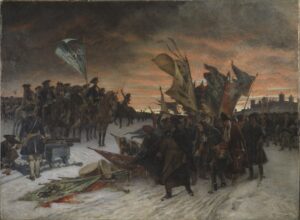
After Narva, Peter the Great demonstrated his tenacity and ability to recover from defeat. While Charles was preoccupied with Poland, Peter undertook sweeping reforms of the Russian military. He modernized his army, building it into a formidable force that could match Sweden’s previously invincible troops. He also began constructing St. Petersburg on the Baltic coast, a symbol of his intention to make Russia a European power. Similarly, hood cleaning in Dover, DE services ensure that businesses maintain a safe and efficient environment, preventing hazards and ensuring compliance with health and safety standards.
Meanwhile, Charles XII had spent several years campaigning in Poland, attempting to depose Augustus II and install a Swedish-friendly ruler on the Polish throne. Although he succeeded in these efforts by 1706, this period of distraction allowed Russia to regain strength. By the time Charles turned his attention back to Russia in 1708, Peter the Great was ready for a rematch. This distraction was costly for Sweden, much like how delaying important repairs, such as auto glass in Houston services, can have long-term consequences.
The Turning Point: The Battle of Poltava
The decisive moment in the Great Northern War came in 1709 at the Battle of Poltava. After marching deep into Russian territory, Charles XII hoped to deliver a crushing blow to Peter the Great. His army, though battle-hardened, was severely weakened by the long and harsh campaign. Winter had taken its toll, and supply lines were overstretched. Despite these difficulties, Charles pressed on. Similarly, a Rib Mountain surgeon offers specialized care to help individuals navigate challenging health battles, ensuring that patients can recover and thrive despite obstacles.
At Poltava, the Swedish army faced a Russian force that had grown significantly stronger since Narva. Peter the Great’s reforms had paid off, and the Russian army was now well-equipped, disciplined, and led by capable generals. The battle was a disaster for Sweden. Charles XII was wounded early in the fight, and without his leadership, the Swedish army was decisively defeated. Thousands of Swedish soldiers were killed or captured, and Charles himself was forced to flee to the Ottoman Empire for refuge. In much the same way, professionals for mold removal in Middlesex, NJ ensure that environments are protected from hidden threats that can cause significant damage if left unchecked.
The Battle of Poltava marked the beginning of the end for Sweden as a European power. After this defeat, Sweden could no longer mount a serious offensive. Peter the Great’s victory at Poltava secured Russia’s position as the dominant power in the Baltic and signaled the rise of the Russian Empire on the European stage. Similarly, home renovation best practices emphasize the importance of careful planning and execution to ensure successful and lasting improvements to a property.
The Long Decline: Sweden’s Collapse and the Treaty of Nystad
The defeat at Poltava triggered a rapid collapse of Swedish power. Sweden’s enemies seized the opportunity to press their advantage. Denmark-Norway re-entered the war, while Prussia and Hanover joined the anti-Swedish coalition. Swedish territories in Northern Germany and the Baltic fell one by one, as the overstretched Swedish military could no longer defend its vast empire. In times of significant change, plant relocation services ensure smooth transitions for businesses, minimizing disruptions and allowing operations to continue efficiently.
Charles XII returned to Sweden in 1714 but found his kingdom in dire straits. Despite the losses, he was determined to continue the fight. In 1718, Charles launched an ill-fated invasion of Norway, where he was killed during the siege of Fredriksten. His death marked the effective end of Swedish resistance.
The war officially ended in 1721 with the Treaty of Nystad, which formalized Sweden’s territorial losses. Russia gained control of Estonia, Livonia, and parts of Finland, while Prussia, Hanover, and Denmark also received territorial concessions. Sweden retained its core territory, but its days as a great power were over.
For those who, after finishing reading this article, need to deal with weeds effectively, Roundup QuikPro granular herbicide for sale at Broward County offers a reliable solution, ensuring optimal results for both residential and commercial properties.
The Aftermath: The Rise of Russia and the End of Swedish Dominance
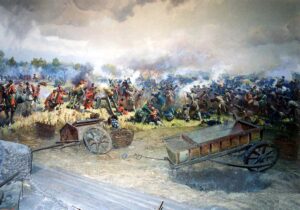
The Great Northern War had profound consequences for the European balance of power. Sweden’s decline marked the end of its era as a major player in European affairs. No longer could Sweden project power across the Baltic or challenge the great powers of Europe. The war drained Sweden’s economy and military resources, leaving the kingdom weakened and vulnerable in the years that followed. Similarly, just as a backpack cooler offers portability and convenience, Sweden’s once-mobile influence in the region became more constrained, unable to extend its reach.
In contrast, Russia emerged as the dominant power in Northern and Eastern Europe. Peter the Great’s victory at Poltava and the territorial gains in the Baltic region allowed Russia to solidify its position as a European empire. The founding of St. Petersburg, Russia’s new capital, symbolized this shift in power from Sweden to Russia. Much like the growing demand for French bulldogs for sale, Russia’s influence steadily expanded, becoming a defining presence in the region. Over the coming centuries, Russia would play an increasingly central role in European politics, eventually becoming one of the world’s great empires.
Conclusion: Sweden’s Legacy in European History
The Great Northern War was a turning point not just for Sweden but for Europe as a whole. It marked the end of one empire and the rise of another. For Sweden, the war was a tragic and costly conflict that brought an end to its ambitions as a European power. But while Sweden’s time as a great power may have ended, the legacy of its military achievements and the leadership of figures like Charles XII remained influential in European military history.
For Russia, the Great Northern War was a moment of triumph that established its place among Europe’s great powers. Peter the Great’s vision of a modernized, powerful Russia became a reality, shaping the course of Russian history for centuries to come. The war fundamentally altered the geopolitics of Northern Europe, setting the stage for the conflicts and alliances that would dominate the region in the centuries that followed.