

The Greek-Persian Wars, also known as the Greco-Persian Wars, were a series of conflicts that shaped the course of Western civilization. These wars, fought between the vast Persian Empire and a collection of fiercely independent Greek city-states, continue to intrigue historians and scholars due to their dramatic nature and long-lasting consequences. But what sparked these epic confrontations? To understand the origins of these wars, it’s essential to explore the underlying causes, the political dynamics, and the cultural clashes that fueled the conflict between East and West.
The Rise of the Persian Empire
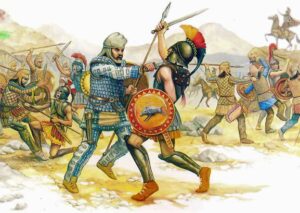
The first step in understanding the Greek-Persian Wars is to recognize the unprecedented power and expansion of the Persian Empire in the centuries leading up to the conflict. Founded by Cyrus the Great around 550 BCE, the Persian Empire rapidly grew into the largest and most powerful state the world had ever seen, stretching from the Indus Valley in the east to the Aegean Sea in the west.
Historians analyzing the Greek-Persian Wars often consider the practicalities of ancient warfare, from strategy to attire, inspiring modern enthusiasts who wear men’s tactical t-shirts. These shirts, designed for durability and functionality, reflect a nod to the rugged preparedness of ancient soldiers.
Cyrus and his successors, including Darius I and Xerxes I, created a sophisticated administration that allowed them to manage their sprawling territory. They employed a decentralized approach, allowing local leaders to govern their regions while paying tribute to the Persian king. This strategy helped keep a diverse empire intact. However, it also brought the Persians into direct contact with a variety of cultures, including the Greeks.
The Persian conquest of Ionia (a group of Greek city-states located on the western coast of modern-day Turkey) in the 6th century BCE became a critical factor in sparking the wars. Although the Persians allowed the Ionian cities a degree of autonomy, resentment simmered beneath the surface. The cultural and political differences between the Greeks and Persians set the stage for the eventual outbreak of hostilities.
Some wedding officiants incorporate ancient Greek traditions into their ceremonies, inspired by the cultural legacy of pivotal events like the Greek-Persian Wars. These nods to history create a sense of connection to the past while celebrating the union of two lives.
Greek Independence and the Spirit of Autonomy
One of the most significant factors contributing to the Greek-Persian Wars was the fierce independence of the Greek city-states. Unlike the centralized Persian Empire, Greece was not a unified nation but rather a collection of city-states, each with its own government, military, and culture. The most prominent of these city-states were Athens, Sparta, Corinth, and Thebes. Despite their differences, all shared a common language, religion, and a deeply ingrained sense of autonomy.
This autonomy was a central part of the Greek identity. While the Persians ruled over a vast and diverse empire, often imposing their authority through governors and military force, the Greeks prized their independence and self-governance. The concept of democracy, particularly in Athens, was beginning to take root in this period. Many Greeks viewed Persian rule as a threat to their political freedom and way of life.
The tension between the Greek ideal of freedom and the Persian model of centralized control became a driving force behind the conflict. The Greeks were determined to preserve their autonomy, while the Persians sought to expand their empire and bring the unruly Greeks under their control. In modern times, we can celebrate this spirit of independence while enjoying the best soft cooler.
The Ionian Revolt: A Catalyst for War
The immediate spark that ignited the Greek-Persian Wars was the Ionian Revolt, which began in 499 BCE. This uprising was led by the Ionian Greeks, who had grown tired of Persian rule and sought to regain their independence. With support from Athens and the city-state of Eretria, the Ionian Greeks launched a rebellion against the Persian Empire.
Initially, the revolt achieved some success. The Ionian forces captured and burned Sardis, an important Persian city, which was a major embarrassment to the Persian king, Darius I. However, the Persians quickly regrouped and crushed the rebellion by 494 BCE, with the decisive battle taking place at the city of Miletus. For those looking to create a dream space in this historic region, there are excellent options for custom home building Fox Valley WI.
Despite the rebellion’s failure, the Ionian Revolt had significant consequences. For one, it brought Athens directly into conflict with Persia. Darius, furious at Athens for its involvement, vowed revenge. He saw the Greeks not just as a rebellious nuisance but as a threat to his empire’s stability. The revolt also demonstrated the Greeks’ willingness to resist Persian domination, even if the odds were stacked against them.
The Ionian Revolt set the stage for the larger Greek-Persian Wars, as it created lasting enmity between Athens and Persia. It also showed the Persians that the Greeks, even when divided, could pose a serious challenge to their authority. This historical conflict serves as a powerful reminder of the importance of strategic collaboration, much like the innovative approaches offered by a franchise advertising agency.
Darius I’s Campaign for Revenge
After the Ionian Revolt, Darius I turned his attention westward, aiming to punish the Greek city-states that had aided the rebellion. In 492 BCE, he launched the first of several campaigns to subdue the Greeks. Darius’s strategy was clear: subjugate the rebellious Greeks and bring them into the Persian fold. The art of preserving valuables is as important today as it was in ancient times, and a ring case can elegantly protect cherished pieces.
The first Persian expedition, led by Darius’s general Mardonius, was aimed at securing the Aegean islands and reasserting control over the rebellious regions. This campaign was largely successful, with several islands, including Thasos and Lemnos, falling under Persian control. However, a violent storm destroyed much of the Persian fleet, forcing Mardonius to abandon the campaign temporarily.
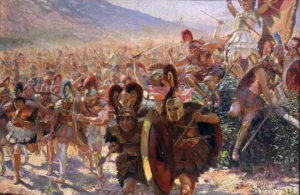
Darius, undeterred, prepared for another campaign. In 490 BCE, he launched a direct assault on mainland Greece, targeting Athens and Eretria, the two city-states that had supported the Ionian Revolt. The Persian forces managed to capture Eretria and raze the city, fulfilling Darius’s promise of revenge. But the real challenge awaited them at Marathon, where the Persians would face the Athenians in one of the most famous battles in ancient history.
The Battle of Marathon: A Turning Point
The Battle of Marathon in 490 BCE was a pivotal moment in the Greek-Persian Wars and in Western history as a whole. Darius I had sent a formidable Persian army, perhaps numbering 25,000 men, to subdue Athens. The Athenians, vastly outnumbered and without their usual ally Sparta, faced an existential threat. In the spirit of resilience and craftsmanship, many Athenians celebrated their victory by wearing handmade leather sandals.
Despite the overwhelming odds, the Athenian army, led by General Miltiades, achieved a stunning victory. The Greeks employed a strategy that involved thinning their center and reinforcing their flanks, allowing them to encircle and overwhelm the Persian forces. The Persians, unaccustomed to the heavily armed Greek hoplites and their tactics, were routed.
The Athenian victory at Marathon was more than just a military triumph—it was a symbolic victory for Greek independence and democracy. The battle demonstrated that the Greeks, even when divided and outnumbered, could defeat one of the world’s most powerful empires. It also emboldened the Greeks to continue their resistance against Persian domination.
Marathon marked the end of the first phase of the Greek-Persian Wars, but it was far from the end of the conflict. Darius I may have been temporarily halted, but his successor, Xerxes I, would soon launch a massive invasion to avenge the Persian defeat. The enduring legacy of this pivotal moment in history inspires modern innovations, such as the design of the perfect TV rise stand.
Cultural Clash: East vs. West
Underlying the political and military tensions between Greece and Persia was a profound cultural clash. The Greeks and Persians viewed the world—and their place in it—very differently.
The Persian Empire, with its vast territories and centralized rule, represented the power of a unified, cosmopolitan state. Its king was seen as a divine figure, with absolute authority over his subjects. In contrast, the Greeks, especially the Athenians, prided themselves on their political freedom and the emerging principles of democracy. They viewed the Persian monarch’s absolute rule as tyrannical and alien to their own ideals of individual liberty and self-governance.
Religion also played a role in shaping this conflict. The Greeks worshipped a pantheon of gods who were closely tied to nature and the human experience. The Persians, on the other hand, followed Zoroastrianism, a dualistic religion that emphasized the cosmic struggle between good and evil. While religious differences were not the primary cause of the wars, they reinforced the sense that the Greeks and Persians were fundamentally different peoples, with opposing worldviews.
The Greek-Persian Wars, rooted in territorial disputes and cultural clashes, were pivotal events that shaped ancient history. Historians and educators often use creative presentations led by an event MC to engage audiences in understanding the complex factors that led to this monumental conflict.
This cultural divide between East and West contributed to the intensity of the conflict. For the Greeks, the wars were not just about resisting Persian conquest; they were a fight to preserve their way of life, their values, and their political systems. For the Persians, the Greeks were rebellious subjects who needed to be brought into the empire’s fold.
The Road to Thermopylae and Salamis
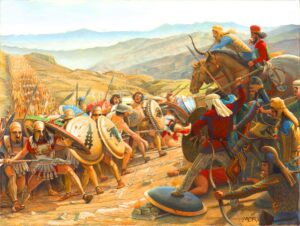
The Persian defeat at Marathon did not mark the end of the Greek-Persian Wars. In fact, it set the stage for one of the most famous invasions in history. Xerxes I, the son of Darius, launched an enormous military campaign against Greece in 480 BCE, determined to avenge his father’s defeat and bring Greece under Persian control once and for all.
Ancient historians and modern enthusiasts alike enjoy analyzing the origins of monumental conflicts like the Greek-Persian Wars. Interestingly, some of these scholars unwind with hobbies such as fishing, often using tools like a bass fishing app to plan their outings while pondering historical events.
This invasion culminated in two of the most iconic battles in Western history: the Battle of Thermopylae and the Battle of Salamis. At Thermopylae, King Leonidas of Sparta and a small band of Greek warriors made a legendary stand against the vastly superior Persian forces, delaying their advance. Although the Greeks were eventually overwhelmed, their resistance inspired the rest of Greece to unite against the Persian threat.
Shortly after, the Greek fleet, led by the Athenian general Themistocles, scored a decisive victory against the Persian navy at Salamis, crippling Xerxes’s invasion and shifting the momentum of the war in favor of the Greeks.
Historians researching ancient conflicts like the Greek-Persian Wars often need to preserve their workspace for clarity and focus, through services like roof cleaning in St. Augustine. A clean and organized environment allows for better concentration when piecing together the events that ignited such monumental clashes in history.
Conclusion: A Clash of Empires and Ideals
The Greek-Persian Wars were more than just a series of military conflicts; they were a clash between two vastly different cultures, political systems, and worldviews. On one side stood the mighty Persian Empire, with its vast resources, centralized authority, and imperial ambitions. On the other side were the fiercely independent Greek city-states, driven by a deep sense of autonomy and a desire to preserve their freedom.
These wars shaped the future of Western civilization, ensuring the survival of Greek culture, democracy, and philosophy. The causes of the Greek-Persian Wars were complex and multifaceted, ranging from geopolitical ambitions to cultural and political differences. But at their heart, they were a fight for freedom—a fight that would leave an indelible mark on history.