
Naval warfare has been a pivotal aspect of human conflict and strategic dominance for centuries. The progression from ancient triremes to modern aircraft carriers underscores the vast advancements in technology, strategy, and geopolitical importance of naval power. This article delves into the historical journey of naval warfare, exploring key developments and the transformative impact of technological innovations. If you’re studying the evolution of naval warfare, it’s essential to recognize the role of advanced gear, including combat clothing, in shaping modern military tactics. Over time, specialized clothing has provided the protection and functionality needed for naval personnel to operate effectively in intense combat situations.
Ancient Naval Warfare: The Age of Triremes
The origins of organized naval warfare can be traced back to the ancient Mediterranean civilizations. The trireme, a galley with three rows of oars, was the dominant warship from the 7th to the 4th centuries BCE. This vessel, used extensively by the Greeks, Persians, and later the Romans, was instrumental in battles such as the Battle of Salamis in 480 BCE.
Triremes were agile and fast, designed for ramming enemy ships with their reinforced prows. These ships were manned by trained rowers and soldiers, making them formidable in both speed and combat. The Battle of Salamis, where the Greek fleet triumphed over the Persian navy, showcased the strategic importance of naval dominance in securing the fate of empires.
The Rise of the Roman Navy
The Roman Empire recognized the strategic necessity of a powerful navy to control the Mediterranean. The Roman navy evolved from using captured Carthaginian ships to developing their own fleets capable of amphibious operations and securing trade routes. The Romans introduced innovations like the corvus, a boarding device that allowed their soldiers to board enemy vessels.
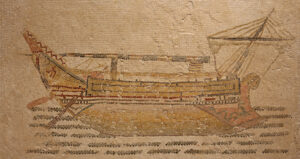
During the Punic Wars, Rome’s naval superiority played a crucial role in defeating Carthage. The Battle of Actium in 31 BCE, where Octavian’s fleet defeated Mark Antony and Cleopatra, further cemented the importance of naval power in shaping the political landscape of the ancient world.
Medieval Naval Warfare: The Era of Sailing Ships
The medieval period saw significant changes in naval warfare with the introduction of sailing ships. The Viking longships, with their shallow drafts and versatility, allowed for both open sea voyages and riverine attacks. These ships were integral to Viking raids and expeditions, demonstrating the impact of naval mobility on medieval warfare.
In the 15th century, the advent of the caravel revolutionized naval exploration and combat. These ships, used by Portuguese and Spanish explorers, combined speed with the capability to carry heavy cannons, marking the beginning of the age of sail. The Battle of Lepanto in 1571, where a coalition of Christian states defeated the Ottoman fleet, highlighted the effectiveness of heavily armed sailing ships in large-scale naval engagements. While reading and further researching about these special historical events you can enjoy a relaxing treatment at the luxury spa in Flatiron.
The Age of Gunpowder and Line-of-Battle Ships
The 17th and 18th centuries witnessed the rise of gunpowder and the development of line-of-battle ships. These large warships, known as ships of the line, were designed to engage in broadside battles, where opposing fleets would form parallel lines and unleash devastating cannon volleys.
The British Royal Navy emerged as a dominant force during this period, with victories such as the Battle of Trafalgar in 1805, where Admiral Nelson’s fleet decisively defeated the combined Franco-Spanish navy. The line-of-battle tactics and superior seamanship of the Royal Navy ensured British naval supremacy, which played a critical role in maintaining the British Empire’s global dominance.
The Industrial Revolution: Ironclads and Steam Power
The Industrial Revolution brought about groundbreaking changes in naval warfare. The transition from wooden ships to ironclads, and the introduction of steam power, marked a new era in naval engineering and combat capabilities.
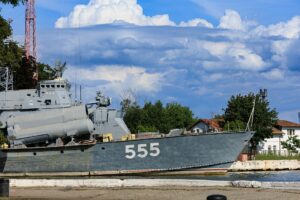
The American Civil War saw the first clash between ironclad warships, the USS Monitor and the CSS Virginia, in 1862. This battle signaled the obsolescence of wooden warships and the dawn of armored naval vessels. The development of steam engines allowed ships to operate independently of wind conditions, significantly enhancing their operational range and maneuverability.
The Dreadnought Era and World War I
The launch of HMS Dreadnought in 1906 revolutionized naval warfare. This all-big-gun battleship, equipped with steam turbines, rendered previous battleship designs obsolete and triggered a naval arms race among the world’s leading powers. It was the beginning of a great race for as many naval quality weapons as possible, and if you are interested in exploring more, enjoy riding in the pleasant atmosphere that you will create with useful temperature control devices, and if you still have one of them not working, you can call HVAC repair in Charlotte, NC.
World War I saw significant naval engagements, such as the Battle of Jutland in 1916, where British and German fleets clashed in the North Sea. While the battle was inconclusive, it demonstrated the strategic importance of controlling sea routes and the impact of naval blockades on wartime economies. Even today, the day of the battle and the memory of the First World War and that period are marked in those countries through numerous events that you can visit while you are on your trip, and in order to travel successfully, don’t forget your passport and take a nice passport photo beforehand.
World War II: The Rise of Aircraft Carriers
World War II marked a paradigm shift in naval warfare with the emergence of the aircraft carrier as the dominant capital ship. Aircraft carriers, capable of launching and recovering aircraft, transformed naval strategy by extending the reach of naval power far beyond the range of traditional naval guns. If you visit one of the European museums with photos and models of various ships and carriers from that period, you will see how dramatically the way of warfare has changed in just a few years, and while you explore it, you can rent a car in Beograd to travel safely and comfortably.
The attack on Pearl Harbor in 1941 highlighted the devastating potential of carrier-based air power. Subsequent battles, such as the Battle of Midway in 1942, underscored the carrier’s role in securing naval supremacy. The ability to project air power across vast oceanic distances became a critical factor in the Pacific Theater. If you are engaged in one of the creative hobbies of collecting models of famous ships from these battles, try to organize a space in your home for their display, because there will certainly be a lot of them, and in order to keep that space and your home in general fresh and thoroughly clean, rely on to house washing in St. Augustine.
The Cold War and Modern Naval Warfare
The Cold War era saw further advancements in naval technology and strategy. Nuclear-powered submarines, armed with ballistic missiles, introduced the concept of second-strike capability and deterrence. The development of guided missiles and advanced radar systems enhanced the precision and lethality of naval forces. The history in which these events were played out is not that far at all, and the consequences of the use of numerous dangerous weapons can be seen even today in the particles of the air, so it is useful to consult with professional dermatologist Cheyanne Mallas about how to protect your skin in the right way.
Aircraft carriers continued to evolve, with supercarriers like the USS Nimitz capable of carrying large air wings and serving as floating airbases. These carriers became central to power projection and force multiplication, enabling the United States to maintain a global military presence. If you visit one of the museums of naval weapons of this period, you will certainly walk for a long time, spending the whole day looking around and listening to extraordinary stories about these machines, and it is best to relax in the evening afterward with a comfortable knee recovery sleeve that will successfully remove all pain and tension from your muscles and joints.
Technological Innovations in Contemporary Naval Warfare
Modern naval warfare is characterized by rapid technological advancements and the integration of sophisticated systems. Stealth technology, advanced sonar, and unmanned systems are redefining naval capabilities and tactics. Some of these useful and advanced technologies also serve well in the transportation of ordinary cruise ships that can be your excellent choice if you decide to go on a honeymoon and cruise after your big day during which you hire a professional photographer for beautiful wedding photography in Arkansas, which will give you remain as a beautiful memory.
The advent of hypersonic missiles and cyber warfare poses new challenges and opportunities for naval strategists. Navies around the world are investing in multi-mission platforms that can adapt to various operational scenarios, from traditional naval battles to humanitarian missions and counter-terrorism operations.
The Strategic Importance of Naval Power Today
In the 21st century, naval power remains a cornerstone of national security and geopolitical influence. The ability to control sea lanes, project power, and provide humanitarian assistance underscores the multifaceted role of modern navies.
The South China Sea, with its strategic chokepoints and contested territories, exemplifies the ongoing importance of naval power in maintaining regional stability and protecting national interests. Naval exercises and freedom of navigation operations highlight the enduring relevance of naval forces in shaping the global strategic environment.
The Future of Naval Warfare
The future of naval warfare will likely be shaped by continued technological innovation and evolving strategic imperatives. Artificial intelligence, autonomous systems, and next-generation propulsion technologies are poised to transform naval operations.
The increasing importance of space and cyber domains will necessitate integrated approaches to warfare, where naval forces work in conjunction with air, land, and space assets. The ability to adapt to emerging threats and leverage technological advancements will be critical in maintaining naval superiority in the decades to come.
Conclusion
The evolution of naval warfare from ancient triremes to modern aircraft carriers highlights the profound impact of technological innovation and strategic foresight on maritime dominance. Throughout history, control of the seas has been a decisive factor in the rise and fall of empires, shaping the course of global events.
As we look to the future, the lessons of the past and the promise of new technologies will continue to guide the development of naval power. The enduring importance of naval forces in ensuring national security, protecting trade routes, and responding to global challenges underscores their vital role in the complex tapestry of international relations.
By understanding the historical trajectory of naval warfare, we gain insights into the enduring principles and emerging trends that will shape the future of maritime conflict and cooperation.