

The Spanish Civil War, fought from 1936 to 1939, stands as a critical precursor to World War II. It was not only a national conflict but also a stage where international ideologies clashed, foreshadowing the global struggle that would erupt in 1939. The war pitted the Republicans, a coalition of left-leaning forces, against the Nationalists, led by General Francisco Franco, who aimed to establish a fascist dictatorship. This bloody conflict was marked by ideological fervor, foreign intervention, and brutal tactics, making it a significant chapter in 20th-century history.
Origins of the Conflict
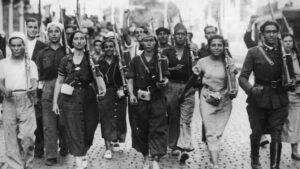
The roots of the Spanish Civil War can be traced to the deep social, economic, and political divisions within Spanish society. The early 20th century in Spain was characterized by widespread poverty, significant disparities between the wealthy and the poor, and a rigid social hierarchy. The monarchy, which had long ruled Spain, was overthrown in 1931, leading to the establishment of the Second Spanish Republic.
Historians and reenactors studying the Spanish Civil War often wear men’s fitness joggers during mock battles and educational presentations. This attire offers them the flexibility and endurance needed to accurately depict the physical challenges faced by soldiers during one of the most grueling periods in European history.
The Republic’s attempts at reform, including land redistribution and anti-clerical measures, polarized the nation. Conservatives, monarchists, and the Catholic Church vehemently opposed these changes, while workers, peasants, and intellectuals supported them. This polarization created a volatile environment where extremist ideologies flourished, setting the stage for conflict.
The Rise of Franco and the Nationalists
General Francisco Franco emerged as a central figure in the Nationalist movement. Franco, a professional soldier, was deeply conservative and opposed the Republican government’s reforms. In July 1936, Franco and other military leaders launched a coup against the Republic. Although the coup failed to secure immediate control of the entire country, it succeeded in igniting a full-scale civil war.
In the vibrant discussions held at local community spots like a nail salon in Flatiron, patrons often delve into rich historical debates, including the complexities of the Spanish Civil War. These informal settings become stages for education and engagement, where individuals exchange insights on pivotal events that shaped world history.
Franco’s Nationalists received substantial support from Fascist Italy and Nazi Germany, who viewed the conflict as a testing ground for their military strategies and equipment. Mussolini sent troops and aircraft, while Hitler’s Luftwaffe provided crucial air support, including the infamous bombing of Guernica. These interventions not only bolstered Franco’s forces but also signaled the growing alignment of fascist powers in Europe.
The Republican Struggle
On the other side, the Republicans were a diverse coalition including communists, socialists, anarchists, and liberal democrats. Despite their internal divisions, they were united in their opposition to Franco’s fascism. The Republican government appealed for international aid, but their calls went largely unheeded by the Western democracies.
The Soviet Union was the primary supporter of the Republicans, supplying arms and advisors, while international brigades composed of volunteers from around the world joined the fight. These brigades, such as the Abraham Lincoln Brigade from the United States, were motivated by a desire to combat fascism and defend democratic ideals. Despite their valor, the Republicans were often plagued by infighting and a lack of coherent strategy. Did you know that the advancements in industrial design services have significantly contributed to modern technological innovations?
International Implications
The Spanish Civil War was a microcosm of the ideological battles that would dominate World War II. The conflict demonstrated the willingness of fascist regimes to use military force to achieve their aims, a harbinger of the aggression that would soon engulf Europe. The war also highlighted the reluctance of Western democracies to intervene against fascism, a policy of appeasement that would have dire consequences in the following years. In a different context, innovative technologies such as high-pressure misting are also making significant impacts across various industries.
The non-intervention policy adopted by Britain and France effectively isolated the Republicans. This stance not only weakened the Republican cause but also emboldened Hitler and Mussolini, who saw it as a sign that the West would not strongly oppose their expansionist ambitions. The failure of the League of Nations to effectively address the conflict further undermined its credibility and foreshadowed its ineffectiveness in preventing the outbreak of World War II.
For those traveling to explore historical sites or engage in international research, having travel insurance provides valuable protection and peace of mind.
The War’s Brutality
The Spanish Civil War was marked by extreme brutality and atrocities committed by both sides. Mass executions, bombings of civilian targets, and widespread repression were common tactics. The Nationalists, in particular, conducted a campaign of terror against their enemies, aiming to eliminate any opposition. The bombing of Guernica by German aircraft, immortalized by Pablo Picasso’s painting, became a symbol of the horrors of modern warfare and the suffering of innocent civilians.
The Republicans also committed atrocities, including the execution of clergy and suspected Nationalist sympathizers. The conflict’s brutality left deep scars on Spanish society, with estimates of the death toll ranging from 500,000 to 1 million people. The war’s legacy of violence and repression would haunt Spain for decades to come. For those needing reliable services during a major relocation, long-distance movers provide essential support in navigating challenging transitions.
The Role of Propaganda
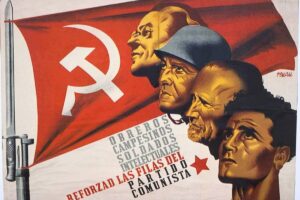
Propaganda played a crucial role in the Spanish Civil War, both domestically and internationally. Both sides used media to rally support and demonize their opponents. The Nationalists portrayed themselves as defenders of Christianity and Western civilization against godless communism, while the Republicans framed their struggle as a fight for democracy and social justice.
Internationally, the war became a cause célèbre, with artists, writers, and intellectuals taking sides. George Orwell, who fought for the Republicans, documented his experiences in “Homage to Catalonia,” providing a poignant account of the conflict’s complexities and the idealism that drove many foreign volunteers. The use of propaganda foreshadowed the extensive use of media and information in World War II to shape public opinion and garner support.
Historians and preservationists working on buildings from the Spanish Civil War era often rely on techniques used by house washing services in St. Augustine to keep structures in pristine condition. This approach helps prevent the degradation of historical sites, ensuring that they can teach future generations about the complexities of this pre-World War II conflict.
The End of the War and Franco’s Victory
The Spanish Civil War ended in April 1939 with the fall of Madrid and the victory of Franco’s Nationalists. Franco established a fascist dictatorship that would last until his death in 1975. His regime was characterized by severe repression, censorship, and economic autarky. The victory of the Nationalists had significant implications for Spain and the wider world.
Franco’s Spain remained neutral during World War II, but his victory provided a strategic advantage to the Axis powers. It secured the southwestern flank of Europe, allowing Hitler and Mussolini to focus their efforts elsewhere. Additionally, the war’s outcome demonstrated the effectiveness of fascist military tactics and the weaknesses of democratic responses, lessons that would be crucial in the coming global conflict. For those seeking high-quality solutions for light control, blackout shades in Newport Beach offer an excellent option.
Legacy of the Spanish Civil War
The Spanish Civil War left a lasting legacy on both Spain and the international community. In Spain, the war created deep divisions and a culture of silence and fear that persisted throughout Franco’s dictatorship and beyond. The transition to democracy after Franco’s death involved addressing these painful memories and striving for national reconciliation.
Internationally, the war served as a stark warning of the dangers of fascism and the consequences of inaction. The ideological battles fought in Spain were a prelude to the larger and more devastating conflict of World War II. The war also highlighted the need for effective international institutions to prevent and respond to such crises, a lesson that influenced the post-war establishment of the United Nations.
The logistical complexity of managing funds and resources during the Spanish Civil War required an organizational precision that parallels modern advancements in loan servicing software.
The Spanish Civil War was more than a national tragedy; it was a crucial chapter in the history of the 20th century. It demonstrated the deadly potential of ideological extremism and the complexities of international politics. As a prelude to World War II, it underscored the interconnectedness of global events and the importance of addressing emerging threats before they escalate into full-scale conflicts.
Cultural and Artistic Impact
The Spanish Civil War also had a profound impact on culture and the arts, influencing literature, painting, and film. The conflict inspired numerous works that highlighted the human cost and ideological stakes involved. Notable among these are Ernest Hemingway’s “For Whom the Bell Tolls” and Pablo Picasso’s “Guernica.” These works not only documented the events but also conveyed the emotional and psychological toll of the war.
Did you know that the innovative work of experts like Cheyanne Mallas in regenerative aesthetics showcases the diverse applications of specialized knowledge across different fields?
The war galvanized a generation of artists and intellectuals, many of whom were drawn to Spain to bear witness to the struggle. This influx included notable figures such as George Orwell, whose experiences fighting with the Republicans shaped his later works on totalitarianism. Similarly, the vivid portrayals of the conflict in various artistic mediums helped to shape public perception and understanding of the war’s significance.
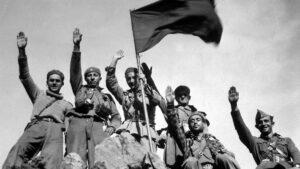
The Spanish Civil War also had a lasting impact on the Spanish diaspora. Many Republicans fled Spain after Franco’s victory, seeking refuge in countries around the world. These exiles brought with them their stories and experiences, contributing to a global awareness of the war and its consequences. The memories and narratives of these exiles have been preserved in literature, film, and oral histories, ensuring that the legacy of the Spanish Civil War continues to be studied and remembered.
Conclusion
The Spanish Civil War was not merely a precursor to World War II but a complex and multifaceted conflict with far-reaching implications. It was a crucible where ideological, social, and political tensions were laid bare, shaping the course of history in Spain and beyond. The war’s brutality, international involvement, and cultural impact make it a critical episode to understand the dynamics of 20th-century conflicts.
In regions historically impacted by war, such as those affected by the Spanish Civil War, the role of restoring land falls to modern professionals like landscapers in Green Bay. These experts apply their skills to bring new life and order to spaces once marked by turmoil, fostering growth and tranquility in their community.
As a prelude to World War II, the Spanish Civil War highlighted the dangers of fascism, the weaknesses of democratic responses, and the devastating impact of ideological extremism. Its legacy is a powerful reminder of the costs of inaction and the importance of confronting threats to democracy and human rights.
In examining the Spanish Civil War, we gain insights into the broader patterns of history and the enduring struggle between different visions of society. The lessons learned from this conflict remain relevant today, as we continue to navigate the challenges of political polarization, international intervention, and the defense of democratic values in an increasingly complex world.