

The year 1857 marked a turning point in Indian history, a moment when simmering discontent exploded into a full-scale rebellion against British rule. While the uprising spread across the subcontinent, it all began in the cantonment town of Meerut, a seemingly ordinary military hub in northern India. The Sepoy Revolt at Meerut was not just an isolated mutiny; it was the spark that ignited a broader revolution, eventually becoming a defining chapter in India’s struggle for independence.
Historical Context of British Rule in India
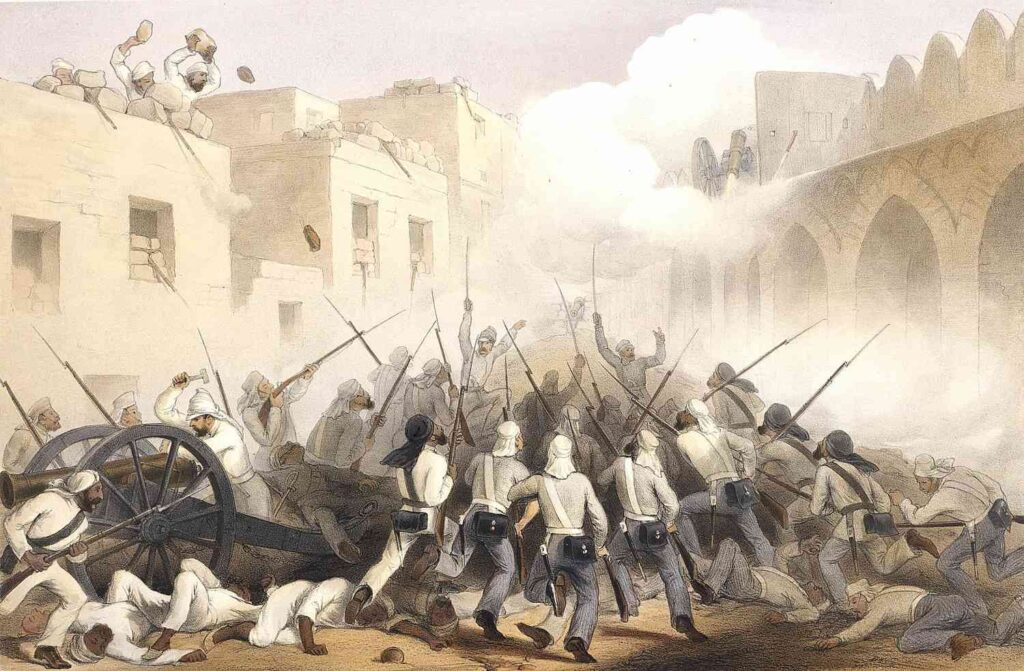
To understand why Meerut became the epicenter of rebellion, it is essential to grasp the conditions of British colonial rule in the mid-19th century. The British East India Company had established a firm grip over large swathes of India, consolidating power through both diplomacy and military force. However, their authority was built on deep social and economic interference. Land revenue systems, such as the Permanent Settlement and the Ryotwari system, disrupted traditional agrarian life, creating widespread resentment among peasants and landowners alike. British interference in social and religious practices, although subtle, bred unease among communities whose traditions were being undermined or ignored.
In this context, the Indian army—primarily composed of sepoys recruited from various regions—found themselves at the intersection of oppression and obligation. Though respected for their martial prowess, the sepoys were subject to discriminatory pay, limited promotions, and harsh discipline, particularly compared to their British counterparts. This systemic inequality was a pressure cooker that would soon explode in Meerut.
Grievances of the Sepoys
The sepoys stationed in Meerut were not merely discontented; they were deeply aggrieved. A combination of cultural, religious, and professional tensions set the stage for revolt. Many sepoys hailed from orthodox Hindu and Muslim communities, whose dietary laws and religious customs were integral to daily life. The British, however, often disregarded these practices, enforcing regulations that were both invasive and humiliating.
A particularly volatile issue arose around the introduction of new rifle cartridges. Rumors spread that the cartridges were greased with cow and pig fat, substances offensive to Hindu and Muslim soldiers, respectively. Although the claim may have been exaggerated, it touched a raw nerve, symbolizing the colonial disregard for local beliefs. For the sepoys, using these cartridges was tantamount to religious pollution, an affront to both faith and honor.
Alongside these religious grievances were growing frustrations over pay disparities and limited opportunities for promotion. British officers maintained strict control over Indian troops, treating them with a mixture of condescension and suspicion. Over time, small humiliations and injustices accumulated, creating a sense of injustice that the sepoys could no longer tolerate.
Immediate Catalysts of the Meerut Revolt
While long-term grievances created the environment for rebellion, specific catalysts in 1857 triggered immediate action. One significant event was the disciplinary measures imposed on a group of soldiers in Meerut who had refused to accept the new cartridges. The British response was harsh, punishing sepoys publicly and humiliating them before their peers. This action, rather than restoring order, inflamed resentment and solidified unity among the soldiers.
Another crucial factor was the political atmosphere beyond the barracks. The annexation of Awadh in 1856 had left thousands of soldiers and nobles displaced, heightening anti-British sentiment. Many sepoys in Meerut had personal or familial connections to Awadh, creating a direct emotional stake in resisting British expansion. Word of these dislocations and injustices spread quickly among the military ranks, fueling a sense of shared grievance that transcended individual units.
The Outbreak of Rebellion in Meerut
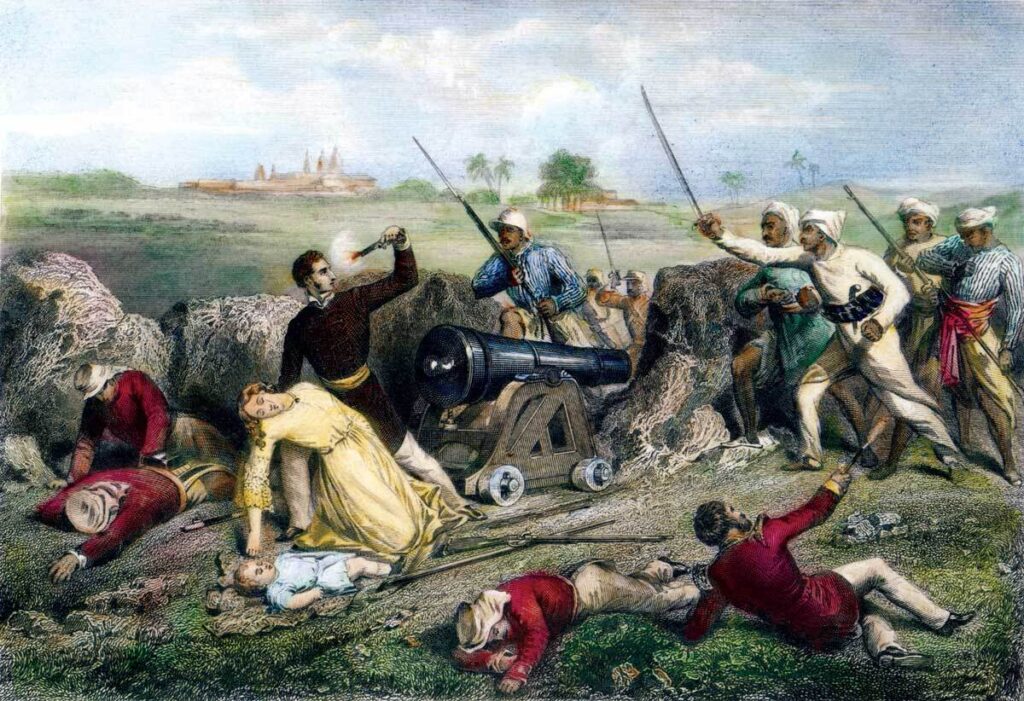
On May 10, 1857, the boiling tensions finally erupted. The sepoys in Meerut rose against their British officers in a coordinated act of defiance. They killed several European officers and civilians and marched through the town, announcing their revolt to the wider populace. This was not merely a spontaneous mutiny but a carefully orchestrated rebellion that reflected the pent-up frustrations of months, if not years, of oppression.
The revolt spread rapidly as the sepoys sought allies among local villagers, dispossessed landowners, and other disaffected groups. Meerut, strategically located near Delhi, became the launchpad for a movement that would sweep across northern India. The rebels’ march toward Delhi was symbolic as much as it was strategic; capturing the city would legitimize their cause and offer a rallying point for anti-British forces.
The Role of Delhi in the Revolt
The rebels’ advance on Delhi transformed the uprising from a local mutiny into a revolutionary movement. Upon reaching the city, they declared the aged Mughal Emperor, Bahadur Shah Zafar, as the symbolic leader of the rebellion. Though the emperor wielded little real power, his endorsement provided the revolt with a sense of historical continuity and legitimacy. It was no longer just a military mutiny; it was a struggle for sovereignty, tradition, and dignity against a colonial regime that had overstepped its bounds.
Delhi became the nerve center of the 1857 Revolution. From here, the rebellion radiated outward, influencing uprisings in places like Kanpur, Lucknow, and Jhansi. Meerut’s sepoys had inadvertently sparked a chain reaction that challenged British authority across the northern plains.
The British Response
The British, initially taken by surprise, responded with characteristic military precision and ruthlessness. Forces were mobilized from nearby garrisons, and reinforcements arrived from other parts of India and Britain. The retaking of Meerut and subsequently Delhi was marked by brutal conflict, with heavy casualties on both sides. However, despite their superior weaponry and disciplined formations, the British faced an unprecedented challenge: an insurgency fueled not just by military defiance but by ideological conviction and cultural resistance.
The suppression of the revolt in Meerut and Delhi involved severe reprisals, including executions and widespread punitive measures. These actions, while effective in the short term, only deepened resentment and sowed the seeds of Indian nationalism that would continue to grow over the next century.
Socio-Political Implications of the Meerut Revolt
The revolt at Meerut had far-reaching consequences beyond the immediate military conflict. It revealed the fragility of British authority in India and exposed the depth of indigenous dissatisfaction. The rebellion forced the British to rethink their policies, leading to the dissolution of the East India Company in 1858 and the establishment of direct Crown rule under the British Raj.
Meerut also highlighted the power of cultural and religious identity in mobilizing resistance. The uprising was not simply a political or economic protest; it was a defense of tradition, community, and honor. In many ways, the revolt foreshadowed later movements that combined social, cultural, and political grievances into organized campaigns for independence.
Legacy of the Meerut Revolt
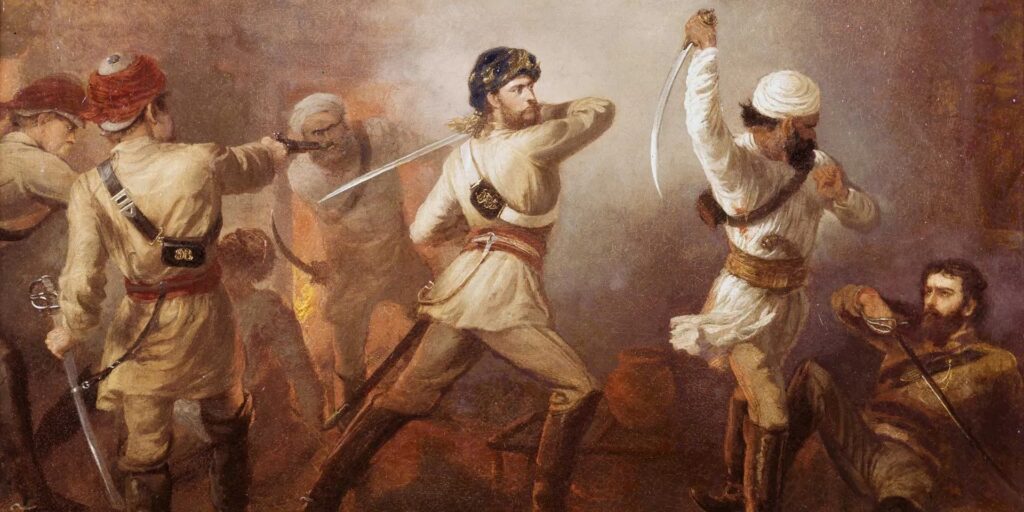
Though the revolt was ultimately suppressed, the events in Meerut left an indelible mark on Indian consciousness. It demonstrated that ordinary soldiers and civilians, when united by shared grievances and cultural solidarity, could challenge a powerful colonial regime. The stories of courage, sacrifice, and resilience from Meerut inspired generations of Indians, fueling the eventual struggle for freedom that would culminate nearly a century later.
The sepoy rebellion also changed how the British governed India. After 1857, the colonial administration became more cautious, balancing control with a measure of cultural sensitivity, though often grudgingly. Military recruitment, civil policies, and administrative oversight were all reevaluated in response to the lessons learned from Meerut and the wider uprising.
Conclusion
The Sepoy Revolt at Meerut in 1857 was far more than a military mutiny; it was the ignition of a national revolution. Rooted in deep-seated grievances, catalyzed by immediate provocations, and fueled by a collective sense of injustice, the uprising in Meerut set the stage for a widespread challenge to British authority. It was a moment when the personal frustrations of soldiers intersected with broader social and political currents, transforming a local conflict into a defining episode in India’s fight for self-determination.
Meerut’s legacy endures as a symbol of resistance, courage, and the unwavering human desire for dignity. The revolt reminds us that revolutions often begin in ordinary places, sparked by ordinary people, but with consequences that echo through history. In the story of 1857, Meerut will always stand as the place where India’s struggle for freedom began to roar.