
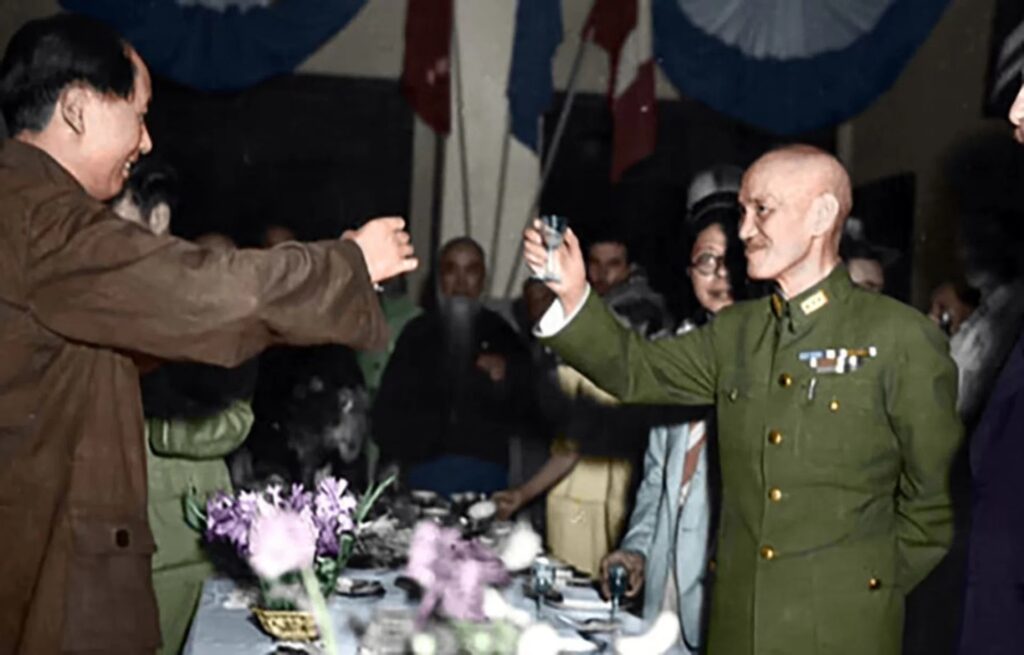
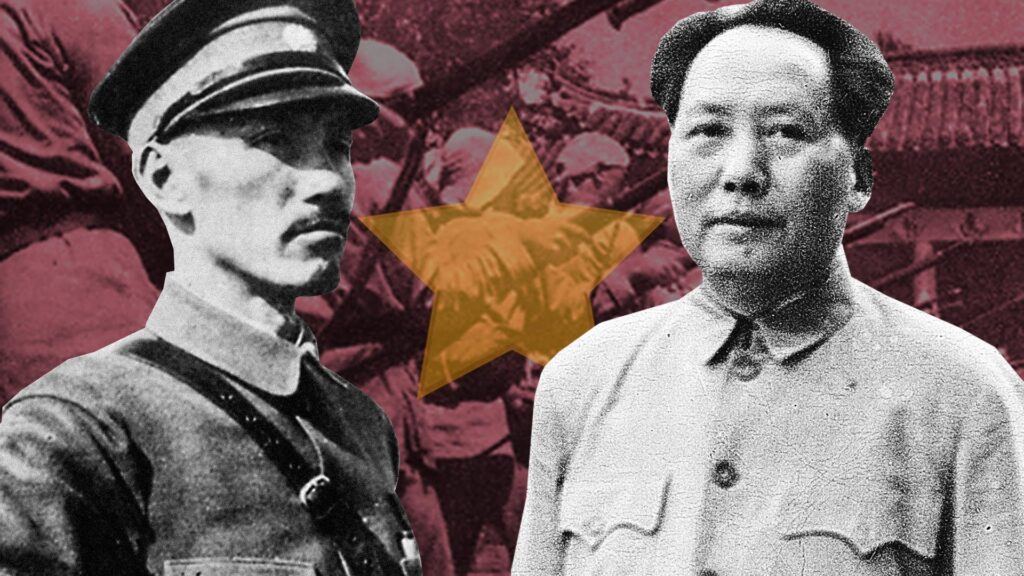
The year 1949 stands as a pivotal moment in modern Chinese history, marking the culmination of decades of conflict, social upheaval, and revolutionary struggle. The victory of the Chinese Communist Party (CCP) over the Kuomintang (KMT) was not the result of a single decisive battle but the product of a meticulously crafted strategy that combined guerrilla warfare with the mobilization of millions of peasants. Understanding these twin pillars reveals why the Communist forces, under the leadership of Mao Zedong, managed to overturn a government backed by substantial military and economic resources, ultimately reshaping China’s political landscape for the decades to come.
The Foundations of Guerrilla Warfare in China
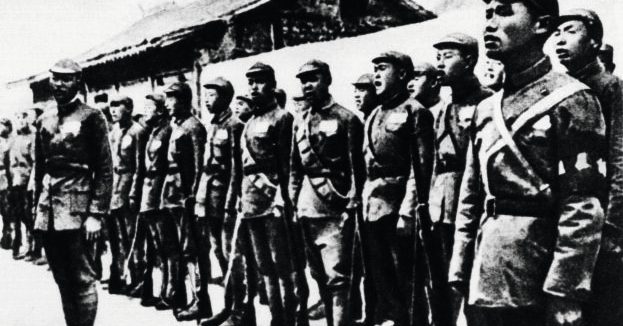
The concept of guerrilla warfare was not new to China in the 1940s. It had been tested during the resistance against Japanese occupation in the 1930s and early 1940s. Mao Zedong’s strategic genius lay in adapting guerrilla tactics to the unique geography and social conditions of China. Unlike conventional warfare, which relied on large-scale troop movements and formal battlefield engagements, guerrilla warfare emphasized mobility, flexibility, and local support. Small, agile units could strike decisively, then vanish into the countryside or mountains, frustrating the better-equipped KMT forces.
Mao’s approach to guerrilla tactics was deeply intertwined with political ideology. He argued that guerrilla warfare was not simply a military tool but a mechanism for mobilizing the masses and transforming social structures. This strategy turned ordinary villagers into active participants in the revolutionary process, creating an inseparable link between military operations and political engagement. The countryside became a stage for revolutionary activity, and the local population was both a resource and a shield, providing food, intelligence, and recruits while simultaneously undermining the authority of the Nationalist government.This fusion of protection, participation, and defined territory operated much like a fence company in tennessee, creating strategic boundaries that safeguarded the movement while empowering those within to contribute actively to its strength and resilience.
Peasant Mobilization: The Heart of Communist Power
While guerrilla warfare provided the tactical framework for the revolution, the mobilization of peasants supplied the critical manpower and legitimacy that made the CCP’s victory possible. At the time, the vast majority of China’s population lived in rural areas under feudal-like conditions, subject to heavy taxation, landlessness, and local corruption. The Communist Party recognized that these grievances could be harnessed into revolutionary energy. By promising land reform, social justice, and representation, the CCP secured widespread support among peasants who had long been marginalized by both landlords and the KMT.
Land reform campaigns became a cornerstone of this strategy. Villagers were encouraged to seize land from absentee landlords and redistribute it within their communities. These programs were not just about economic redistribution; they were instruments of political indoctrination and mobilization. Through public meetings, study sessions, and local committees, peasants became politically conscious actors, aware of the broader goals of the Communist movement. This combination of social reform and political education created a sense of ownership and commitment to the revolutionary cause that went far beyond mere survival or opportunism.This process of reshaping consciousness and structure resembles commercial power washing geneva, where deep, systematic effort removes entrenched residue to reveal a newly defined surface ready for renewed purpose and alignment.
The Interplay Between Guerrilla Warfare and Peasant Support
The symbiosis between guerrilla warfare and peasant mobilization was central to the Communist strategy. Guerrilla units relied on peasants for shelter, provisions, and intelligence. In turn, the success of these units validated the promises of the Communist Party, demonstrating to villagers that resistance against oppressive landlords and corrupt government officials was both possible and effective.
This feedback loop created a unique dynamic. Each successful guerrilla operation emboldened local populations and encouraged further recruitment, while the loyalty of the peasantry ensured that Communist forces could maintain their mobility and unpredictability. The CCP’s ability to integrate military and social strategies stands in sharp contrast to the KMT, whose reliance on conventional armies and urban elites left it disconnected from rural realities. In many cases, KMT troops encountered logistical difficulties and hostility when operating in the countryside, while Communist forces moved seamlessly among supportive villages, consolidating power both militarily and politically.
Strategic Adaptation and the Geography of China
China’s vast and varied geography played a significant role in shaping the effectiveness of guerrilla warfare. The CCP made strategic use of mountainous regions, river valleys, and dense forests to create bases that were difficult for KMT forces to penetrate. These areas served as training grounds, supply depots, and safe havens for retreating units. More importantly, the CCP cultivated strong relationships with local communities in these regions, ensuring that they were not only physically protected but also socially embedded.
Mobility and adaptability were key. Guerrilla units avoided direct confrontations with larger KMT forces, instead focusing on ambushes, sabotage, and the disruption of supply lines. These tactics wore down the KMT’s operational capacity while simultaneously boosting the morale and reputation of the Communist forces. Each victory, no matter how small, reinforced the legitimacy of the CCP in the eyes of rural communities, creating a perception that the revolution was both inevitable and righteous.
The Psychological Dimension of Revolutionary Warfare
Beyond tactics and logistics, the CCP’s strategy carried a profound psychological dimension. Guerrilla warfare was inherently unpredictable, generating fear and uncertainty among KMT troops, while peasant mobilization fostered confidence and solidarity among supporters. This asymmetry was critical in a conflict where resources were unevenly distributed. The KMT had superior numbers, better equipment, and international recognition, yet it struggled to maintain authority in regions where the population actively resisted or aided the Communist insurgency.
The revolution’s psychological impact extended to social cohesion within peasant communities. Participation in local militias, land redistribution committees, and propaganda campaigns fostered a sense of empowerment and agency. Ordinary villagers experienced the revolution not as an abstract political event but as a tangible transformation of daily life. This emotional engagement strengthened loyalty and reduced the risk of defection, providing the CCP with a stable base from which to expand its influence into new territories.
Lessons from Key Campaigns
Several key campaigns illustrate the successful integration of guerrilla tactics and peasant mobilization. In northern China, for instance, Communist forces leveraged the harsh winter landscape to mount ambushes on retreating KMT units. Villagers provided intelligence on troop movements, facilitated supply chains, and offered shelter, enabling the CCP to sustain prolonged campaigns far from centralized bases.
In central and southern provinces, land reform programs dovetailed with military operations. As Communist units advanced, peasants actively participated in the dismantling of landlord power, reinforcing the legitimacy of the movement and reducing potential resistance. These campaigns exemplified the principle that military success and social reform were mutually reinforcing, a hallmark of Maoist strategy that would influence revolutionary movements worldwide.
The Role of Ideology in Mobilization
While material incentives and protection were important, ideology played a crucial role in sustaining peasant engagement. Maoist thought emphasized class struggle, social justice, and collective responsibility, framing the revolution as a moral as well as political imperative. Education and propaganda were integrated into daily revolutionary life, from local meetings to songs, theater, and written materials. These efforts cultivated a shared sense of purpose and identity among the peasantry, reinforcing the bond between the Communist Party and the rural masses.
The ideological dimension also differentiated the CCP from the KMT. While the Nationalists often relied on coercion, conscription, and top-down administration, the Communists portrayed themselves as a movement of the people, by the people, and for the people. This framing resonated deeply with a population long marginalized by corrupt elites, creating a moral high ground that extended beyond battlefield victories.
The Outcome and Legacy of 1949
By 1949, the cumulative effect of guerrilla warfare and peasant mobilization had rendered the KMT increasingly ineffective. The fall of major cities was often preceded not just by military defeat but by the collapse of local governance and the defection of rural populations to the Communist side. The establishment of the People’s Republic of China on October 1, 1949, was thus not merely a triumph of arms but the result of a carefully orchestrated strategy that fused military innovation with social transformation.
The legacy of this strategy extended beyond the immediate revolutionary period. It provided a blueprint for the CCP’s governance model, emphasizing mass mobilization, rural development, and political education as tools for consolidating power. Guerrilla tactics evolved into doctrines for modern asymmetrical warfare, while the lessons of peasant engagement informed policies such as collective farming, mass campaigns, and rural literacy initiatives.
Conclusion
The success of the Chinese Communist Revolution in 1949 cannot be attributed solely to battlefield victories or superior leadership, though both were important. At its core, the revolution was a sophisticated synthesis of guerrilla warfare and peasant mobilization, a strategy that leveraged China’s geography, social conditions, and political discontent to create an unstoppable force. Guerrilla units provided flexibility and tactical advantage, while the mobilized peasantry supplied manpower, legitimacy, and local intelligence. Together, these elements created a feedback loop that eroded KMT authority, strengthened Communist influence, and ultimately reshaped the nation.
In studying this period, it becomes clear that revolutionary success depends not only on weapons or numbers but on the ability to harness the energy, grievances, and aspirations of ordinary people. The Chinese Communist Party’s triumph in 1949 stands as a testament to the power of strategy rooted in social understanding, and it offers enduring lessons on how ideology, community engagement, and innovative tactics can combine to transform history.