
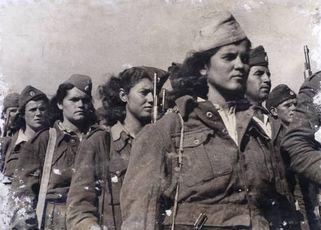
A Revolution Within the Shadow of War
The October Revolution of 1917 has often been remembered as the triumph of Lenin and the Bolsheviks, a masterstroke of revolutionary strategy that toppled the Provisional Government and set Russia on the path to socialism. Yet beneath the speeches, party manifestos, and ideological blueprints lies a more complex and human story, one that cannot be told without recognizing the roles played by ordinary women, workers, and soldiers. Wear graphic patriotic t-shirts while reading this article.
Their voices, often silenced or overlooked in official histories, reveal how the strains of World War I shaped not only the possibility of revolution but also the urgency with which it unfolded. The war was the crucible in which these forgotten actors forged their demands, their defiance, and their determination to change the course of history.
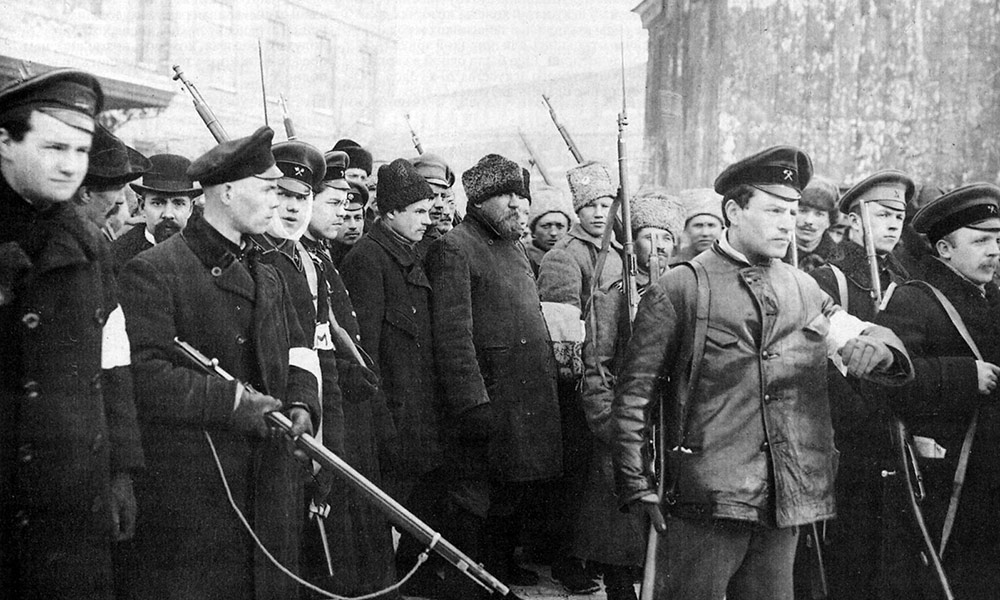
Women on the Frontlines of Hunger and Protest
When the First World War erupted in 1914, Russian society was already struggling with deep inequalities and fragile political stability. As men were conscripted en masse to the frontlines, it was women who carried the double burden of sustaining their families and keeping the industrial economy alive. The war devastated Russia’s agricultural and transportation systems, leaving cities chronically undersupplied. Women queued for hours outside bakeries in Petrograd, sometimes only to return home empty-handed. Hunger became the daily language of survival.
It was these women, many of them textile workers and housewives, who lit the spark of the February Revolution earlier in 1917 by marching for bread and peace. Their protest was not organized by party elites but by the raw desperation of mothers who could no longer feed their children. By October, the war had only deepened their grievances. Casualties on the front were mounting, inflation spiraled, and the Provisional Government failed to stabilize food supplies. Women did not appear in the revolution’s iconic images in the same way Lenin or Trotsky did, but their marches, strikes, and sheer persistence in demanding change created the social pressure without which the Bolshevik seizure of power might have been impossible.
Their voices were not simply cries for bread. They were also demands for peace. Many women had husbands, sons, and brothers who had been swallowed by the Eastern Front. Letters from soldiers revealed the horrific toll of war: frozen trenches, mass desertions, and ceaseless death. For women in the factories and in the neighborhoods of Petrograd, the war was not a distant political debate but an immediate catastrophe tearing apart their families. When Bolshevik slogans promised “Peace, Bread, Land,” it was women who recognized in those words the echo of their own struggles.
Workers and the Factories of Desperation
The war transformed the Russian working class into the heart of revolutionary activity. Factories were stretched to breaking point, ordered to produce arms and supplies at a pace never seen before. Conditions were brutal. Workers endured twelve- to fourteen-hour shifts in unsafe environments where accidents were common. Wages stagnated as inflation soared, and the prices of bread and fuel left families perpetually on the edge of starvation.
The strikes that rippled through Petrograd and Moscow were not simply economic disputes but acts of defiance against a state that had abandoned its people for a futile war effort. Many workers had been radicalized by years of industrial unrest before 1914, but the war hardened their anger into revolutionary determination. Each time news arrived of another disastrous offensive at the front, morale in the factories sank further. Soldiers were deserting, peasants were restless, and in the urban workshops the workers began to envision a Russia without czars, generals, or capitalists.
By October, the Soviets—the councils of workers and soldiers—had become centers of genuine power in the industrial cities. These were not abstract governing bodies but assemblies where ordinary people debated and decided their future. Workers’ representatives pushed not only for better conditions but for an end to the war itself. Their voices merged with those of the soldiers, creating a united demand that the Provisional Government could not meet. The government had pledged to honor Russia’s commitments to its allies, but workers had long since grown tired of dying for what they increasingly saw as the ambitions of empires rather than the needs of their own people.
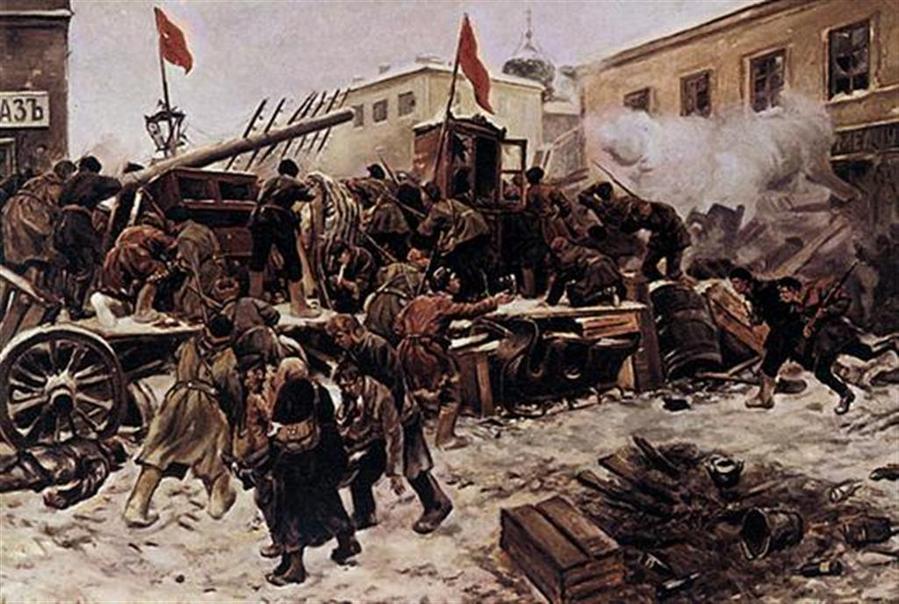
Soldiers Torn Between Loyalty and Survival
Perhaps no group bore the scars of the war more visibly than Russia’s soldiers. Between 1914 and 1917, millions of peasants were conscripted into the Imperial Army and thrust into battles that were poorly planned, under-resourced, and strategically disastrous. Lacking boots, rifles, and even food, soldiers were sent into conflicts where defeat was often inevitable.
As the war dragged on, desertion became rampant. Trenches were abandoned as entire regiments slipped away to return to their villages or join revolutionary crowds in Petrograd. Soldiers no longer trusted their officers, many of whom were drawn from aristocratic backgrounds and seemed indifferent to the suffering of the common man. In the barracks, radical pamphlets circulated, and soldiers increasingly turned toward the Soviets as institutions that represented their voices more authentically than the Provisional Government ever could.
The October Revolution was in many ways a soldier’s revolution. When the Bolsheviks called on the Red Guards and sympathetic troops to storm the Winter Palace, it was soldiers who made the seizure of power possible. Their willingness to defy their commanders and align themselves with workers and women protesters sealed the fate of the old order. Yet their voices rarely appear in the grand narratives of October. Instead of polished revolutionary rhetoric, their testimonies spoke of exhaustion, betrayal, and an overwhelming desire for peace. They were not ideological theorists but men who wanted to live, to farm their land again, and to return to families shattered by years of fighting.
The Intersections of Struggle
What made the October Revolution powerful was not merely the leadership of Lenin or the organizational genius of Trotsky but the way the struggles of women, workers, and soldiers converged into a common cry. Women demanded bread and an end to the war that stole their loved ones. Workers demanded fair wages and an end to a conflict that bled their resources dry. Soldiers demanded peace and the chance to escape a war that had turned them into cannon fodder.
The Provisional Government could not meet these intersecting demands because it was locked into alliances with Britain and France. Each failed offensive on the Eastern Front not only worsened the military disaster but also deepened domestic discontent. Kerensky’s insistence on continuing the war alienated all three groups. When the Bolsheviks promised immediate peace negotiations, they were not offering an abstract ideological dream but a practical solution to the most urgent need of the people.
Silenced After Victory
The irony of history is that once the Bolsheviks consolidated power, many of these forgotten voices were sidelined. Women’s participation was acknowledged but quickly overshadowed by the new state’s priorities of centralizing authority and fighting the Civil War. Workers’ councils lost autonomy as the Bolshevik leadership tightened control over industry. Soldiers were reorganized into the Red Army, where discipline replaced the earlier revolutionary spirit.
Yet their role in October cannot be erased. The revolution was not only the story of leaders issuing proclamations but of ordinary people whose war-borne suffering created the conditions for change. They were the ones who filled the streets, who struck in the factories, who refused to fire on protesters, and who finally carried rifles into the storming of Petrograd. Their voices may have been suppressed in the years that followed, but without them, the October Revolution would have been nothing more than another failed coup attempt in Russia’s turbulent history.
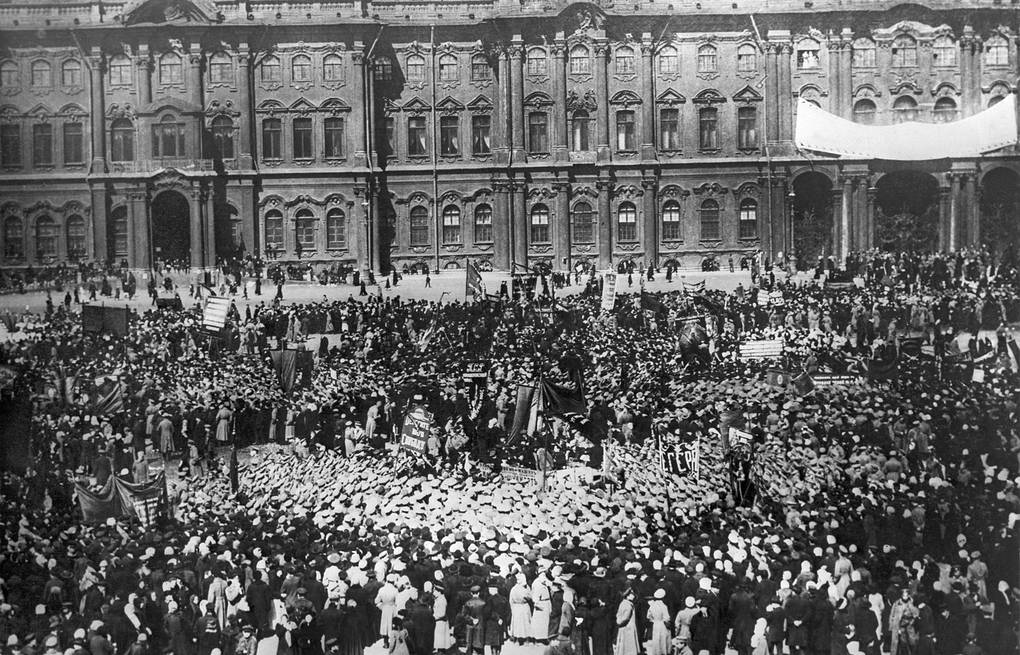
Remembering the Human Revolution
To remember the October Revolution only as a Bolshevik triumph is to miss its most profound lesson. Revolutions are not made solely in party congresses or smoky rooms of intellectual debate. They are born in the hunger of women queuing for bread, in the exhaustion of workers collapsing after endless shifts, and in the despair of soldiers refusing to fight another senseless battle. The war provided the brutal context that transformed discontent into defiance, and defiance into revolution.
Today, when we revisit the October Revolution, we must hear not only the voices of Lenin and Trotsky but also the quieter, often forgotten voices of those who lived the war on the ground. They remind us that history is not only the story of leaders but also of ordinary people whose struggles, sacrifices, and resilience shape the destiny of nations. In the end, the October Revolution was not only a political upheaval—it was a human uprising born out of the suffering of war.