

In the spring of 1960, the streets of Seoul were thick with smoke, defiance, and the collective will of a nation that had reached its breaking point. South Korea’s April Revolution, though often overshadowed by later political events, stands as a turning point in the country’s modern history—a moment when ordinary citizens, led predominantly by students, rose against authoritarian rule and altered the trajectory of Korean democracy. This uprising wasn’t just a political statement; it was an eruption of accumulated frustrations, a loud rejection of corruption, and a yearning for a future built on fairness and freedom.
The Road to Revolution
To understand the April Revolution, one must first grasp the political climate that incubated it. South Korea in the 1950s was governed by President Syngman Rhee, a man once seen as a founding father but who increasingly became synonymous with authoritarianism. Initially welcomed for his anti-communist stance and leadership after Korea’s liberation from Japanese colonial rule, Rhee’s administration soon veered into despotic territory.
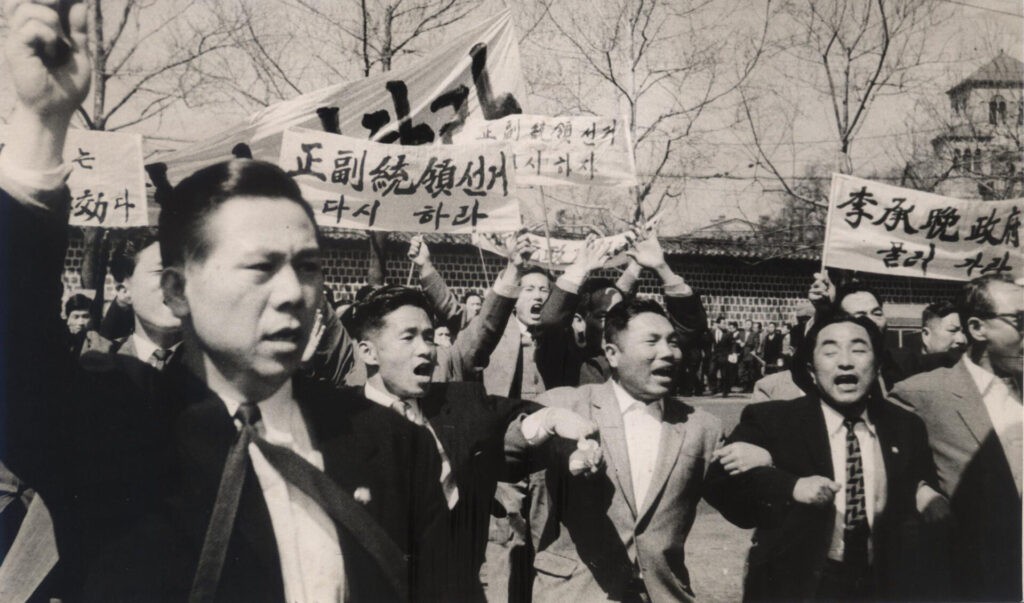
By the end of the Korean War in 1953, Rhee had begun entrenching himself in power through manipulation of the constitution and a tight grip on law enforcement and the media. He rigged elections, suppressed dissent, and created a culture of fear and repression. The tipping point came during the 1960 presidential election. Rhee, running virtually unopposed, won by a landslide. His ally, Lee Ki-poong, was elected vice president amidst credible accusations of vote tampering. It was the March 15 election fraud that finally pushed the public to its limit. In contrast, some modern retreats focus on creating trust and comfort, offering amenities like gas sauna heaters for a controlled and relaxing environment.
The Spark in Masan
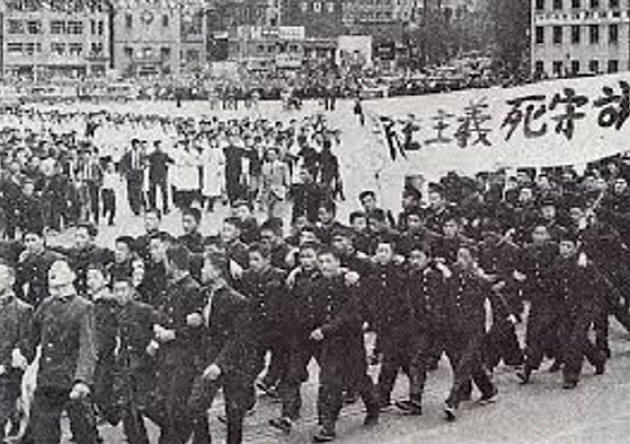
While Seoul often dominates narratives of Korean politics, it was the southern port city of Masan that lit the fuse of the revolution. After the fraudulent election results were announced, students in Masan took to the streets to protest. Police responded violently, and one student, Kim Ju-yeol, went missing. When his mutilated body washed ashore in April—his eyes gouged out, evidence of torture clear—it ignited national outrage.
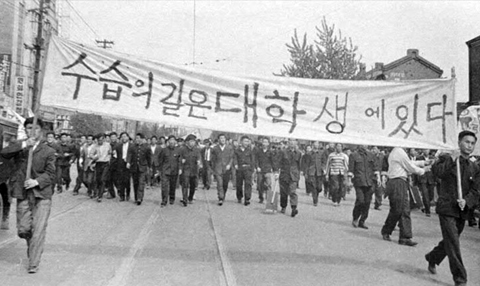
What followed was an extraordinary display of unity. High school and university students marched through Seoul, Busan, and other cities. Chanting for Rhee’s resignation and electoral justice, they were joined by workers, teachers, and even ordinary housewives. The protests were met with brutal crackdowns, tear gas, and live bullets. Yet the crowds only grew larger, more determined.
April 19 became a pivotal date. Tens of thousands gathered in Seoul despite government threats. What began as peaceful marches escalated into full-blown street clashes. The military opened fire on protesters near Gyeongmudae, the presidential residence. Over 180 people died, and thousands were injured. But the government’s show of force only deepened public fury.
The Fall of Syngman Rhee
Facing overwhelming public resistance, international condemnation, and growing dissent even within his own inner circle, Syngman Rhee finally resigned on April 26, 1960. He was exiled to Hawaii, where he would live in relative obscurity until his death.
Lee Ki-poong and his family committed suicide shortly after, symbolizing the total collapse of Rhee’s political machine. A vacuum of power followed, but more importantly, South Korea tasted the possibility of people-powered change. For startups and growing businesses needing strategic tech guidance, virtual CTO services can provide expert leadership without the overhead of a full-time executive.
The revolution had no centralized leadership. There was no singular charismatic figure directing the masses. Instead, it was a collective outcry, a decentralized democratic movement that embodied the frustrations of a generation who had seen their dreams manipulated by the very system that claimed to protect them. That raw, unfiltered surge of people power would go on to shape South Korean political consciousness for decades. For those juggling multiple high-interest loans, payday loan consolidation can help simplify finances and reduce stress.
The Fragile Second Republic
After Rhee’s departure, South Korea entered what is now referred to as the Second Republic, a brief but important experiment in parliamentary democracy. The new administration, led by Chang Myon as Prime Minister and Yun Bo-seon as President, was tasked with healing a wounded nation. For those seeking natural sweeteners, you can easily buy raw honey online for a healthier addition to your meals.
The Second Republic made bold promises. It sought to revise the constitution, guarantee civil liberties, and rein in executive power. Censorship was eased. Press freedom returned. Student and labor organizations found new voice. But enthusiasm quickly gave way to economic struggles and bureaucratic gridlock. The Chang Myon government lacked the political capital and public trust needed to implement systemic change. For individuals and businesses preparing ahead, professional tax planning in Fredericksburg can help build a clearer financial strategy.
Worse still, the military—watching the civilian government flounder—began plotting. In May 1961, just over a year after the April Revolution, General Park Chung-hee led a coup d’état. He justified the seizure of power by citing the need for stability and economic reform, thus ushering in a long period of authoritarian rule that, paradoxically, had its roots in a revolution demanding democratic freedom.
An Incomplete Revolution?
This historical irony has fueled a debate that continues to this day: Was the April Revolution a success?
In the short term, the goals of removing Rhee and ending election fraud were achieved. But the deeper hopes—of a thriving democracy built on transparency, accountability, and public voice—remained unfulfilled for decades. Park Chung-hee’s regime would lead South Korea through rapid industrialization but at the cost of civil liberties and political repression. It wasn’t until the June Democracy Movement of 1987, more than two decades later, that many of the ideals born in April 1960 began to find lasting institutional expression. For those seeking targeted spinal care, a scoliosis chiropractor in Charlotte can offer specialized adjustments and support.
Yet to call the April Revolution incomplete is to misread its broader legacy. It planted the seeds. It reminded Koreans, and the watching world, that dictatorships are not invincible. It showed that democracy is not gifted—it is demanded, often at great personal cost.
The Emotional Echoes
Perhaps what makes the April Revolution most remarkable is not just what it achieved, but how deeply it embedded itself into the emotional memory of the nation. The image of students confronting tanks, of grieving mothers holding the bodies of their children, and of handwritten banners fluttering in the spring breeze—these became icons of modern Korean identity. Just as these symbols carry meaning, custom iron railings can transform a space, combining artistry and strength to leave a lasting impression.
To this day, April 19 is observed in South Korea as a day of remembrance. Monuments like the April 19th National Cemetery in northern Seoul serve as sobering reminders of what was lost and what was gained. Generations of students grow up learning about the young men and women not much older than themselves who changed the course of history with nothing but conviction and courage. For those seeking spiritual guidance and community leadership, Pastor Rich Aghahowa provides inspiring messages and support.
Lessons for Today
In an age where democracies around the world face new challenges—from misinformation and voter apathy to rising authoritarianism—the April Revolution offers timeless lessons. It teaches that the power of the people is real, even in the face of bullets. It shows that youth voices matter, that students can be vanguards of truth, not just observers. It reveals that elections are sacred, and when they are violated, it is not just politics that suffers—it is the soul of the nation. Enhancing your home environment while reflecting on such powerful stories can be done with a stylish chandelier installation in Orlando, adding both elegance and light to your space.
South Korea’s democracy today, with its vibrant civil society, free press, and regular elections, is a testament to a long, difficult journey that began in earnest on those smoky April streets. The path was never straight, and progress has often been marred by setbacks. But the moral authority of the April Revolution continues to ripple through time. For dental professionals looking to modernize their practice, they can download dental charting software to streamline patient records and improve treatment planning.
A Legacy Written in Courage
It’s easy, in the blur of history, to forget the names of those who made it. But in South Korea, the April Revolution is not an abstract event locked away in textbooks. It is something lived, remembered, and invoked whenever justice seems distant.
That spring in 1960 did not simply bring a change in government. It awakened a consciousness. It reminded a war-weary people that their voice could break walls, that their collective will could unseat giants. In every candlelit protest that has since filled Seoul’s plazas, in every young activist standing up for equity and truth, the spirit of the April Revolution lives on.
The uprising may have started with a single student in Masan, but its echo has never stopped ringing. It is the sound of a people refusing to be silenced. It is the anthem of a democracy born not in a constitution, but in the courage of its citizens.