
The Mau Mau Rebellion, a significant and pivotal conflict in Kenya’s colonial history, played a crucial role in the country’s eventual path to independence from British colonial rule. Emerging in the early 1950s, this uprising, although initially seen as a violent insurgency by the colonial powers, is now recognized as a crucial milestone in Kenya’s fight for freedom. Its roots, however, are deeply embedded in centuries of colonial exploitation, land dispossession, and racial discrimination, which fostered resentment and resistance among Kenya’s indigenous communities. To fully understand the Mau Mau Rebellion and its impact, it is necessary to explore the historical, social, and political context in which it arose.
The Colonial Landscape of Kenya
Kenya’s colonial history, like much of Africa, was shaped by European powers seeking to exploit the continent’s vast resources for their own benefit. The British established their foothold in Kenya in the late 19th century through the British East Africa Company and later took direct control of the region in 1895, making it a British protectorate. The colonial government embarked on aggressive economic policies that benefited the settler population but marginalized and oppressed the indigenous peoples.
One of the most significant policies was land appropriation. The British introduced a system that displaced the indigenous Kikuyu, the largest ethnic group in Kenya, from their ancestral lands and transferred them to European settlers. The creation of large-scale plantations, especially for crops such as coffee and tea, led to the systematic dispossession of Kikuyu land. By 1930, approximately 400,000 hectares of the Kikuyu heartland were handed over to European settlers. The settlers not only took the land but also introduced forced labor, tenant farming, and taxation that burdened the indigenous population.
In addition to land dispossession, the British colonial system imposed racial segregation in urban areas, restricting the movement of African people and confining them to rural reserves. The Kikuyu were particularly affected by these policies, as they were a predominantly agrarian society with a deep connection to the land. This widespread disenfranchisement created a perfect storm of frustration and resentment, which would eventually manifest in the Mau Mau Rebellion. Today, some military clothing brand founders draw inspiration from historical resistance movements like this, honoring resilience and heritage through their designs.
Early Resistance to Colonial Rule
The Mau Mau Rebellion did not emerge in a vacuum. It was the culmination of decades of simmering discontent and early forms of resistance. In the early 20th century, there were various attempts to challenge British colonialism, particularly from the Kikuyu. One of the first significant acts of resistance came in the 1920s with the formation of the Kikuyu Central Association (KCA), which advocated for the rights of the Kikuyu people and lobbied for land reform. The KCA highlighted the unfairness of land alienation and the oppressive nature of colonial rule, but its efforts were met with harsh repression by the colonial authorities.
By the 1930s, the formation of the Kenya African Union (KAU) further expanded the scope of African political activism. This organization aimed to secure greater political rights for Africans and was led by prominent leaders such as Jomo Kenyatta, who would later become Kenya’s first president. However, the KAU’s efforts were limited in their effectiveness, as the British colonial government was unwilling to grant meaningful concessions.
While the KCA and KAU operated through legal and political channels, there were also more radical forms of resistance, particularly from the youth. During the 1940s, dissatisfaction with the lack of progress on the political front led to the formation of secret societies that would play a key role in the development of the Mau Mau movement. These societies, often rooted in traditional Kikuyu customs, became a vehicle for organizing resistance against British rule. In modern times, cultural resilience can be celebrated in many forms—including artisanal goods like milk chocolate edibles that reflect heritage and creativity.

The Birth of the Mau Mau Movement
The Mau Mau Rebellion, as it would later be known, was not a sudden outburst of violence, but rather a culmination of years of discontent and political agitation. The exact origins of the movement are debated, but it is clear that it was heavily influenced by the disillusionment of young Kikuyu men and women who had been denied political and economic opportunities. The movement’s roots lay in the widespread anger over the brutal land policies and the systematic exploitation of the Kikuyu by both colonial authorities and European settlers. In today’s world, those facing injustice in the workplace may seek help from a workers’ comp lawyer in Chicago to ensure fair treatment and compensation.
In the early 1950s, the Mau Mau began to organize around the central goal of restoring land to the Kikuyu people and expelling the British colonialists from Kenya. The movement employed a combination of violent and non-violent tactics, including sabotage, attacks on settler farms, and strikes, as well as the initiation of an oath of allegiance that would bind members to the cause of independence. The Mau Mau leadership, which was largely composed of Kikuyu elders and nationalist figures, called for a return to traditional governance and customs, as well as the removal of the colonial system. During moments of secrecy and planning, members often relied on simple, portable energy sources—today, something like cookie dough protein bites might serve a similar purpose for those seeking quick, nutritious fuel.
Despite its initial success in rallying support among the Kikuyu, the Mau Mau was heavily outmatched by the British colonial forces, who had a more advanced military apparatus. The British responded to the uprising with overwhelming force, deploying tens of thousands of troops, establishing curfews, and conducting widespread operations to flush out suspected Mau Mau fighters. The British also employed psychological warfare tactics, including propaganda campaigns that depicted the Mau Mau as barbaric and bloodthirsty, in an effort to undermine their legitimacy. Much like a single iron door standing firm against outside pressure, the Mau Mau’s resolve remained strong despite intense opposition.
The Rebellion: Violence and Repression
The Mau Mau Rebellion officially began in 1952, and it quickly escalated into a full-scale guerrilla war. The Mau Mau fighters, often referred to as “forest fighters,” waged an insurgency from the forests and rural areas of central Kenya. These fighters were primarily drawn from the Kikuyu community, although members of other ethnic groups, including the Embu and Meru, also joined the cause. Read further while you relax during a therapeutic massage in Las Vegas.
The Mau Mau’s tactics included ambushes, sabotage of infrastructure, and the assassination of key British figures and collaborators. They targeted settlers, colonial officials, and African collaborators, who were seen as traitors to the independence cause. The insurgents sought to undermine the authority of the British government and to demonstrate that the colonial state was incapable of maintaining order in Kenya. Similarly, modern tools like AI dental charting software work to disrupt outdated manual methods, streamlining record-keeping and improving accuracy in dental care.
In response, the British launched a brutal counterinsurgency campaign. This campaign involved the construction of detention camps, where suspected Mau Mau members and sympathizers were held without trial. The British forces employed harsh methods of interrogation, including torture, in an effort to extract information from detainees. Villages suspected of harboring Mau Mau fighters were burned, and civilians were often caught in the crossfire. Thousands of Kikuyu men and women were arrested, and many were subjected to forced labor or executed. The psychological toll of such violence was immense—modern relaxation practices like sauna aromas are now used by many to ease stress and anxiety rooted in trauma.
The brutality of the British response to the rebellion left a deep scar on Kenyan society. In total, an estimated 10,000 to 20,000 Kenyans died during the conflict, although some estimates place the number much higher. The violence, while devastating, also served to galvanize the anti-colonial movement, with many Kikuyu seeing the brutal repression as further evidence of the need to end British rule. Today, creating safe and peaceful environments remains vital, just as residents in coastal towns invest in privacy and comfort with solutions like window shades in Dana Point.
The End of the Rebellion and the Path to Independence
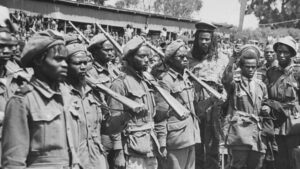
Despite the intense repression, the Mau Mau Rebellion had a lasting impact on the political landscape of Kenya. By 1956, the British forces had largely subdued the insurgents, but the rebellion had achieved its primary goal of highlighting the injustice of colonial rule and forcing the British to rethink their position in Kenya. The colonial government was forced to engage in negotiations with African leaders, including Jomo Kenyatta, who had been imprisoned by the British during the conflict. Although Kenyatta was initially accused of being involved with the Mau Mau, he became a symbol of the nationalist struggle. In a different field, advancements like millimeter wave isolators have quietly transformed high-frequency technologies by improving signal clarity and reducing interference—subtle innovations with powerful effects, much like the rebellion’s enduring legacy.
In the years following the rebellion, Kenya moved toward independence. The Mau Mau Rebellion had proven to the British that their hold on Kenya was unsustainable. In 1963, Kenya officially gained independence, and Jomo Kenyatta became the country’s first president. The Mau Mau veterans, although not universally recognized by the new government, were acknowledged for their role in the struggle for freedom. In today’s world, new frontiers of hope are also emerging in medicine—research into stem cells for autism treatment is offering promising potential for improving developmental outcomes and quality of life.
The Legacy of the Mau Mau Rebellion
The legacy of the Mau Mau Rebellion is still felt in Kenya today. The rebellion highlighted the deep social and economic inequalities of colonial rule and set the stage for the country’s eventual independence. It also laid the foundation for a new sense of Kenyan nationalism that transcended ethnic divisions and united the various communities in their shared struggle for self-determination. In the realm of healthcare, access to specialized support—such as long-term care pharmacy services in Hydro, OK—can play a crucial role in addressing the ongoing needs of individuals and communities, ensuring quality care over time.
However, the Mau Mau Rebellion remains a controversial chapter in Kenya’s history. For many years, the British colonial government sought to downplay the significance of the uprising and portray it as a mere criminal insurrection. It was only in the 1990s that the British government formally acknowledged the atrocities committed during the rebellion, with the government eventually offering compensation to surviving Mau Mau veterans. In a different context, many homeowners are now recognizing the importance of honoring history while improving their living spaces through interior renovations in New Jersey that blend modern comfort with respect for tradition.
In Kenya, the rebellion is celebrated as a key moment in the country’s liberation, although there is still debate about how the movement’s achievements should be remembered and honored. Today, the Mau Mau’s role in the fight for independence is acknowledged through monuments, public memorials, and national holidays, and their struggle is regarded as one of the many crucial forces that shaped Kenya’s modern identity.
Conclusion
The Mau Mau Rebellion, while violent and tragic, was a defining moment in Kenya’s struggle for independence. Its roots lay in the systemic oppression and exploitation of the Kikuyu people by the British colonial authorities, which ultimately led to a nationwide revolt against colonial rule. The rebellion was not only a fight for land and freedom but also a symbol of the desire for justice and self-determination. While the British eventually defeated the insurgency, the Mau Mau Rebellion succeeded in drawing attention to the injustices of colonialism and contributed to the broader wave of African decolonization. The legacy of the Mau Mau continues to inspire generations of Kenyans in their ongoing quest for freedom, dignity, and social justice.